








For years, fundraising teams have lived by one principle: the CRM is your single source of truth.
But as technology evolves and donor expectations rise, that mindset is no longer enough. Today’s most successful organizations know that data doesn’t just sit in a database – it flows between systems, teams, and decisions.
It’s time to move from managing data to using it.
That shift was at the heart of a recent conversation featuring Becky Fullmer of Florida State University, Mark Koenig of Oregon State University Foundation, and David Woodley of the University of Alaska Foundation. Together, they explored what it takes to build smarter, more sustainable data strategies that empower fundraisers to work efficiently and drive stronger results.
Here are the lasting takeaways that every fundraising organization can apply.
1. Turn Data Management into a Measurable Strategy
Many teams spend their days maintaining spreadsheets, updating records, and chasing data completeness. It’s important work, but it’s not strategy.
True data strategy means understanding how information drives fundraising results. It starts by asking:
- What are we trying to achieve with the data we collect?
- Who needs to use it and how?
- What does success look like when data is doing its job?
Florida State’s Becky Fullmer emphasized that data value is built collaboratively, not delivered by one team. The organizations seeing the biggest impact are the ones connecting data, technology, and fundraising teams around a shared purpose: to use information intelligently in support of meaningful donor relationships.
2. Build Data Value Through Collaboration
Fundraising data is most powerful when it’s shared, trusted, and actionable.
That requires a culture shift. Instead of data “belonging” to operations or analytics, the most effective organizations treat it as a team sport. Everyone from gift officers to stewardship staff to campus partners plays a role in keeping information clean, relevant, and insightful.
When fundraisers understand where data comes from, they’re better equipped to use it to spark conversations and deepen relationships. And when data professionals understand how that information impacts outreach and giving, they can prioritize what truly matters.
3. Prioritize Usable, Trustworthy Data Over Perfection
Mark Koenig of Oregon State made a point that resonates across every fundraising shop: no one has perfect data.
The goal isn’t to create a flawless database, it’s to build a “good-enough environment” where data is current, accurate, and easily accessible. Instead of chasing every missing data point, focus on what’s most important in the effort to strengthen relationships and inspire philanthropy.
- One way OSU is improving their data is by encouraging alumni to help in the effort to keep their records clean. By routinely asking alumni to update their information and share their opinions, they’re not only ensuring their records are accurate, they’re also gathering behavioral data by surfacing the alumni who are engaged enough to participate.
Perfection is unattainable. Usability is transformative.
4. The CRM Is the Hub, Not the Whole Engine
One of the most important takeaways from the conversation was clear: the CRM is still the backbone of fundraising operations, but it’s no longer the only system of record.
As David Woodley from the University of Alaska Foundation shared, his team uses a central data warehouse to connect insights from multiple systems and paint a fuller, more actionable picture of their donors.
In an ideal world, the CRM houses the most critical data points – the information fundraisers rely on daily to track activity, improve efficiency, and inform decisions. But in reality, some of the richest details now live in complementary systems built to analyze, enrich, and visualize data in new ways.
Modern fundraising teams are creating connected environments where each platform plays a distinct role:
- The CRM captures essential transactions, history, and relationship details.
- Donor intelligence tools (like DonorSearch) pull together philanthropic, wealth, and affinity data for deeper insight.
- Analytics platforms (like Clarity by EverTrue) surface patterns and opportunities, helping you understand why someone should be prioritized.
- Outreach tools (like Signal by EverTrue) empower fundraisers to act on those insights through personalized, cadence-based outreach.
- Data warehouses consolidate engagement data across systems, ensuring the full story is visible.
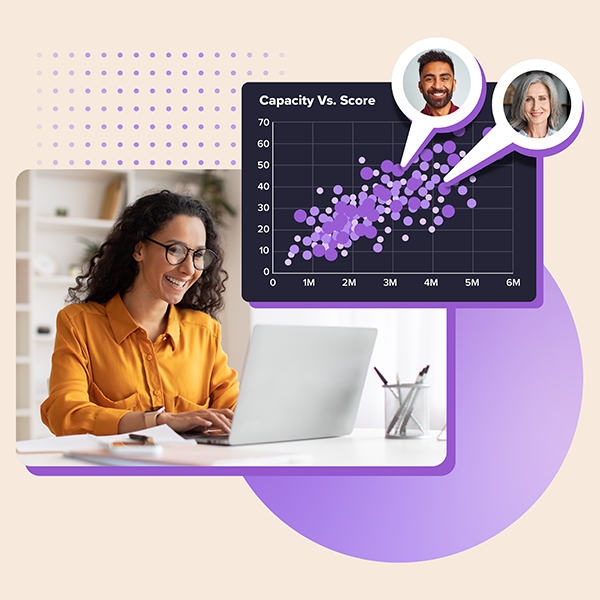
For example, DonorSearch AI (DSAI) brings these pieces together by combining donor intelligence and engagement data to create actionable scores and predictions. Those insights can then be pushed directly into the CRM, ensuring fundraisers have the context they need without losing operational efficiency.
The most effective fundraising teams aren’t chasing a single “source of truth” – they’re building a unified data flow that strengthens the CRM, increases confidence in decision-making, and ensures everyone understands why a prospect is scored, prioritized, or approached a certain way.
This connected ecosystem doesn’t replace the CRM. It enhances it, making every system, every score, and every fundraiser smarter.
5. Start Small, Test Often, and Evolve your data strategy
The best data strategies don’t start with a massive overhaul. They start small.
Test a new enrichment method. Pilot an engagement score. Create a simple dashboard for fundraisers. Then iterate.
As Becky Fullmer noted, progress happens when teams are willing to experiment, learn, and evolve. Small, measurable improvements compound over time, leading to smarter processes, better collaboration, and more confident fundraisers.
Use the Data You Already Have to Drive Your Next Win
When you zoom out, these lessons all point to a simple truth: fundraising success depends on how you use the data you already have.
Florida State, Oregon State, and the University of Alaska Foundation each brought a unique perspective but shared a common mindset:
- Think strategically, not reactively.
- Empower collaboration across teams.
- Prioritize usable, trustworthy data.
- Connect your systems, don’t silo them.
Whether you’re running a major university foundation or a small nonprofit, that’s the roadmap for building a data strategy that scales.
Because in today’s world, the smartest fundraising organizations aren’t the ones collecting the most data, they’re the ones who know how to turn information into action.
At EverTrue, we help fundraising teams make the most of the data they already have – surfacing actionable insights and turning them into timely outreach.