












When it comes to endowment management, far too many of our clients come to us with just three words: “Spreadsheets. Spreadsheets. Spreadsheets.”
While we do appreciate a good spreadsheet, they rarely excel when it comes to endowment funds. In our experience, using spreadsheets to manage your endowment creates too many opportunities for manual errors, and spreadsheets are far from the most secure way to transfer this sensitive financial information.
If you’re not convinced that a specialized endowment accounting tool is right for your nonprofit, then we’re ready to make our case. We’ll explore:
- Endowment Accounting FAQ
- Common Endowment Accounting Mistakes
- 6 Reasons to Invest in an Endowment Accounting Tool
Ready to hear us out on why you should move your endowment accounting process away from spreadsheet land and into a secure, digital platform? Let’s get started with a few basic questions about just what exactly endowment accounting is.

Endowment Accounting FAQ
What is an endowment?
A single endowment is a fund that nonprofits maintain to earn long-term financial returns. The idea behind an endowment is not to spend its principal but instead invest it to earn a regular income. This investment income can then be spent on whatever your nonprofit needs or invested back into the endowment to keep it growing.
Often, large nonprofits, like universities, will consolidate their various endowment investments. To continually track the value of each endowment, they will follow a process called unitization. Essentially, in an investment pool, each endowment owns specific investment units. This simplifies investment management while also ensuring each endowment’s returns are properly accounted for.
But it’s a little more complicated than that! There are two primary types of endowment net asset categories:
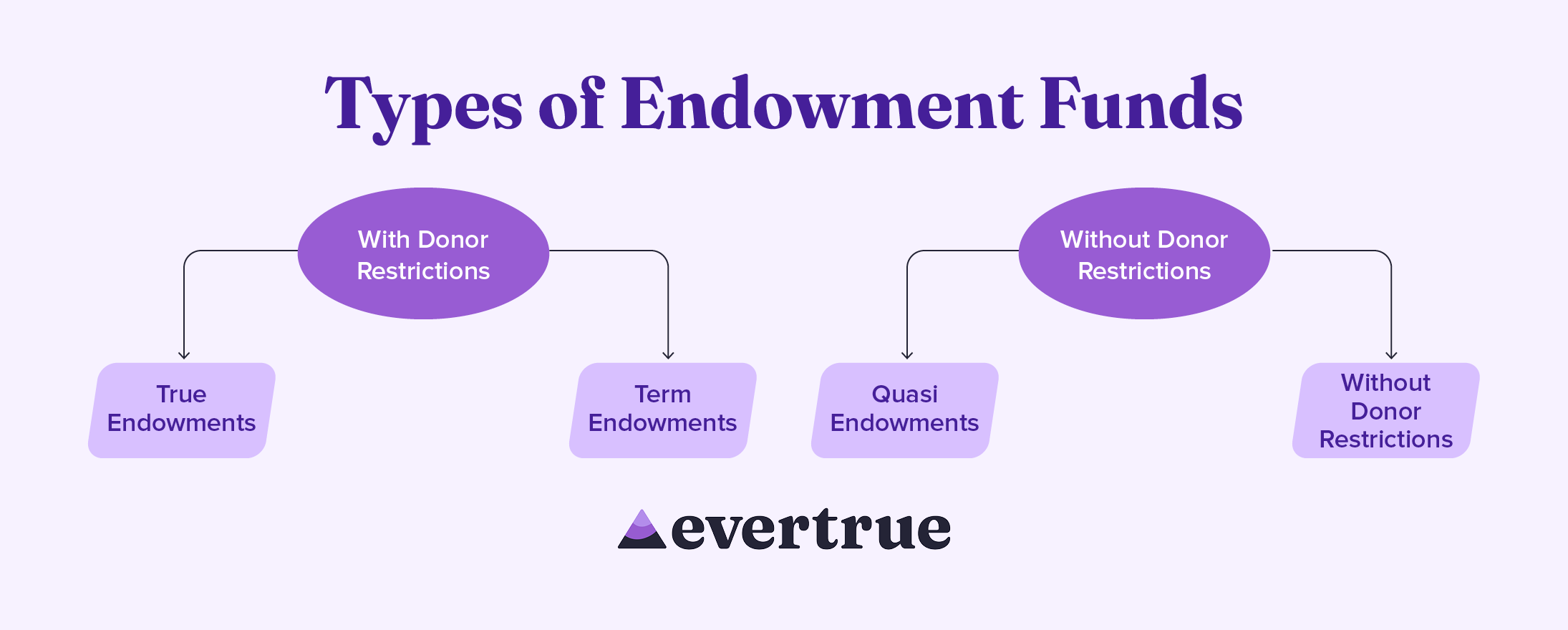
- With Donor Restrictions: An individual might make a big gift to create a new endowment, but they want some say over how their money is spent. In a restricted endowment, the original donor calls the shots for how the endowment’s investment income is spent.
- Without Donor Restrictions: Unrestricted endowments are the opposite of restricted endowments. For these, your nonprofit is free to spend investment revenue however you want.
Within these two categories, an endowment will likely be one of these types:
- True: A true endowment is the most strict—the principal is to be held in perpetuity, and only the investment income can be spent according to donor-defined purposes.
- Term: Most endowments are for long-term growth, but not term endowments. These exist for a limited period of time. Once their deadline expires, term endowments—including both the interest and the principal—can be spent according to their donor-defined purpose.
- Quasi: Endowments usually have restrictions set by donors. Quasi-endowments, however, are created by your board and made up of funds your nonprofit has on hand. With your board’s approval, you can also end your quasi-endowment to start spending its principal.
What endowment regulations do I need to know?
Investing and accounting always come with legal guidelines. For endowments, there are two primary regulations to be aware of:
Uniform Prudent Management of Institutional Funds Act (UPMIFA)
UPMIFA is a set of guidelines designed to help nonprofits make sound investment decisions, spend endowment funds properly, and be considerate of donor restrictions. These guidelines apply specifically to donor-restricted endowments. This means if you only have a quasi-endowment, these rules don’t apply to you.
But if you have a true or term endowment, then it’s best to familiarize yourself with these six core components of UPMIFA:
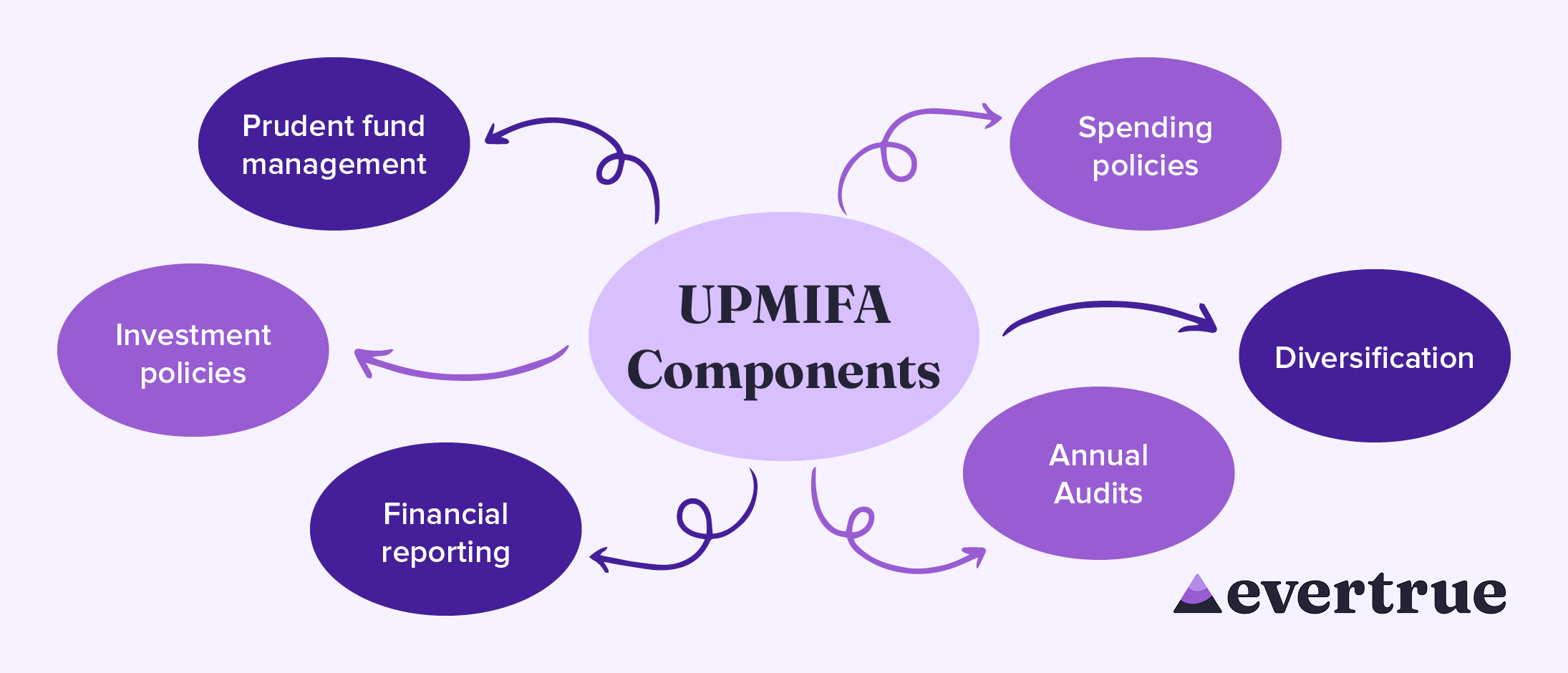
- Prudent fund management. UPMIFA advises nonprofits to manage their endowments in a “prudent” manner. Essentially, this means considering the endowment’s purpose, economic factors, and potential financial risks when making investments.
- Investment policies. Your nonprofit should invest however it thinks is best. You just need to create a policy outlining why and how you’ll invest your endowment. This document should include your risk management strategy, investment monitoring process, and how you’ll assess your investments’ success.
- Financial reporting. UPMIFA requires nonprofits to prepare annual financial reports. If a regulatory agency requests one, ensure you provide it promptly.
- Annual audits. Nonprofits with endowments must conduct an independent audit every year.
- Spending policies. Create a spending policy that outlines how your nonprofit will use funds, with special consideration for donor restrictions and the type of endowment.
- Diversification. It’s common investment advice to not put all your eggs in one basket, and that’s what UPMIFA advises: nonprofits should invest in a range of assets that align with their organization’s values. For example, an environmental nonprofit might alienate its donors if it uses their endowment gifts to invest in oil companies.
Generally Accepted Accounting Principles (GAAP)
GAAP is the standard framework all organizations use to record and report their finances. There are 10 GAAP principles:
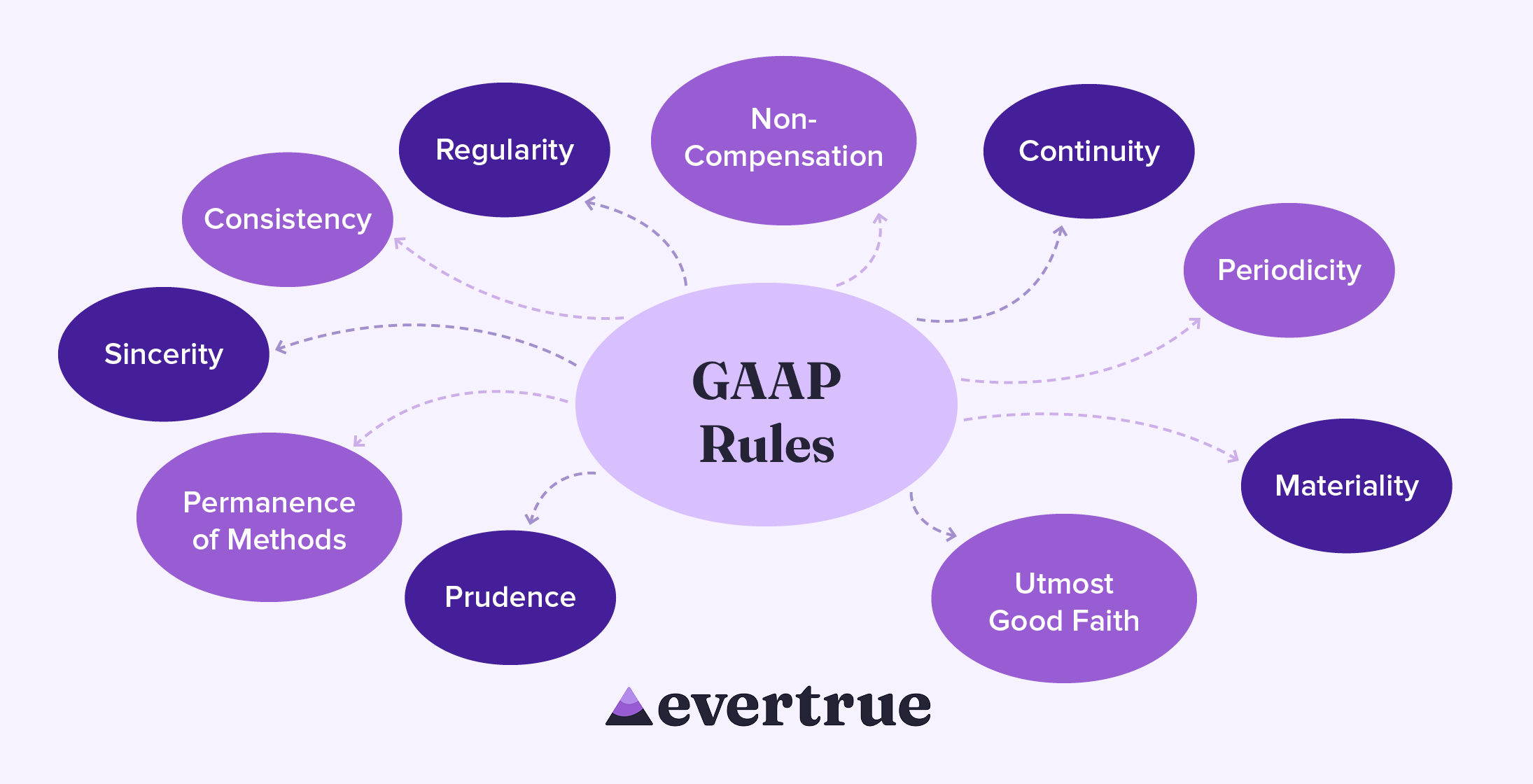
- Regularity: Follow standard accounting rules and regulations.
- Consistency: Use consistent standards when creating financial reports.
- Sincerity: Conduct finances as accurately as possible and without bias.
- Permanence of Methods: Use standard procedures when creating financial reports.
- Non-Compensation: Report on both the good and bad aspects of your nonprofit’s financial performance, with no prospect of debt compensation.
- Prudence: Your financial data is not impacted by future speculation.
- Continuity: When reporting assets (the buildings you own, equipment, investments, etc.), there’s an assumption that your nonprofit is going to continue operating.
- Periodicity: There are three accounting periods to create reports for: monthly, quarterly, and annually.
- Materiality: Your reports should include all significant information when reporting your financial situation.
- Utmost Good Faith: Everyone managing your nonprofit’s finances should be honest and trying their best to do right by your organization.
Who should oversee my nonprofit’s endowment?
This depends on your nonprofit! In general, your board is responsible for managing your endowment and making investment decisions. They might also delegate responsibilities by forming an investment committee to oversee the endowment.
Additionally, your nonprofit’s major gift officers should be aware of the state of your endowment so they can have informed conversations with donors when seeking endowment gifts.
Common Endowment Accounting Mistakes
Endowments are complex financial accounts, which means it’s easy to make mistakes, and these mistakes can cost your nonprofit big time. Here are a few common ones to look out for:
- Treating your endowment like a regular account. An endowment is a unique type of account, and nonprofits shouldn’t casually dip into it. Even if you only have a quasi-endowment, it’s still best to treat it as a pool of assets for long-term growth. If you keep taking money out, your investment will never grow!
- Not classifying different types of funds. As soon as you get a gift for your endowment, note what type of gift it is (restricted or unrestricted). If it does have restrictions, mark those down as well. Accidentally mispending a gift can break donor trust at best and land your nonprofit in legally risky waters at worst.
- Not maintaining compliance. If you’re not familiar with UPMIFA, GAAP, or local and state laws, now’s the time to get acquainted. Remember, these regulations exist to help protect your nonprofit’s endowment and donors, so maintaining compliance is best for everyone.
- Not keeping proper records. Records help your nonprofit properly use all gifts and are essential to have on hand when tax season rolls around.
- Opening your endowment up to fraud. Keep your endowment safe! If you don’t have proper internal controls or oversight policies, you’ll open your endowment up to potential misuse.
Fortunately, there is a way your nonprofit can dodge all of these pitfalls: an endowment accounting tool!
6 Reasons to Invest in an Endowment Accounting Tool
1. To save hours of valuable staff time (and their sanity)
In an industry where resources are limited and burnout rates are high, saving employees time and stress is worth its weight in gold. Essentially, investing in a time-saving tool means also investing in your employees’ wellness.
Our endowment accounting tool is named Balance for good reason. Our goal is to help nonprofit professionals grow their endowments while reducing the amount of time they spend fussing over them, creating a better work-life balance. We even created a series of guided meditations tailored specifically for finance and endowment accounting professionals.
Take, for example, the fund import and edit process. Rather than manually adding and editing fund details, Balance by EverTrue users can use the Import function to apply additions, updates, and spending rules to a bulk set of funds, saving hours of time on manual fund entry.
Our imports and exports are built to be flexible and work with your data. Balance works with many accounting systems, including:
- Workday®
- Peoplesoft®
- Oracle/FRS®
- NetSuite
- Jenzabar®
- Blackbaud Financial Edge®
- Ellucian/Banner Finance®
- Ellucian/Colleague Finance®
In Balance, you and your team will save tons of time and stress. Phew!

2. To streamline collaboration with colleagues
Communication is key with any project, both in and outside your nonprofit’s office. When you’re rowing in the same direction as your colleagues, everyone wins. If not, the boat might just tip over.
When it comes to collaborating on high-priority and complex projects like endowment accounting and reporting, clear and consistent communication is an absolute must.
Many parties are involved in endowed fund management (finance managers, auditors, gift officers), and each has a different level of involvement with the process (fund reporting, fund reviewing, fund distributions, donor communications).
With Balance, all of your colleagues can collaborate digitally. Easily give Report Access to folks who need to quickly run fund reports, and grant Read-Only Access to allow internal and external colleagues to view fund reports and basic fund details. Balance even generates on-demand, auditor-ready SOC reports to efficiently deliver the information auditors need.
Ready to get out of spreadsheets?
If you agree that it’s time to get your endowment accounting out of spreadsheets and into the modern era, then we would love to chat. Book a Balance demo with a member of our team.