












As technology advances, so does the automation of many parts of people’s jobs — but fundraisers know realistically that not everything can (or should) be automated. So much of fundraising centers around human connection, and those key moments shouldn’t be replaced.
However, there are several tasks in the life of a fundraiser that can be automated, freeing teams up to do the important work of building relationships.
If your organization is like one of the many that are investigating how new technology can increase efficiency and dollars raised, then you already know a simple truth: the software your team needs isn’t like what for-profit companies use.
Fundraisers need something tailor-made for them: automation that is in their hands, with the ability to take repetitive tasks off their plate, but leaves tasks that require a personal touch for them to handle.
Spoiler alert: that’s exactly the philanthropy-first intelligence EverTrue built into Signal, our donor engagement platform.
Read on to learn:
✔️ What automation tools Signal provides
✔️ How a fundraising expert is using those tools today
✔️ The value automation can bring when used correctly
Cadences 101
Let’s set a baseline. Signal offers many ways to turn data into action — AI tools, trip planning, activity dashboards, a mobile app, and more. For now, we’re going to focus on one of the more important features called cadences.
Cadences are pre-planned sequences of touchpoints with a donor and are built on the strategy of polite persistence. They can be created with conditional branching, meaning that once a cadence is rolling and donors are assigned to it, the donor’s actions decide what happens next.
A simple example of conditional branching is that when a donor gets an email, the next step depends on what they do with it. If they don’t reply, they get a follow-up email. If they do reply, the cadence could end there as the fundraiser steps in and takes over the conversation.
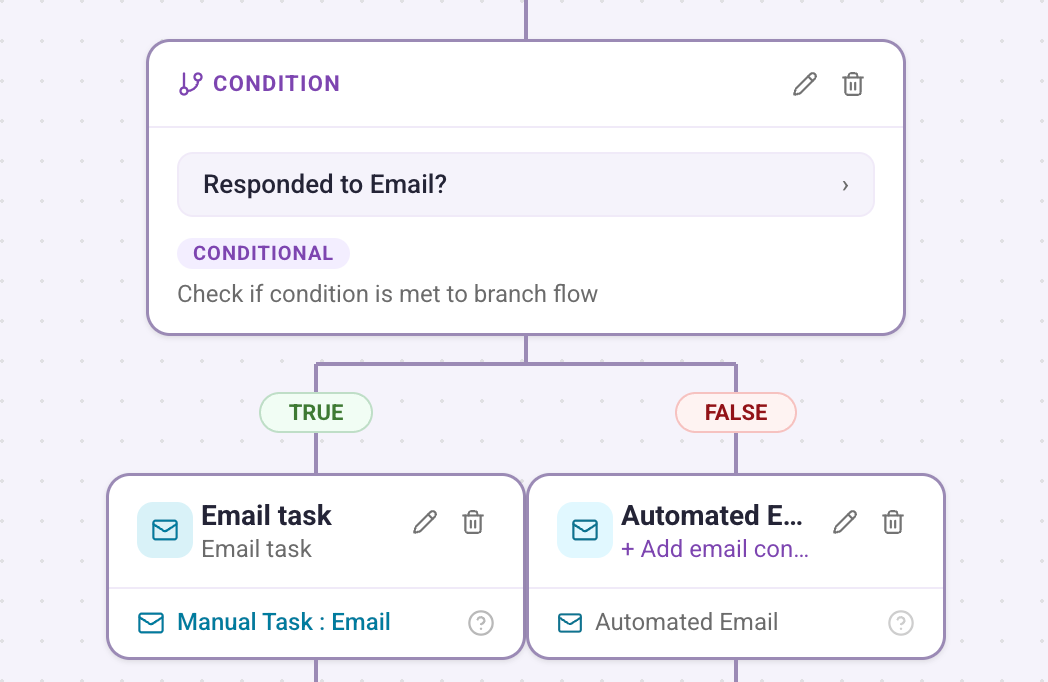
There are also intervention capabilities built into cadences to ensure the pathways can be altered when necessary. While automated emails and SMS messages can be sent on your behalf, other cadence tasks are manual. That means when those tasks come up on your daily task list in Signal, you can choose to skip them or give the constituent a new task based on previous behavior.
Cadences are something that many for-profit organizations have been using for a while — and we have proof that they work for nonprofit organizations, as well. Research shows that Signal cadences accelerate major giving conversations, with major gift officers trained on cadences producing 4x more interactions and booking nearly 3x more meetings compared to traditionally-trained officers.
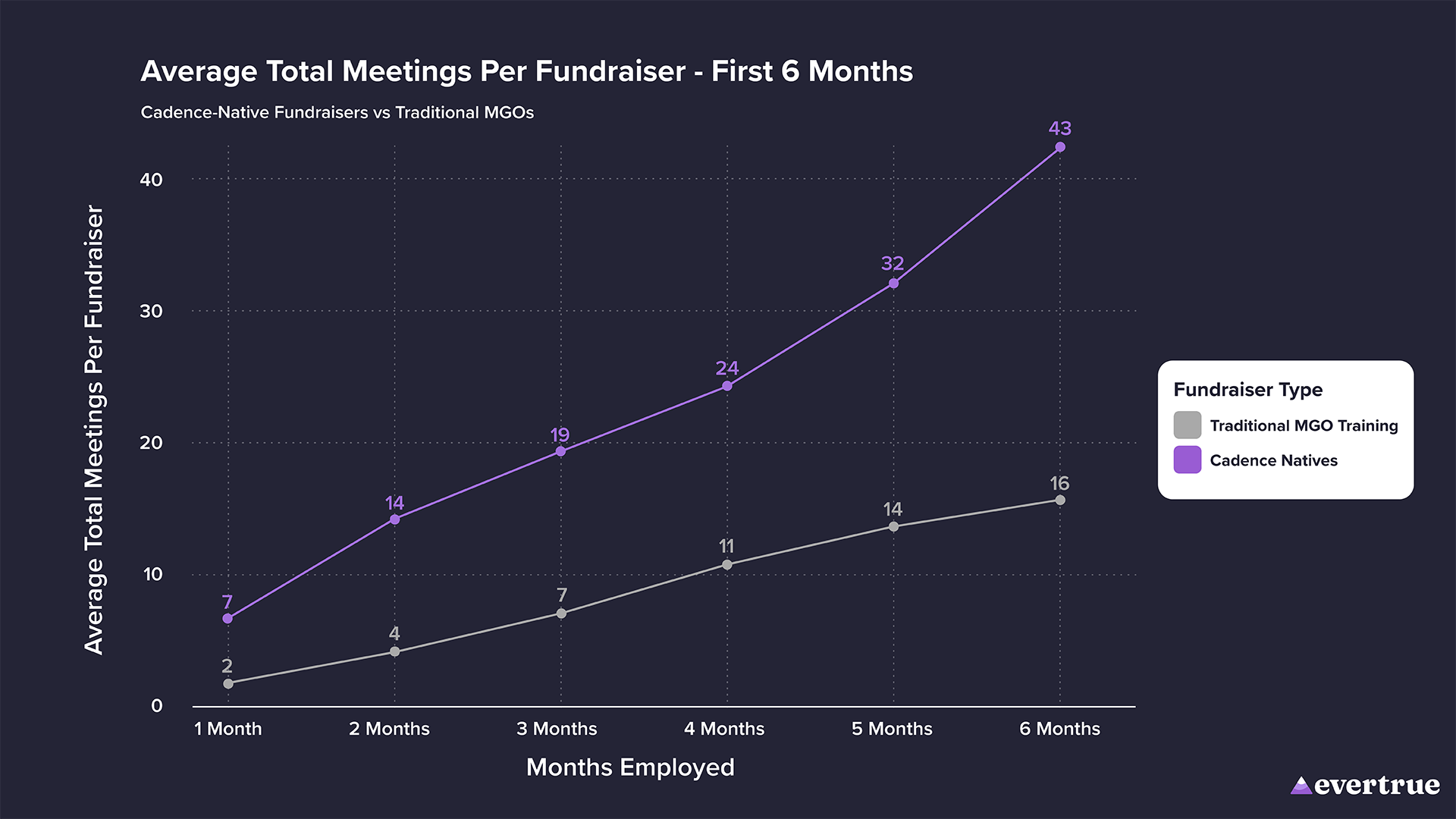
So, in summary: cadences are an effective strategy for gift officers, and cadences with conditional branching are the heart of automation for fundraising. This is because they remove the headache of keeping track of how a donor is reacting to your outreach. Instead, now you just have to worry about logging in and completing your pre-routed daily tasks.
This is what Signal offers that your CRM can’t. Your CRM tells you what happened. Signal’s cadences tell you what to do next.
An Expert’s Advice
Now you know what Signal’s cadences can do. But how could your team start utilizing this method of automation in your workflows?
Meet Rebecca Nievar, Donor Experience Program Manager at EverTrue. She works with multiple clients through our Donor Experience program, helping develop high-performing systems for fundraising teams. She’s had over 10 years of experience in fundraising, and has some pretty notable accolades: she was the chair of the CASE 2025 District IV Conference, on the cabinet for 5+ years, and was 2024’s Rising Star for CASE District IV.
Rebecca and her fundraising teams are big fans of Signal’s cadences, with one client attributing well over half of the funds brought in for a special campaign solely to cadences.
“Cadences have been a big part of creating scalable, personalized donor outreach,” Rebecca said. “The biggest benefit of cadences is letting the system do the busywork for you so you can focus on relationship-building. It’s a serious time-saver.”
As an expert in fundraising automation, she gave us a breakdown of three key areas where branching cadences have made a big impact.
Engagement
For donor engagement, think in terms of events (reunions, galas, football games, community nights, etc) and things you want donors to do.
When it comes to events, cadences are an obvious fit, as they can be a great set-it-and-forget-it way to automate polite follow-ups if someone hasn’t clicked on the registration link.
As for ‘things you want donors to do’, that probably sounds a bit broad, but this is where cadences’ new SMS feature comes into play.
“SMS is great for when you want a donor to take a specific action,” Rebecca said. “You’re reaching donors where they check most.”
Here’s a quick rule: if you need a constituent to click a link, SMS is a great avenue. So this could apply to events as well, but could also be for when you want donors to go to a webpage, watch a video, or sign up to volunteer.
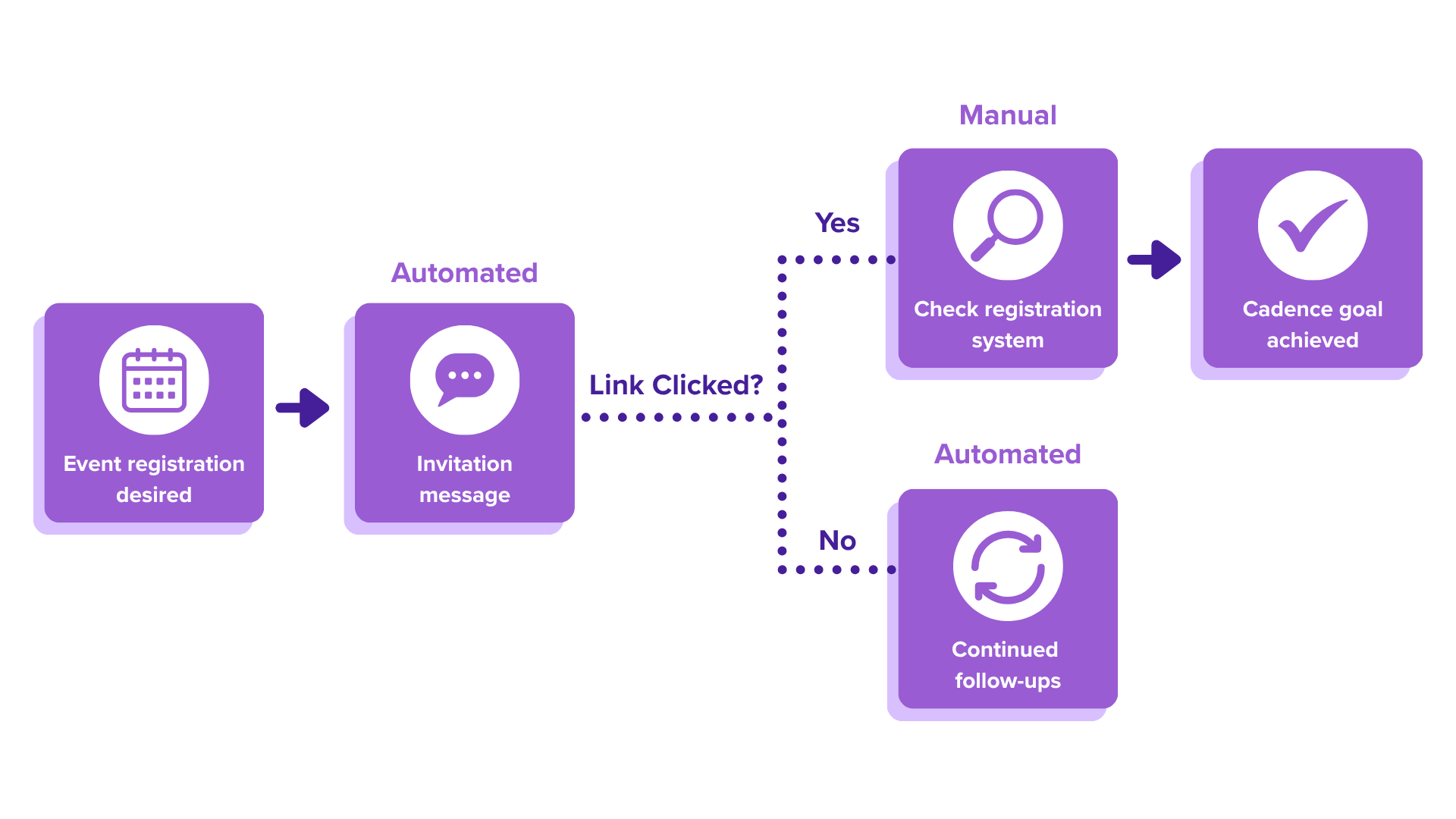
“Those automated follow-ups are incredibly important to getting the result you want, and with cadences, they can be multi-channel,” Rebecca said. “So you can send a text invitation and have it set so that if a donor doesn’t open the text within an hour, they’ll also get an invitation in their email inbox.”
Solicitation
Making the ask is where the hard work pays off, and it’s also where some fundraisers may be hesitant to automate. Using cadences for solicitations really comes down to your audience.
“One of my clients has been using cadences to reach out to large segments of their low- and mid-tier donors for their giving day,” Rebecca said. “When the follow-ups are automated, they become one less thing to worry about and make it more likely to bring in dollars.”
Besides mass outreach, cadences are also a great way to ensure major gift donors are being consistently engaged. To keep the relationship at the center, a cadence could have a healthy mix of manual and automated tasks. For example, an automated invitation to coffee could be followed by a manual phone call if it goes without a response. Later down the line after an in-person meeting, a thank-you message with more information about your organization could be automatically sent on your behalf.
Don’t hesitate to incorporate cadences into your current solicitation strategies, as well. One of Rebecca’s clients uses cadences as a follow-up to mail solicitations, ensuring that they’re reaching donors in a variety of ways. Your team doesn’t have to start from scratch to begin using more automation.
Stewardship
The thank-you is incredibly important in making donors feel seen, which can lead to future gifts. That’s why it can’t be missed, but it can often feel like a heavy (and time-consuming) burden. This is where automation comes in.
Signal’s cadences recently got an upgrade to their merge field capabilities and can now dynamically insert a donor’s giving data into automated email and SMS messages. This can include their lifetime giving amount, last gift amount, the fund they gave to, and more.
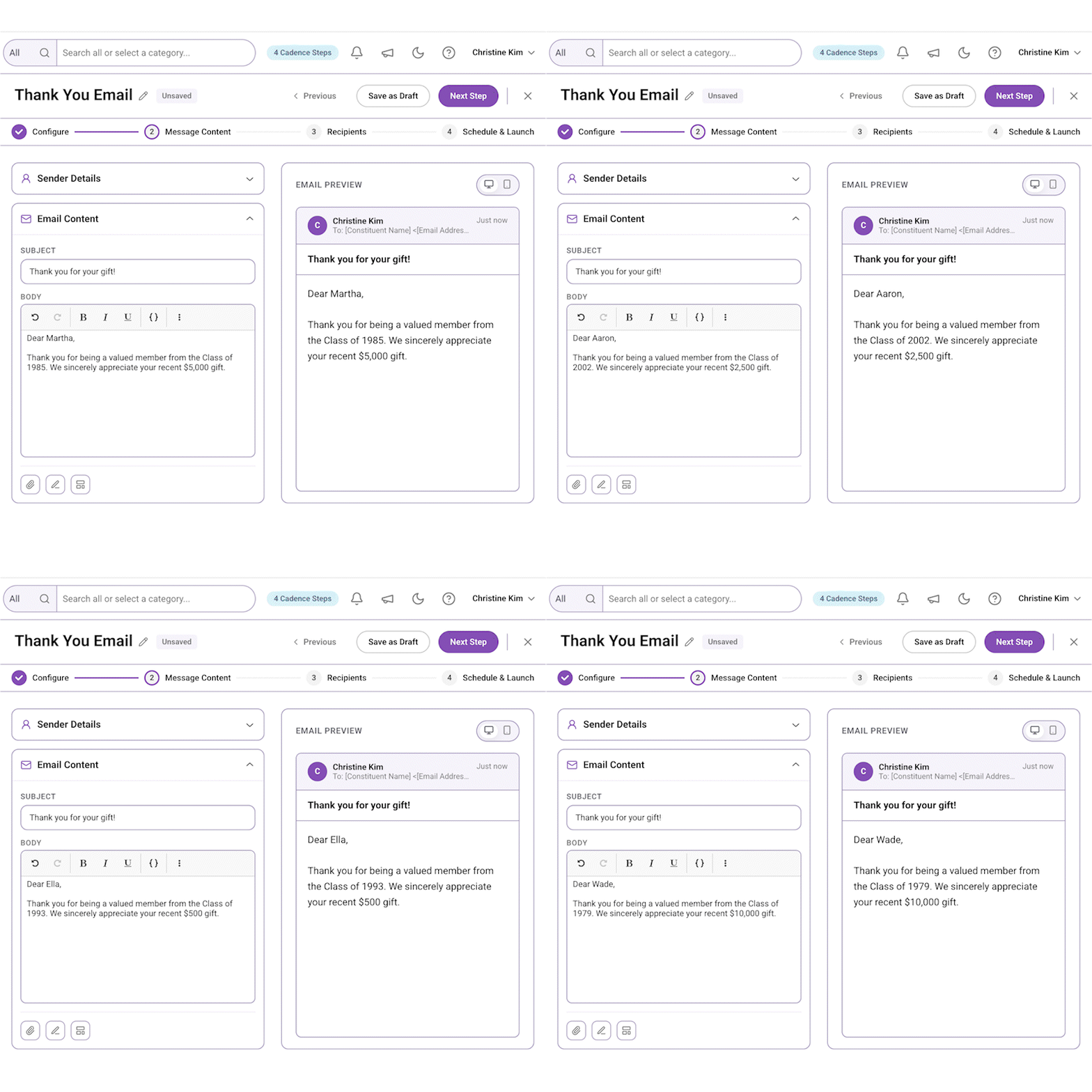
Using this feature, recognizing gifts just became a lot easier. You can even set up a system that automatically puts donors who have given recently into a thank-you cadence (more on how this works below). This ensures that everyone is thanked for their contribution — and, if you add an extra filter for donors that have a high net worth, this cadence ensures you don’t miss any big opportunities.
As Rebecca said: “During a busy time where lots of gifts are coming in, cadences are essential to making sure no one goes unthanked. That little note of individualized appreciation goes a long way.”
The Value of Philanthropy-First Automation
Throughout the above section, you could probably start to see how valuable automation can be in fundraising. But as someone who has been using cadences daily (and training fundraising teams on how to use them, also), Rebecca Nievar was able to point to three clear ways automation is making a positive impact.
Time Saved
As mentioned above, the merge field capability is able to dynamically insert a donor’s information into messages. This means teams can make these automated touchpoints feel individual without spending excessive amounts of time writing emails one by one.
This is a core way Signal’s cadences help fundraisers. Automation and dynamic personalization handle tasks that need to be repeated at scale, giving teams time to handle manual, relationship-building steps when the cadence hands them off.
Speaking of relationship-building, Rebecca also highlighted how cadences show you who is really invested in your mission.
“You can set the cadences up so that you’re spending time with the right people,” she said. “When the conditions for the branches are based on who is engaging or clicking, you’re making sure personal follow-up is happening for constituents who are interested.”
This is another time-saver, because you’re no longer wasting time figuring out who to connect with; they’re already surfaced in your cadence task list.
Knowing What Works
Signal’s cadences have robust reporting metrics featuring customizable goal-setting, so when you’re looking at the analytics, you can clearly understand how a cadence is performing. This is to help fundraisers understand what’s working.
“It’s very easy to A/B test new content and strategies,” Rebecca said. “The data is right there, so you can see how donors are responding. One of my clients was able to see that an email was getting a 50% open rate, which is almost unheard of. With that information, they have a solid understanding of what communications are most effective for their constituents.”
Rebecca’s pro tip for performance analytics lies in a subfeature of cadences called blueprints. Simply stated, it’s a way to share a successful cadence org-wide for your fellow fundraisers to use.
“My clients love the blueprint feature,” Rebecca said. “You can build multiple cadences from the blueprint template, and all the data gets rolled up together. It’s even less manual reporting because it combines it all for you.”
Not Missing New Prospects
One of the biggest benefits of Signal’s cadences (which was alluded to earlier) is the ability for a constituent to be automatically enrolled into a cadence when they reach a certain requirement.
This is called saved search, and it uses Signal’s many data filters to create highly-targeted segments. A simple example is that a cadence pulling from a saved search could be set up to put engaged prospects with high net worth into a relationship-building cadence in hopes of leading to a major gift.
This feature has been very valuable to the fundraisers Rebecca is working with. “You’re not having to pull a new list every week,” she said. “As soon as someone falls within your set data filters, they get put onto your task list, so you can’t miss them.”
That means qualified potential donors don’t get lost in the data; they get presented to you automatically.
You can’t fully replace the human connections that lead to giving, but there are areas of fundraising that benefit from automation. Freeing teams from repetitive tasks means they have more time to do the important work of building relationships.
Signal provides fundraisers the tailor-made automation they need to increase efficiency and dollars raised. It gives every fundraiser — from the managing director to the frontline gift officer — a clear picture of who to engage, an automated workflow, and the intelligence to make every touchpoint feel personal. Less time managing data. More time building the relationships that lead to gifts.