


New 1:many cadences with automated emails, reusable templates, and more in Signal

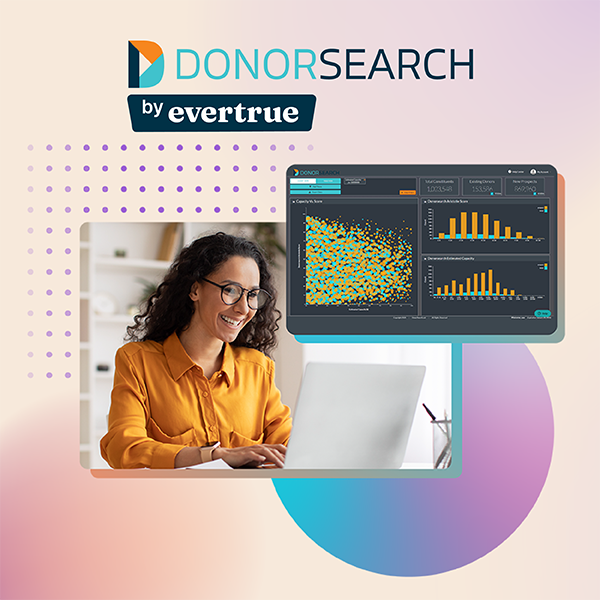
DonorSearch identifies prospects in your database with the capacity and intent to give.

Missed the live session? Watch our on-demand webinars anytime to get guidance from industry experts.

Can Crowdfunding Engage and Retain New Donors?

Remember crowdfunding? Seems like just two years ago it was all anyone wanted to talk about. At every conference, we discussed the benefits and problems associated with micro-philanthropy. Some called it “a must”; others said it was merely “a fad.”

At the time, data wasn’t available to tell the long-term effects of crowdfunding. But now, as we prepare to close the books on FY16 at Cornell Alumni Affairs and Development, the fruits of our crowdfunding labor are becoming evident.

Back in 2014, we at Cornell took a bold—but not unprecedented—step into the world of crowdfunding. Like the Middleburys and Vermonts before us, we believed it would be an effective tool for improving participation, young alumni giving, and retention.

So, how did we do? Let’s take a look:

  • Over $500,000 raised for over 50 projects
  • More than 70% of projects met or exceeded their goals
  • Nearly 4,000 unique donors


This bird’s-eye view of our crowdfunding looks pretty good, but like most high-level metrics, they don’t capture the data that gives senior-level advancement pros goosebumps. Organizations want to know if new donors are being engaged, if dormant donors are coming back to life, and if both groups are coming back for seconds.

We pulled a few more numbers to answer those questions:

  • Nearly 2,000 new donors gave to Cornell crowdfunding
  • 2,179 people who had not given in the past five years gave to a crowdfunding project
  • 1,320 donors were retained via crowdfunding (gave to crowdfunding one year and again the next)
  • 444 donors reactivated by crowdfunding (had made a gift in the past five years, missed a year, then came back via crowdfunding)


Although we’re happy with these numbers, we understand that there is much we can improve upon as we continue to manage student project teams. We know that, as platforms evolve and donor characteristics change, we’ll always be shooting at a moving target.

But we also know that few other fundraising methods give us the opportunity to tell a compelling story, while also showing the direct impact of making a gift. Not to mention, the user experience is typically fantastic—and that’s crucial for online fundraising.

Perhaps I don’t hear as much about crowdfunding any more because so many institutions have implemented it, making it a common weapon in the advancement arsenal. But for those who haven’t tried it—or think the era of crowdfunding is behind us—I encourage you to consider the data I have shared, along with the graphs below.


Crowdfunding remains a powerful fundraising mechanism for many industries. Hopefully, more higher-ed institutions will continue to jump on board and take advantage of it. Just a word of caution: People, not the platform, raise the money. There is no magic wand here; you and your project teams will have to work hard to relay the message and impact to the donors.

The good news is, if you put in the work, crowdfunding can create a lasting relationship between alma mater and a previously unengaged alumni. The crowd is still out there, are you?

Keith Hannon is the associate director for digital innovation for Cornell University Alumni Affairs & Development. You can connect with him on LinkedIn or catch him on Twitter @KeithHannon.
Endowment Spending & Growth Calculator

Enter your fund's current value and adjust the return, spending, and inflation sliders to see how its value in today's dollars changes over time.

$
6.0%
0%12%
4.0%
2%7%
3.0%
0%8%
10
5 yrs25 yrs

Value in 10 years

$0

In today's dollars

$0

4. Continue to Steward Donors

Your relationship with the donors who give to your endowment doesn’t end when you secure their gifts. Because your endowment exists to make a difference in the long term, your supporters will want you to keep in touch about its progress. Ongoing stewardship means keeping donors updated about your endowment’s performance and impact. A report that strengthens your relationship with donors should cover:
  • The fund’s balance at the start and end of the year
  • Spending amounts and allocations
  • How the fund’s returns compare to your investment targets
  • A short narrative detailing the specific impacts the endowment achieved
Create a report for each endowment rather than sending an identical document to everyone. A donor who endowed a scholarship wants to hear about the students it supported, while a donor who endowed a building fund wants updates on construction projects.

5. Upgrade Your Endowment Management Tools

Your endowment management tools should make applying your spending policy across every fund easy. Investing in dedicated software is especially useful as your endowment grows. Handling unitization in spreadsheets might work for a few funds, but as you begin to manage dozens or hundreds of gifts, dedicated software can save your team time spent manually calculating gains and losses for each one.

Why Nonprofits Need Dedicated Endowment Management Software

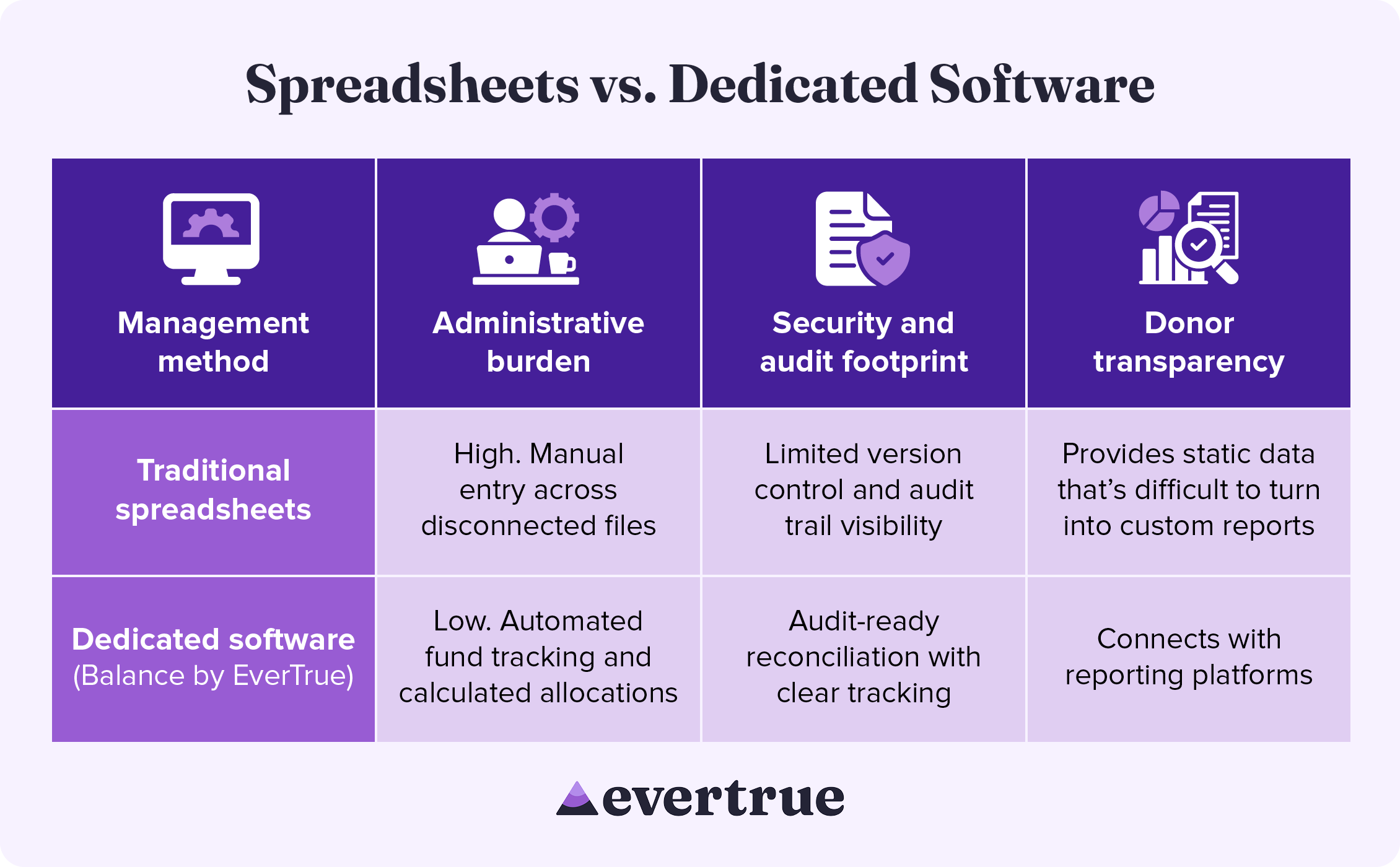
Dedicated endowment software brings accuracy and consistency to every part of the management process, from tracking individual funds to improving security. See how these solutions compare to a spreadsheet-based approach: nfographic table outlining the information below.

How These Methods Compare:

In managing your endowment with traditional spreadsheets, you may see:
  • High administrative burden: Manual entry across disconnected systems
  • Limited security and audit footprints: Reduced version control and audit trail visibility
  • Difficulty with donor transparency: Spreadsheets provide only static data that is difficult to turn into custom results.
By using dedicated software, you are likely to find the following improvements:
  • Lower administrative burden: Automated fund tracking and calculated allocations
  • Enhanced security and audit footprint: Audit-ready reconciliation with clear tracking
  • Greater donor transparency: Connects with reporting platforms
Dedicated endowment management software keeps your organization compliant while freeing up the time your team once spent manually managing spreadsheets.

Secure Your Endowment with Balance by EverTrue

Effective endowment management begins with excellent accounting. Balance by EverTrue handles unitization, applies spending rules, and produces audit-ready reports, so your team can spend more time on the donor relationships that built the fund in the first place.
  • Turn your data into a clear picture of long-term impact. Combine accurate fund accounting with donor reporting that showcases impact.
  • Connect with the tools you already use. Pair Balance with Impact by EverTrue and ODDER by EverTrue to create and deliver compelling digital endowment reports that you can send to donors with ease.
  • Know where every fund stands in real time. Check market values, gift history, and available spending for any fund. Then, share view-only versions with your team, so everyone stays informed.
With Balance, your team can stop spending all your time on manual management and instead add balance to your endowment workflow.

Additional Resources

To learn more about managing your endowment and other ways that technology can help your organization, check out these additional resources: Less stress, higher endowment funds. Discover how Balance provides the organization, security, and accuracy your endowment needs. Request a demo.
0 0 votes
Article Rating
Subscribe
Notify of
guest
0 Comments
Oldest
Newest Most Voted
Inline Feedbacks
View all comments
0
Would love your thoughts, please comment.x
()
x