
















Congratulations! You’ve conducted comprehensive prospect research, analyzed your results, and come up with a prioritized list of potential major donors for your organization. However, you might now be wondering what comes next. How do you reach out to these individuals to convert them into donors?
A donor discovery call is one potential strategy for connecting with prospects and starting the cultivation process. In this guide, you’ll learn all you need to know to conduct these conversations effectively, including:

- Donor Discovery Calls FAQ
- How to Conduct a Donor Discovery Call
- How EverTrue Can Help You Prepare for Donor Discovery Calls

Donor Discovery Calls: Frequently Asked Questions
What is a donor discovery call?
A donor discovery call is a structured phone conversation with a potential major donor that establishes your nonprofit’s connection with them. It sets the tone for your request for support and helps confirm that that prospect is a good fit for your organization’s needs in terms of both their willingness and ability to give. Remember that discovery calls are not a time to ask for a contribution to your nonprofit. Their purpose is to establish a relationship with a potential donor. After this call, you’ll likely spend several months stewarding each donor before soliciting a donation.What happens during a donor discovery call?
After you and your prospect exchange introductions and general pleasantries, most donor discovery calls begin with an explanation of your organization’s work (more on this later!). From there, you’ll ask your potential donor questions about their background and interests, and finally open the door for future engagement. Recommendations for how long a donor discovery call should take vary, but it’s generally agreed that 45 minutes is the maximum amount of time you should spend on the phone with a prospect. If you’ve sent a prospect a message in advance asking if you could call them at a specific time, your call can take longer than if you’re using this opportunity to make first contact with that potential donor (in the latter case, try to keep your call under 15 minutes).Should every potential donor receive a discovery call?
No. Your nonprofit should reserve discovery calls for prospects who you’re hoping will make high-impact contributions—i.e., potential major and legacy donors. You may still call donors who you’d like to make mid-level or recurring gifts, but those conversations likely won’t be discovery calls in the strictest sense since you may ask for a contribution during them and simply decide to call because it’s those supporters’ preferred communication method. Additionally, your discovery call might turn into an in-person meeting or video chat depending on donors’ preferences, and your calls will look slightly different if you’re talking to a brand-new prospect or one who is already in your supporter base. If you aren’t sure whether a potential donor should receive a discovery call, you can take the quick quiz below to figure out the answer!QUIZ: Should You Conduct a Donor Discovery Call?
Choose a specific potential donor on your nonprofit’s prospect outreach list, then answer the questions below based on them.
1. Are you planning to request a major or planned gift from this potential donor?
2. Are you already in the process of cultivating this prospect?
3. Is this prospect currently involved with your organization?
4. Would this donor prefer a face-to-face meeting over a phone call?
How to Conduct a Donor Discovery Call
Now that you know the basics of donor discovery calls, let’s dive into some tips for conducting them.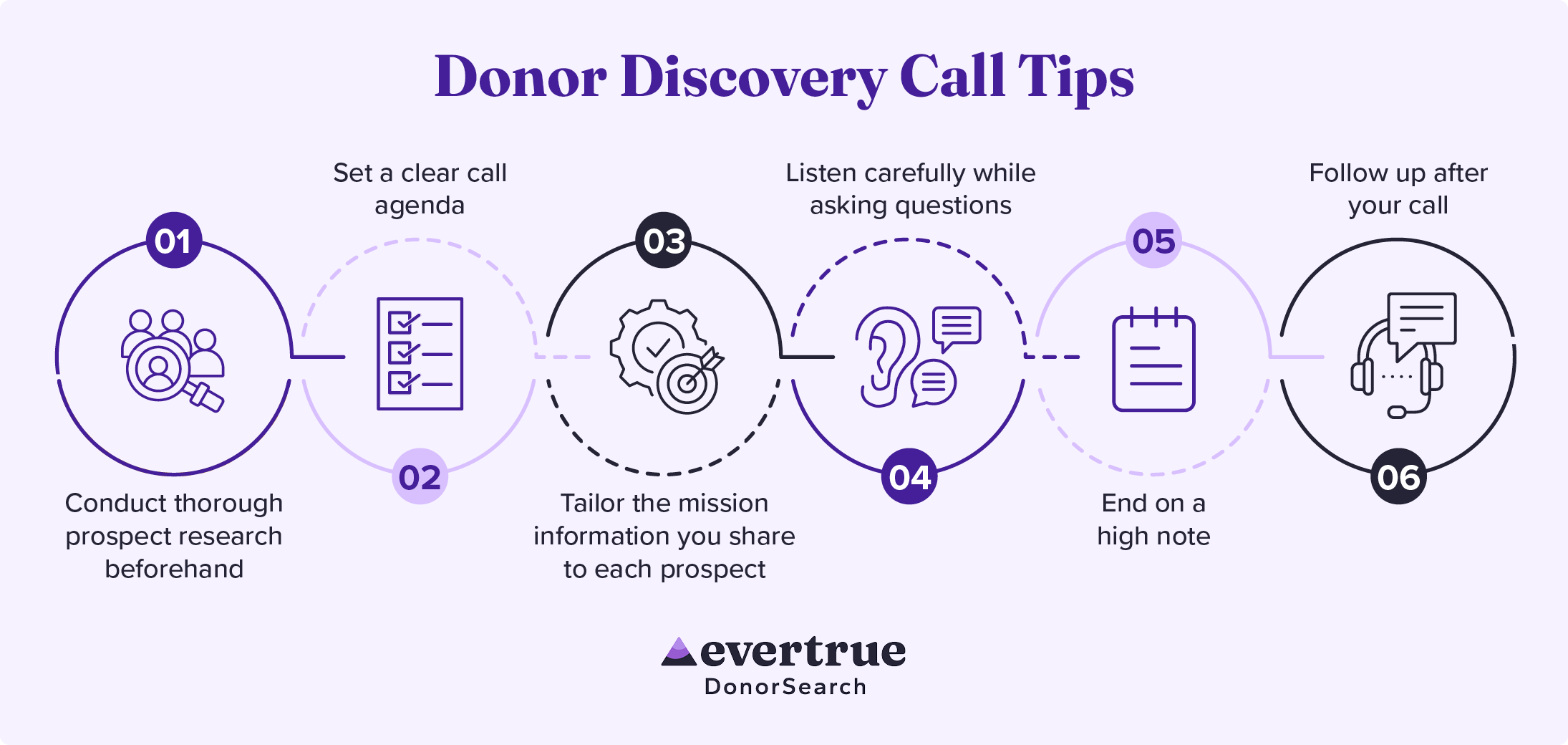
1. Conduct thorough prospect research beforehand
Before your discovery call, learn as much as you can about your prospect so that you know what to talk about and what questions to ask during it. Some data points (also known as markers or indicators of a viable prospect) to look for as you conduct research include: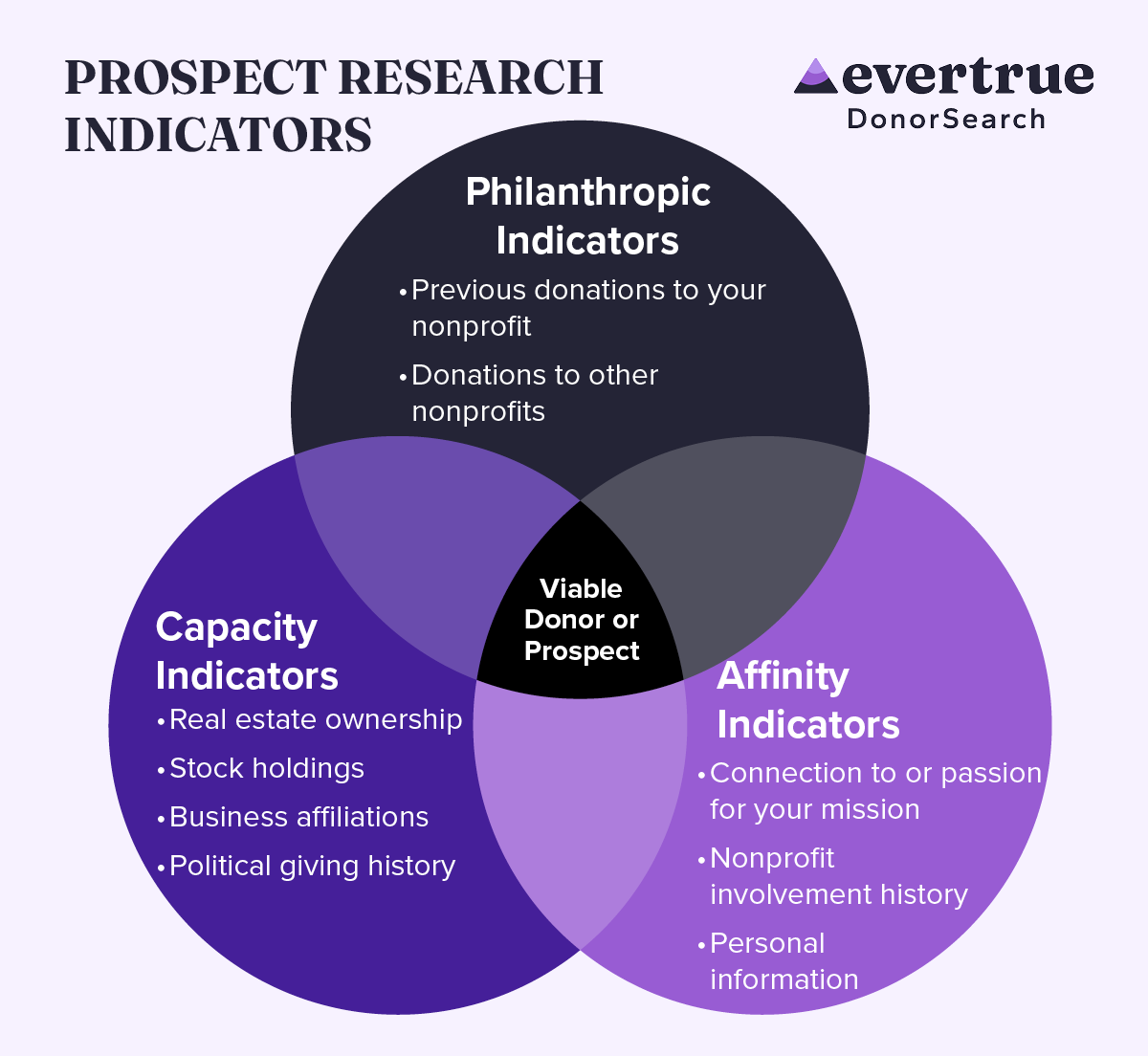
- Capacity (wealth) indicators: Real estate ownership, stock holdings, business affiliations, political giving history
- Philanthropic indicators: Past donations to your organization or other nonprofits
- Affinity indicators: A connection to or passion for your mission, a history of non-donation nonprofit involvement (volunteering, event attendance, board service, advocacy, etc.), other relevant personal information (e.g., interests and values)
2. Set a clear call agenda
The first few minutes of a discovery call set the tone for the rest of your conversation. Start by quickly sharing your plans so it’s clear to your prospect that you respect their time. After introducing yourself and thanking them for taking the time to speak with you, you might say something like, “The goal of this call is for me to get to know what you care about and want to accomplish when it comes to [Organization Name]. I’d also love to tell you a little about the work we’re doing and hope to do with your help. If, at the end of our call, you want to continue our discussion, we can plan to connect again. Does that sound good to you?” If your prospect says yes, proceed into your actual discussion, or you might answer any questions they have first. An introduction like the one above establishes expectations and sets up your call as a conversation, even though your first segment will focus on your nonprofit.3. Tailor the mission information you share to each prospect
Once you’ve set your agenda, start by discussing your nonprofit’s mission and current priorities for just a few minutes. During this segment, make sure to:- Meet every potential donor on their level. Prospects who are already familiar with your nonprofit may be turned off if you discuss basic information, while those who know nothing about your mission will be confused if you don’t. Review each potential donor’s philanthropic and affinity history to get a sense of their knowledge level and plan accordingly. If you can’t tell, prepare for a few different scenarios, then start by asking, “What do you know about [Organization Name]?” and go from there.
- Emphasize individual prospects’ interests. Use what you know about potential donors’ values, hobbies, and past areas of nonprofit support to decide which initiatives to focus on during this segment. For example, a prospect who values education might enjoy hearing about an environmental organization’s program that teaches K-12 students about recycling. Discussing initiatives that align with potential donors’ interests and your funding priorities can help them know how to direct their future gifts.
- Incorporate data and storytelling. Although some people claim to be more persuaded by either logic or emotion, your mission discussion will be most memorable if you include both impact statistics and stories as appropriate. Continuing with the environmental organization example, that prospect would likely be impressed to know that your educational program had reached more than 500 students to date and that it inspired a group of ninth graders to start an annual recycled fashion show at their high school.
4. Listen carefully while asking questions
Outside of your mission discussions, try to spend more time during your discovery calls listening than talking. Devote most of your conversation to asking questions about your prospect, making sure to:- Primarily ask open-ended questions to empower prospects to share what they’re thinking and feeling about your cause.
- Validate all relevant concerns and needs they mention so they know you hear and understand where they’re coming from.
- Work your questions into the conversation naturally and allow plenty of time for discussion in between each one.
5. End on a high note
Always try to leave prospects with a good feeling about your organization and give them the sense that their discovery call was the beginning of a meaningful relationship. Reiterating how philanthropic support has helped your organization further its mission in the past can be helpful on this front, since they can use that information to imagine how they can impact your cause’s future with their generosity. Additionally, summarize what your prospect shared with you during your call to show that you clearly understand what they care about. Doing so will cement the feeling that you heard them and want to work together to make a difference. Or, if your assessment ends up being off-base, repeating it gives your prospect a chance to offer corrections or elaborate on their thoughts.6. Follow up after your call
Within two business days of your discovery call, send them a follow-up message thanking them for their time. Attach any resources you said you’d get back to them with, and propose another interaction with your organization, such as a facility tour or a meeting with another staff or board member whose work aligns with their interests. By following up, you can apply what you learned during your discovery call and create an opportunity to keep that discussion going. Some potential donors may still drop off at this stage, but prompt, personalized follow-ups reduce that risk and provide clear next steps for prospects.How EverTrue Can Help You Prepare for Donor Discovery Calls
Although conducting a donor discovery call is a human-centric process that technology can’t replace, there are some fundraising tools that can make the steps before and after your calls more efficient, including a few of EverTrue’s solutions. For example, our donor engagement platform Signal can alert your team when a potential donor might be receptive to outreach and help you send strategically timed call invitations. EverTrue also acquired DonorSearch, the leading provider of nonprofit prospect research software, in 2025. DonorSearch’s comprehensive approach to prospecting, proprietary database of more than a billion data points, and AI-powered analysis make it a perfect fit for preparing for your donor discovery calls.Final Thoughts
Your first conversation with a prospective donor is the most important one. It’s your first chance to tell an inspirational story about your work and learn about that prospect’s passions and goals so you can develop a cultivation strategy that works for them. Use the tips above to prepare for successful discovery calls, and remember that donor engagement and research tools like those EverTrue provides may be the key to taking your approach from good to great. For more information on donor engagement, check out these resources:- Donor Segmentation: How Organizing Donors Boosts Retention. Explore strategies for grouping donors based on shared characteristics to reach them more effectively.
- Fighting Donor Fatigue: What It Is & How to Prevent It. Learn the truth about the often misunderstood phenomenon of donor fatigue and how to avoid inducing it during discovery calls.
- 14 Fundraising Software Solutions for Nonprofits in 2026. Discover additional tools that can help you cultivate donors at every stage of their journeys with your nonprofit.