














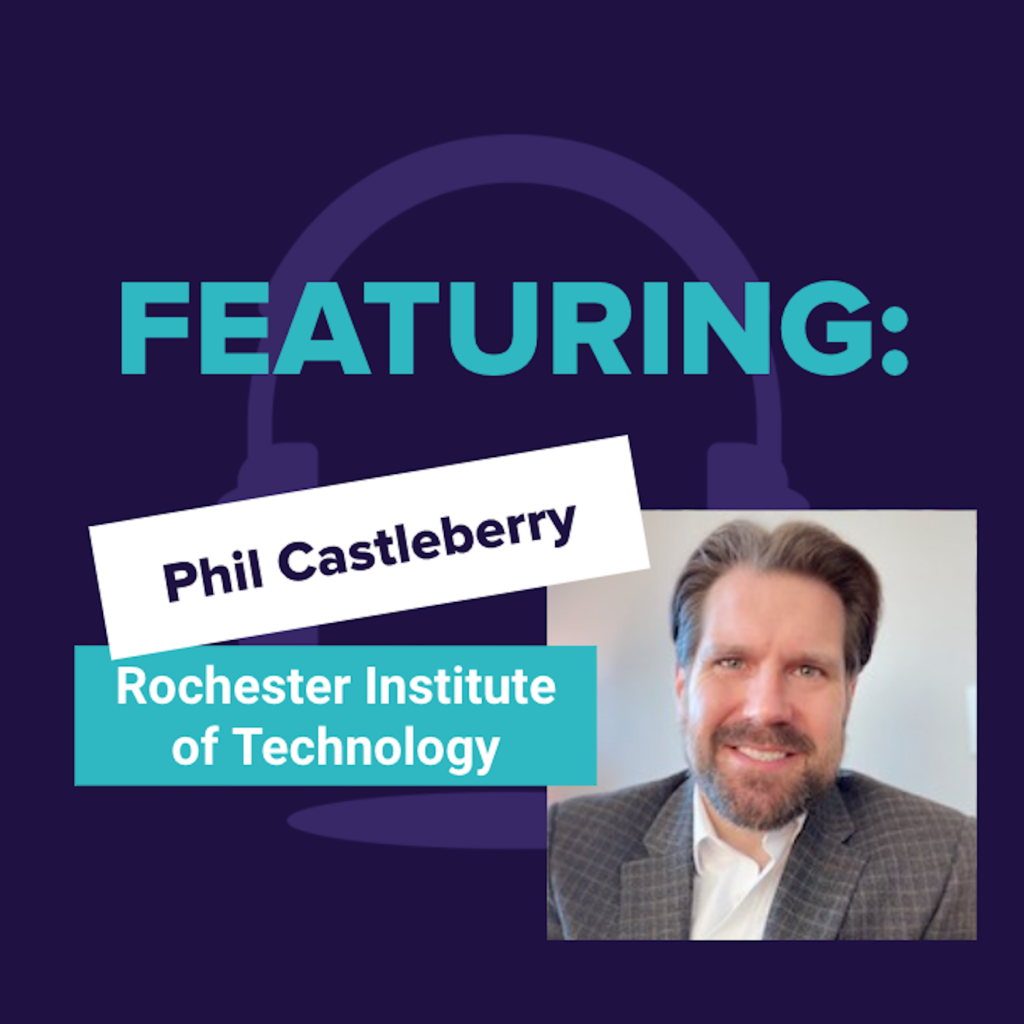
On this episode of the RAISE podcast, Brent chats with Phil Castleberry, Vice President for University Advancement at the Rochester Institute of Technology. Check out this recap featuring our favorite takeaways from the episode, and how to tune in yourself!
Here are some highlights from the episode…
Don’t let prospects fall through the cracks during portfolio transition, even if they are only modest annual donors. If the relationship is transitioned and cultivated well, they just might end up giving multiple 8-figure gifts to the school.
Phil’s first $100K solicitation got rejected. Six months later, the prospect asked Phil, “Do you know why I said no?” The answer resulted in a $1M gift.
Higher ed philanthropy is one of the only industries in the world in which the investment price-point varies from $5 to $500M. Advancement professionals need to be able to tell the impact story at all of those various giving levels. No easy task.
Utilize Zoom for discovery and early cultivation calls, especially international ones. Phil just had a great discovery conversation with an ‘88 alum in Hong Kong who apologized for being disengaged from RIT for 30 years.
Phil has his pilot’s license and could technically fly himself to a donor meeting. Post-pandemic, he just might do it!
About Phil…
Phil Castleberry grew up in a military family that moved around with regularity. Though it was tough moving so much at a young age, in hindsight, it was great preparation for a career in fundraising. Phil is comfortable with being thrown into new environments and having to adapt and quickly find common ground with new acquaintances. Childhood tribulations do pay off!
Phil received a full scholarship to Central Missouri University to complete his undergraduate degree. It was a fully-full scholarship; it included room and board and even covered the cost of his books. But, Phil went through his undergrad years on a full scholarship without once thinking where the money had come from. Phil reflects on the missed opportunity at UCM to build a culture of philanthropy among students.
How can we educate students about philanthropy starting from the moment they receive their financial aid letter? It’s a question we should all work to answer, and one that Phil has top-of-mind at every institution he serves.
While at UCM, Phil served for three years as the president of the Student Housing Organization before running the Student Government Association. From there, he became his fraternity’s representative on the International Fraternity Council, which earned him a seat on the university’s President’s Cabinet. Also at that table during important discussions on the role of Greek life at UCM was the Vice President of Development, who asked Phil if he would be interested in taking a job in the advancement office after graduation.
(Fun fact: Phil’s future wife of 19 years, Tracey, was also at that table.)
So, instead of going to law school, Phil threw himself into the job of Phonathon Manager and learned to run a high-volume, high-performing team of student callers. By necessity, his management, organization, and communications skills boomed. He also learned the thrill of closing a gift and started to envision his future as an advancement professional. (We hear this from many of our podcast guests. The Phonathon Manager position is the gateway drug to a successful advancement career.)
Eventually, Phil decided he wanted to leave Warrensburg and head for Kansas City. Thanks to a connection he had made at a CASE District VI conference, he got word of a job opportunity at William Jewell College. He interviewed for the position on a Thursday morning, received a job offer that same evening, and accepted the job by Friday morning.
Imagine that hiring timeline?!
Phil has worked his way from Phonathon Manager to Vice President of Development, and like many folks in the advancement space, in order to move up, he moved around. Reflecting on this, he discusses how there should be a path of upwards mobility for gift officers that doesn’t involve managing other staff. (Because, as we all know, the skills needed to be a good fundraiser don’t necessarily translate to the skills needed to be a good manager.) Phil and Brent also compare the salaries of other revenue-generating university employees such as athletic coaches or trainers, and how MGO salaries should be more reflective of the funds they bring into the university.
(Just the tip of the iceberg of the conversation around MGO compensation.)
On this episode of the podcast, Phil shares some really helpful stories from his broad and deep advancement experience, including his most transformative solicitation; how offering prospects a menu of impact opportunities is the right approach to identifying their capacity; and how the transition of a portfolio when a gift officer leaves the institution is vitally important. If it’s done right, you might have several 8-figure gifts on your hands. If it’s not, there could be millions of dollars left on the proverbial table.
On this episode of the podcast, Phil talks about how much relationships matter. The connections at CASE conferences, the early bosses, the quick brushes with the VP of Development, the sorority president sitting across the boardroom table, the student callers at the Phonathon center; all of these connections compound over time and make for a deep pool of professional and personal relationships that provide many layers of support over the course of a career.
We invited Phil to the podcast because he is one of the relatively few advancement leaders that are sharing their voices and stories on LinkedIn. Check him out.
P.S. The Rochester Institute of Technology is hiring! Thanks to Phil’s leadership, they are building a regional fundraising program and there will be about fifteen positions posted over the next six months. Keep an eye on their job postings, and connect with Phil to learn more.