











New 1:many cadences with automated emails, reusable templates, and more in Signal

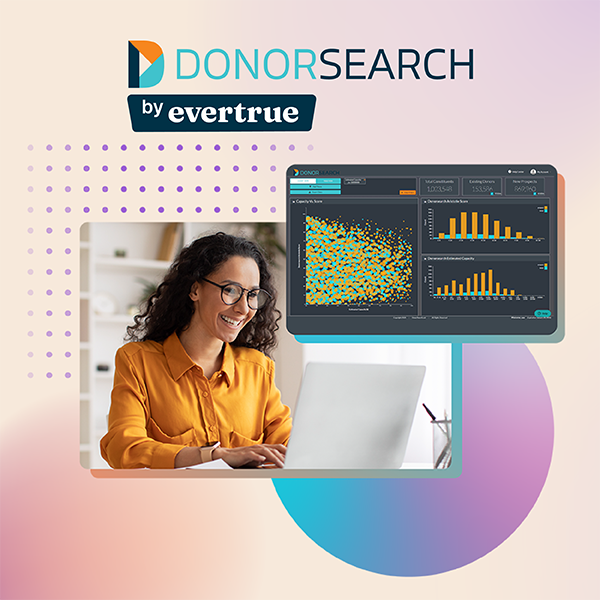
DonorSearch identifies prospects in your database with the capacity and intent to give.

Missed the live session? Watch our on-demand webinars anytime to get guidance from industry experts.

Score! A Book Review

Score! is hot off the presses and offers an excellent introduction to analytics and data-driven decision making in the world of advancement. Authors Kevin MacDonell and Peter Wylie bring years of experience and a candor that makes the book not just easy to read but also enjoyable. Long story short, you should read it!

Before you buy your own copy here, let me take you through what I liked about—and what I’d add to—the book’s three parts:


PART ONE

The overwhelming takeaway in Part One is the importance of building a culture of analytics (which is also, not surprisingly, the title of Chapter Two). The authors do an excellent job describing the current landscape of the advancement industry, highlighting its strengths and weaknesses.

The best analytics and insights in the world are worthless without buy-in from every level of the organization. Not everyone has to be a math genius, but everyone should understand and appreciate the value of numbers. Somebody or multiple bodies on your team should know enough to be dangerous. S/he should ask tough questions and hold everyone accountable.  After all, if you can’t align around seeking ROI, then what’s the point?

One thing I’d add:

For advancement, it’s not just about building a culture of analytics; you should be building a culture of adaptability. Learning to not just accept change is hugely important, but capitalizing on that change could be the bigger fish that needs frying in advancement.


PART TWO

Part Two describes the various skills and talents seen in some archetypes (e.g. the authors) and lays out strategies for developing or acquiring those talents. The upshot is that almost anyone can learn this stuff well enough to be a real contributor. All you need is an intellectual curiosity and the opportunity to succeed.

But here’s where I would pick up where the authors left off:

Peter and Kevin talk a lot about a supposed lone wolf; the battle scars of their own journeys show through. While they do hint at the complementarity of their own personalities and skill sets within their own duo, they don’t speak enough about the importance of building a team.

The reality is, it’s really hard to find a single person with the right potpourri of skills and talents needed. By the way, it’s also risky! In software development, we often worry about bus factor, i.e. what if that person leaves or even worse, if they aren’t very good and they stay?!

Of course, the flip side is you can’t afford to hire five new people tomorrow. But all team members don’t all need to be 100% dedicated to “The A-Team” (“A” is for “Analytics”!) —but maybe a team leader can recruit 25% of the resident Powerpoint expert’s time and 25% from your favorite in-house annual fund expert and contract some of the data wrangling. Can you afford to build an insights and analytics team of 2 ½?

The real question is, can you afford not to?


PART THREE

Part Three demonstrates the value of basic scoring by walking through some simple case studies. There are compelling examples, including scoring potential annual fund givers using data you almost certainly already have. It’s a great introduction. Everyone should absolutely Grok these chapters.

Where I beg to differ:

The authors present fair and pragmatic views on working with traditional vendors. But with that, I can’t help but observe an undertone of undervaluing external data. Whether considering governmental data or the social data that pervades our daily lives, this external data cannot be made a second-class citizen. We live in a world where we no longer “own” all the data… and I don’t think there’s any going back.

No model or score is (even close to) perfect.  But we can all agree higher-quality inputs lead to higher-quality outputs.  Schools are really good at collecting data about their constituents up until graduation day. This book demonstrates why this data is valuable.  But after graduation, our precious young leave the data nest.

Using your own data vs. external data is not an either/or choice.  The only right choice is all-of-the-above.
 

Endowment Spending & Growth Calculator

Enter your fund's current value and adjust the return, spending, and inflation sliders to see how its value in today's dollars changes over time.

$
6.0%
0%12%
4.0%
2%7%
3.0%
0%8%
10
5 yrs25 yrs

Value in 10 years

$0

In today's dollars

$0

4. Continue to Steward Donors

Your relationship with the donors who give to your endowment doesn’t end when you secure their gifts. Because your endowment exists to make a difference in the long term, your supporters will want you to keep in touch about its progress. Ongoing stewardship means keeping donors updated about your endowment’s performance and impact. A report that strengthens your relationship with donors should cover:
  • The fund’s balance at the start and end of the year
  • Spending amounts and allocations
  • How the fund’s returns compare to your investment targets
  • A short narrative detailing the specific impacts the endowment achieved
Create a report for each endowment rather than sending an identical document to everyone. A donor who endowed a scholarship wants to hear about the students it supported, while a donor who endowed a building fund wants updates on construction projects.

5. Upgrade Your Endowment Management Tools

Your endowment management tools should make applying your spending policy across every fund easy. Investing in dedicated software is especially useful as your endowment grows. Handling unitization in spreadsheets might work for a few funds, but as you begin to manage dozens or hundreds of gifts, dedicated software can save your team time spent manually calculating gains and losses for each one.

Why Nonprofits Need Dedicated Endowment Management Software

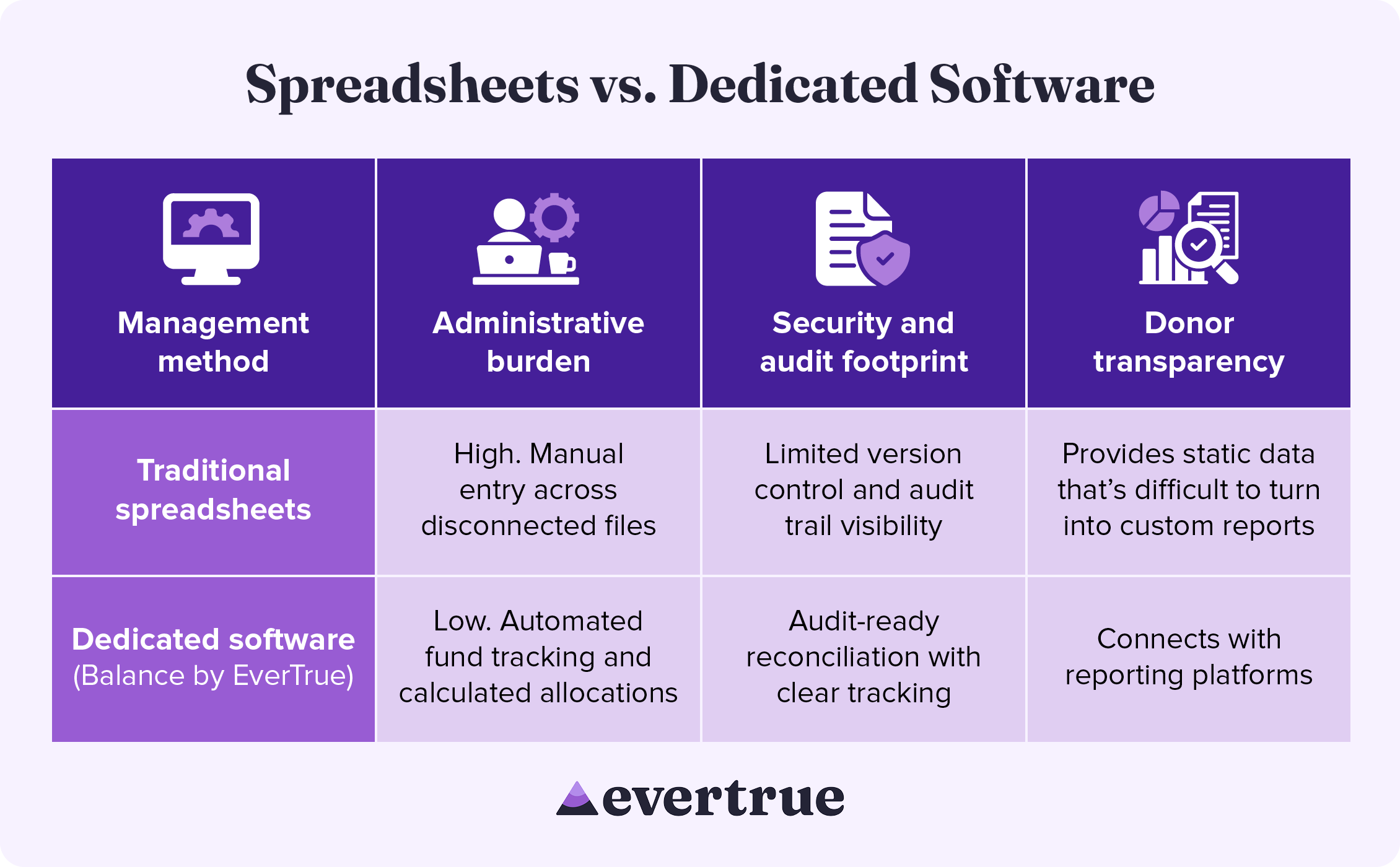
Dedicated endowment software brings accuracy and consistency to every part of the management process, from tracking individual funds to improving security. See how these solutions compare to a spreadsheet-based approach: nfographic table outlining the information below.

How These Methods Compare:

In managing your endowment with traditional spreadsheets, you may see:
  • High administrative burden: Manual entry across disconnected systems
  • Limited security and audit footprints: Reduced version control and audit trail visibility
  • Difficulty with donor transparency: Spreadsheets provide only static data that is difficult to turn into custom results.
By using dedicated software, you are likely to find the following improvements:
  • Lower administrative burden: Automated fund tracking and calculated allocations
  • Enhanced security and audit footprint: Audit-ready reconciliation with clear tracking
  • Greater donor transparency: Connects with reporting platforms
Dedicated endowment management software keeps your organization compliant while freeing up the time your team once spent manually managing spreadsheets.

Secure Your Endowment with Balance by EverTrue

Effective endowment management begins with excellent accounting. Balance by EverTrue handles unitization, applies spending rules, and produces audit-ready reports, so your team can spend more time on the donor relationships that built the fund in the first place.
  • Turn your data into a clear picture of long-term impact. Combine accurate fund accounting with donor reporting that showcases impact.
  • Connect with the tools you already use. Pair Balance with Impact by EverTrue and ODDER by EverTrue to create and deliver compelling digital endowment reports that you can send to donors with ease.
  • Know where every fund stands in real time. Check market values, gift history, and available spending for any fund. Then, share view-only versions with your team, so everyone stays informed.
With Balance, your team can stop spending all your time on manual management and instead add balance to your endowment workflow.

Additional Resources

To learn more about managing your endowment and other ways that technology can help your organization, check out these additional resources: Less stress, higher endowment funds. Discover how Balance provides the organization, security, and accuracy your endowment needs. Request a demo.
0 0 votes
Article Rating
Subscribe
Notify of
guest
0 Comments
Oldest
Newest Most Voted
Inline Feedbacks
View all comments
0
Would love your thoughts, please comment.x
()
x