











As a nonprofit organization, maintaining diverse, reliable revenue streams is key to supporting mission-critical work. Endowments provide the funding needed for long-term sustainability, helping sustain new programs and initiatives, stabilize your organization during economic downturns, and reduce reliance on unpredictable revenue sources.
Endowments are pools of donated money that, rather than spending outright, organizations invest in order to generate income long-term. For instance, Harvard University’s endowment is nearly 400 years old and totaled $56.9 billion in 2025. Because endowments can be so massive, there are special regulations that nonprofits must follow.
The Uniform Prudent Management of Institutional Funds Act (UPMIFA) governs how these funds are managed. Nonprofits with endowments must understand the rules outlined in UPMIFA to ensure they handle these funds properly.
In this guide, we’ll explore the basics of UPMIFA and break down its specific policies:

UPMIFA FAQ
What is UPMIFA?
UPMIFA is a law that governs how nonprofits manage their endowment funds, including specific regulations on investing, spending, and navigating donor restrictions. This law replaced its predecessor, the Uniform Management of Institutional Funds Act (UMIFA), in 2006 and was then adopted on a state-by-state basis.
What is the purpose of UPMIFA?
UPMIFA was created to replace UMIFA and provide more specific guidance related to investing and spending policies for endowments. It includes revised rules that promote a total return approach to both investing and spending. It encourages organizations to invest in a way that preserves the purchasing power of the endowment principal and spend in a way that aligns with the donor’s intentions.
UPMIFA also removed the previous rigid spending floor. Under UMIFA, organizations were not allowed to spend from endowments that had fallen below their historical dollar value (HDV), or the original amount of money first given to the fund. However, this became a problem during times of economic crisis and prevented organizations from tapping into much-needed endowment funds.
UPMIFA removed this rigid rule and allows organizations to spend from underwater endowments, provided they determine it is prudent to do so based on factors like the duration of the fund, general economic conditions, and inflation.
Does UPMIFA only apply to endowments?
UPMIFA applies specifically to donor-restricted endowments (endowments where spending is dictated by the donor). This applies to:
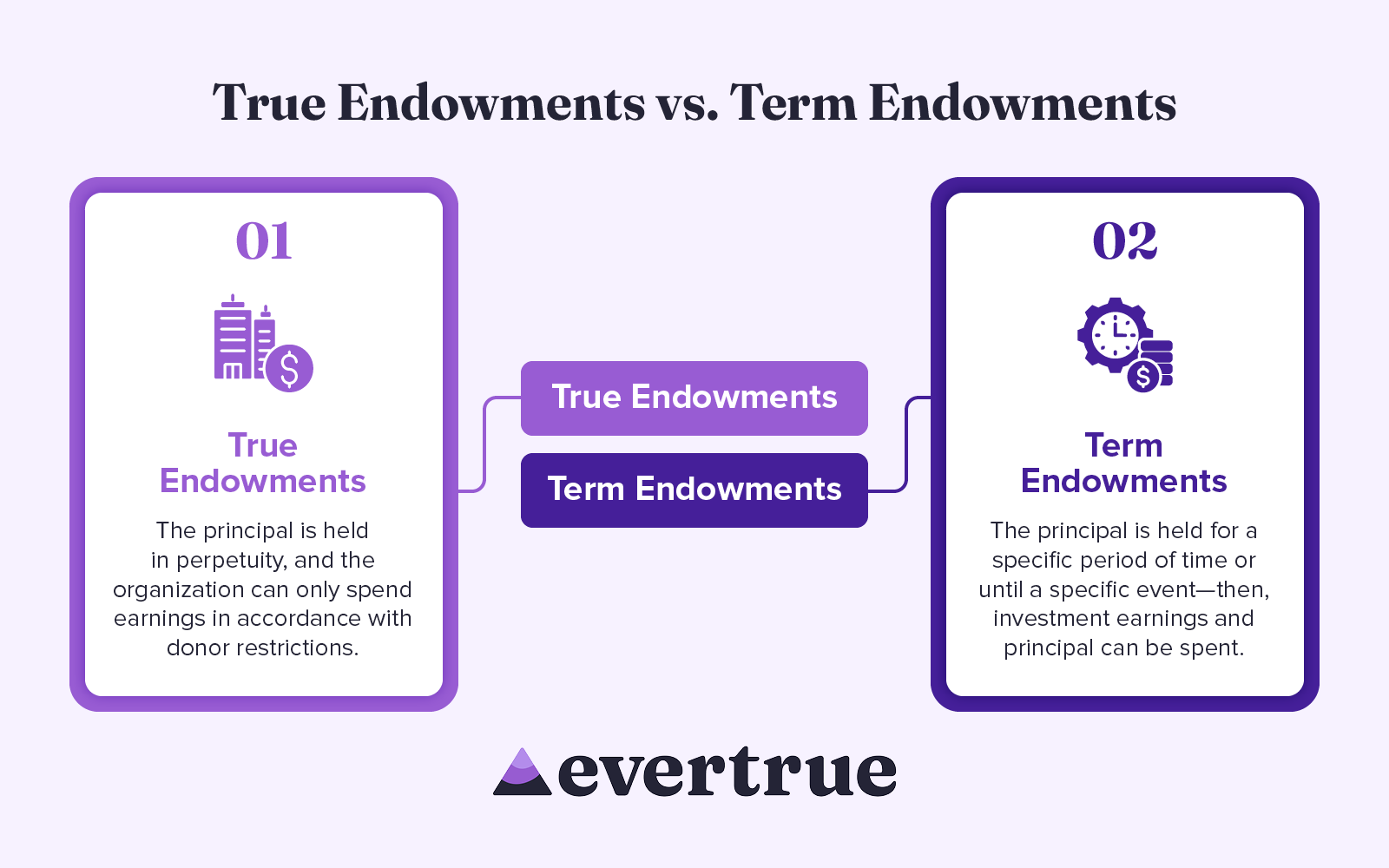
- True endowments: The principal is held in perpetuity, and the organization is only permitted to spend earnings from investments in accordance with the donor’s restrictions.
- Term endowments: The principal is held for a specific period of time or until a specific event occurs (e.g., a 20-year anniversary). After the term ends, the investment earnings and principal can be spent according to donor stipulations.
However, UPMIFA does not apply to quasi-endowments. These endowments are created by an internal board designation rather than from donor gifts, and they do not have donor restrictions. The funds can be designated for another use at any time, meaning they do not fit within UPMIFA’s legal framework.
UPMIFA also does not apply to short-term investments, annual funds, or donor-restricted funds that are not meant to be held in perpetuity (i.e., standard major gifts).
What organizations does UPMIFA apply to?
UPMIFA applies to all nonprofit organizations, including churches and religious organizations, as well as private foundations, trusts, and public entities.
UPMIFA is not a federal law and was adopted on a state-by-state basis. As of 2026, UPMIFA is law in 49 U.S. states, the District of Columbia, and the U.S. Virgin Islands. Pennsylvania and Puerto Rico have yet to adopt UPMIFA.
UPMIFA’s Policies Explained
1. General Fund Management
UPMIFA dictates that nonprofits must manage funds to the best of their abilities and with respect to donors’ restrictions. This means considering the purpose and restrictions of each fund when spending and making investment decisions.
Typically, your organization’s board is responsible for managing and investing endowment funds, but this can vary from nonprofit to nonprofit. It’s important to keep financial data secure and accurate while still allowing for collaboration across your team. For example, major gift officers should have context about your endowment’s purpose and strategy so they can effectively seek endowment gifts.
To properly manage endowed funds, your organization needs an endowment accounting tool rather than simple spreadsheets. These platforms can:
- Promote efficiency by streamlining accounting and reporting tasks
- Protect sensitive information via a secure platform
- Enhance transparency by providing limited, view-only access to users who aren’t decision makers
These measures ensure team members can access the information they need about your endowment without accessing sensitive data related to major donors and investments.
2. Spending
UPMIFA guides nonprofits to spend funds based on a prudence standard that is less strict than the rigid floor set by UMIFA. However, it still requires that nonprofits create a spending policy that they review and update regularly. This policy should consider donors’ restrictions for the fund and the organization’s needs and priorities.
UPMIFA outlines seven key factors to consider when creating spending policies:
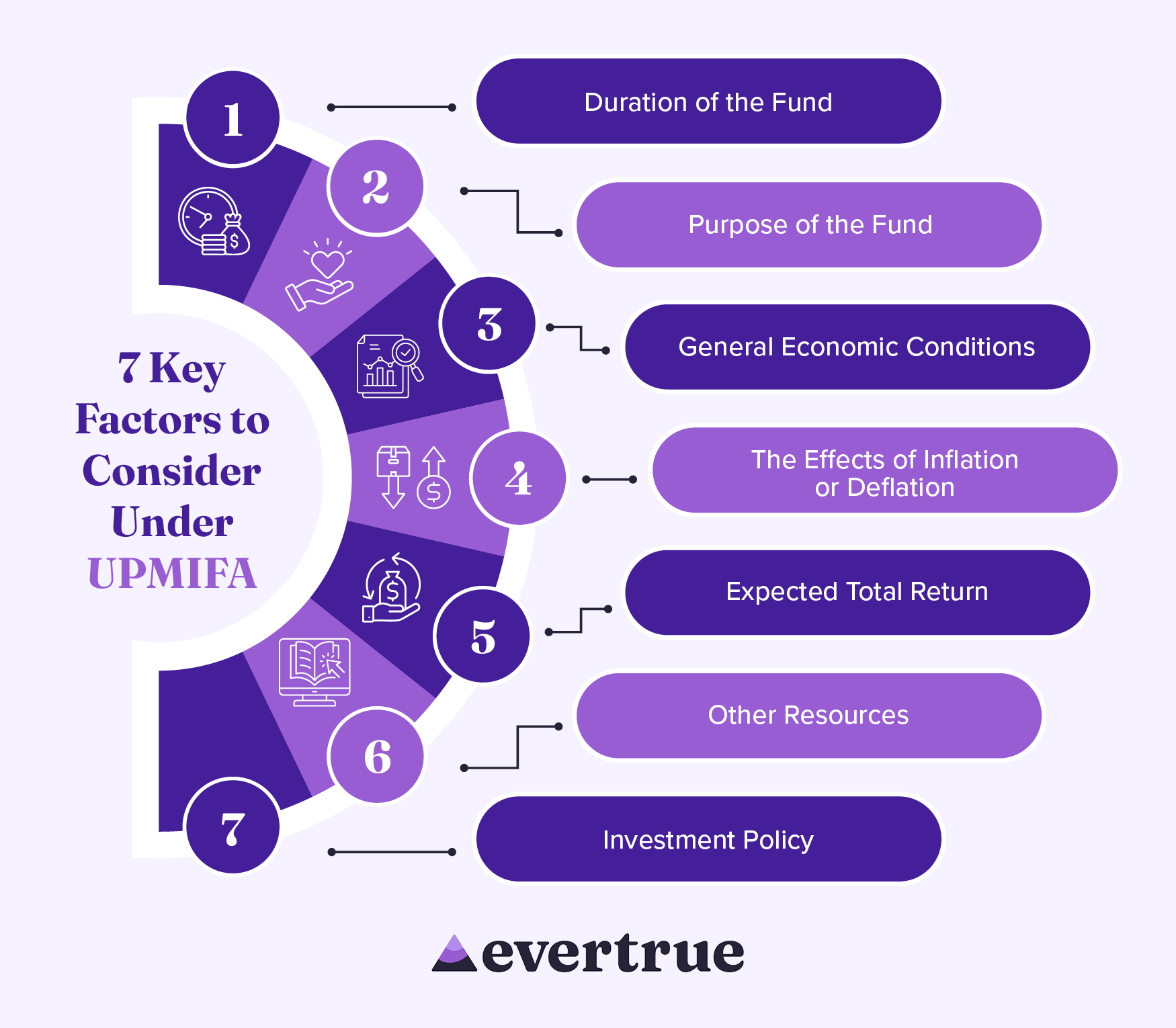
- The duration of the fund: Is it meant to be held in perpetuity or only for a certain time period?
- The purpose of the fund: What did the donor want their gifts to accomplish?
- General economic conditions: What is the market doing right now, and does the spending policy provide enough flexibility to accommodate fluctuations?
- The effects of inflation: Does the policy take inflation into account? If inflation were to change, how would spending shift?
- Expected total return: What is the expected total return in the long term? Depending on the duration of the fund, how does current spending impact long-term returns?
- Other resources: What other resources does the nonprofit have? Does the policy have a plan in place in case the organization must increase spending?
- The investment policy: Does the investment policy support the spending policy? Is there a chance returns will fall short?
Include a plan for handling scenarios like underwater spending that considers the factors listed above. While this is allowed under UPMIFA to help nonprofits with strained finances overcome those challenges, it will ultimately limit the endowment’s ability to grow. Additionally, some states added a provision to UPMIFA that limits this spending to 7% of the principal unless the organization can show that the spending meets the UPMIFA standards of prudence.
3. Investing
Under UPMIFA, nonprofits must develop a written investment policy that includes the following:
- A risk management strategy: Outline your nonprofit’s tolerance for volatility and measures you will take to protect the fund’s long-term growth. Include diversification requirements to protect the fund from market failures. This approach should consider your entire portfolio, not individual assets in isolation.
- A clear process for monitoring investments: UPMIFA requires that boards exercise ongoing oversight of investments. Identify who is responsible for overseeing investments and how often they must report on them.
- Guidelines for changing investments: Also known as a rebalancing policy, these guidelines dictate when and why the organization will sell or buy assets.
Diversification is allowed—and even encouraged—under UPMIFA, meaning nonprofits can invest in multiple asset types. However, these investments must align with your nonprofit’s mission and donors’ values. For example, an animal shelter would avoid investing in a beauty product conglomerate that performs animal testing.
Stay aware of general economic conditions and inflation when making investment decisions. Consider whether investments are prudent in the current and projected economic landscape, and aim to earn yields that will cover inflation increases.
4. Reporting
Nonprofits are required to create annual financial reports for their endowments and provide them to their state’s regulatory body upon request (typically, UPMIFA is enforced by the state’s attorney general). These reports should include:
- The fund balance at the beginning and end of the year
- A record of contributions and investment returns
- Spending policies
- Disclosure of underwater endowments, including an explanation and any spending from underwater funds
Organizations also have to submit to an independent audit each year. During this process, a certified public accountant (CPA) will examine your nonprofit’s financial records to ensure compliance with UPMIFA and Generally Accepted Accounting Principles (GAAP).
Additionally, while not required under UPMIFA, don’t forget to report to donors to keep them in the loop about their endowment. EverTrue’s solutions, ODDER and Impact, transform your financial data into compelling, personalized endowment and annual fund reports.

With ODDER, nonprofits can work with a professional support team to build fully-branded digital presentations that donors can access with a direct link. These resources help form connections with major donors and present your organization as professional and trustworthy. Add a human touch with tailored messaging and the option to add a personalized video along with PDF reports.
5. Delegation
Your organization can manage its endowments independently or delegate management to an external agent. This agent is the person who is formally in charge of handling the endowment.
Nonprofits cannot be held legally responsible for the actions of this agent. If the organization hands control of the endowment over to a financial investor who makes investments that go against donors’ wishes, the organization will not be held liable.
However, while there aren’t legal consequences for these scenarios, this could still harm donors’ trust in your nonprofit and lead to financial losses. Be careful about who you give access to your endowment, and exercise oversight by establishing the scope of the delegation and regularly reviewing the agent’s actions.
For other members of your team who need to access endowment fund information, put measures in place to protect financial data and funding. Using endowment management tools with permissions allows you to share information via view- or report-only views so users can access data without being able to make changes.
6. Changing Donor Restrictions
Organizations are allowed to modify restrictions for how an endowment is spent or invested if they receive written permission from the donor and notify the state’s attorney general. This often occurs if a donor restriction becomes impracticable or impossible to follow. For example, a donor may intend for funds to be used for a specific program that has since been discontinued due to shifting community needs.
If you need to modify donor restrictions, try to work with the donor first. Validate the original restrictions, but explain what changes have occurred since and why you now need to take a different approach. Present any data that supports the need for the change, and come prepared with a new plan. Be ready to address the donors’ feedback and collaborate on a path forward that both parties are satisfied with.
In the rare event that a donor is unwilling to modify restrictions that are unlawful, wasteful, or impossible, nonprofits can go through the court system to modify a management or investment restriction. Avoid this if possible to maintain a positive relationship with donors.
The Top Endowment Management Tool: Balance by EverTrue
UPMIFA provides detailed guidelines to help your nonprofit effectively manage and sustain its endowment fund. These guidelines and frameworks are an essential part of your toolkit, but you’ll also need specialized technology to support the fund accounting lifecycle from unitization to reporting.
This is where Balance comes in.
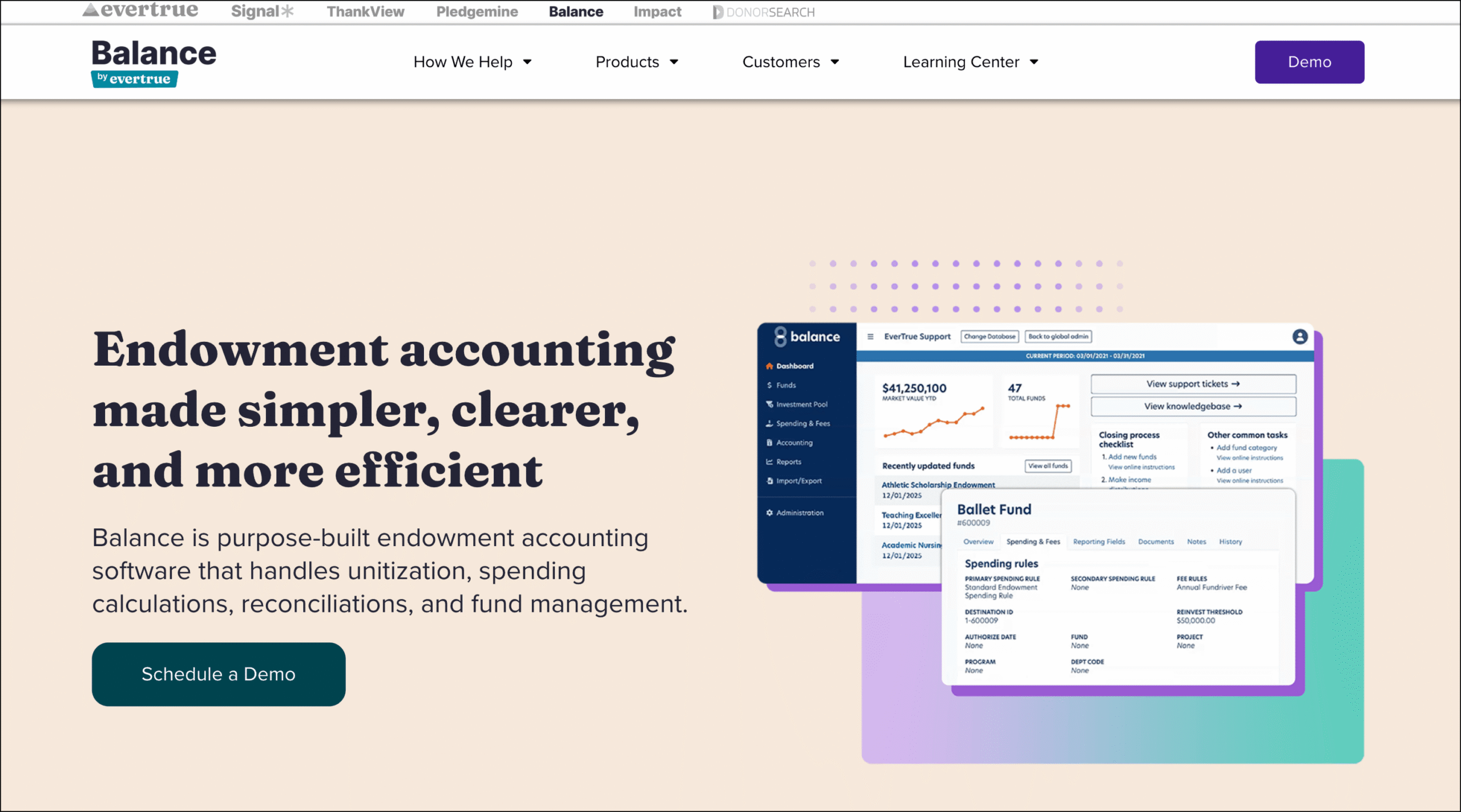
Balance by EverTrue is purpose-built endowment accounting software designed to manage each phase of the endowment lifecycle, all while helping you maintain compliance with UPMIFA.
Improve your ability to balance your nonprofit’s needs, donor restrictions, and your team’s time and resources with these top features:
- Endowment Accounting & Unitization: Automate unitization to calculate and track units, ensuring each fund receives an accurate share of investment gains and losses without the need for complicated spreadsheets. Spending logic will automatically be applied across all endowed funds, including market-value baked, hybrid, inflation, and custom policies.
- Fund Activity & Structure Management: Balance provides a centralized system to manage the entire endowment lifecycle, helping you maintain clear records of gifts, transfers, fees, and more. This allows you to facilitate the integrity of complex fund hierarchies while still adhering to donor restrictions.
- Reconciliation & Audit Support: Review balances, address differences, and prepare data for audits without adding hours of manual labor to your team’s plate.
- Reporting, Access, & Oversight: Gain real-time visibility into market values, historical gifts, and available spending through fund-level reporting. These reports provide the clarity needed to honor donor intent and make sustainable funding decisions. Control access by sharing restricted view-only reports with other teams and stakeholders.
EverTrue also offers annual fund and endowment reporting tools, Impact and ODDER, to enhance your donor stewardship efforts. With these tools, transform your endowment data into compelling branded reports that show donors that their gifts are being used effectively and responsively, building trust and credibility.
Additional Fundraising Resources
If managed right, endowments provide a sustainable funding that can support your nonprofit’s programs indefinitely. However, managing these funds responsibly and in accordance with donor restrictions and UPMIFA is imperative. Understanding UPMIFA regulations and how they impact your decision-making process is just the first step in this process, and you’ll also need the right technology.
Reach out to our team at EverTrue to learn how Balance can help you optimize and streamline endowment accounting.
To learn more about using technology to enhance your nonprofit’s daily operations, check out these additional resources:
- Why Your Nonprofit Needs an Endowment Accounting Tool. Dig deeper into endowment accounting basics and uncover the unique benefits a specialized endowment accounting can offer.
- 14 Fundraising Software Solutions for Nonprofits in 2026. Explore the top 14 fundraising solutions to help your nonprofit drive more revenue from diverse sources.
- 10 Donor Management Software Solutions for Nonprofits. Cultivate stronger donor relationships with these donor management software solutions.
