













Each one of your nonprofit’s donors is an individual, with a unique relationship to your organization. But actually writing personalized messages to every donor isn’t practical… or is it?
Donor segmentation ensures your nonprofit’s outreach and marketing efforts align with donors’ personal interests, increasing engagement, retention, and gifts.
In this guide, we’ll define donor segmentation and give you the actionable strategies you need to put it to work. We’ll cover:
- What is Donor Segmentation?
- Donor Segmentation Benefits
- Types of Donor Segmentation
- Putting Your Donor Segmentation Strategy into Action
- The Future: Exploring AI-Driven Segmentation
- Additional Donor Management Resources
What is Donor Segmentation?
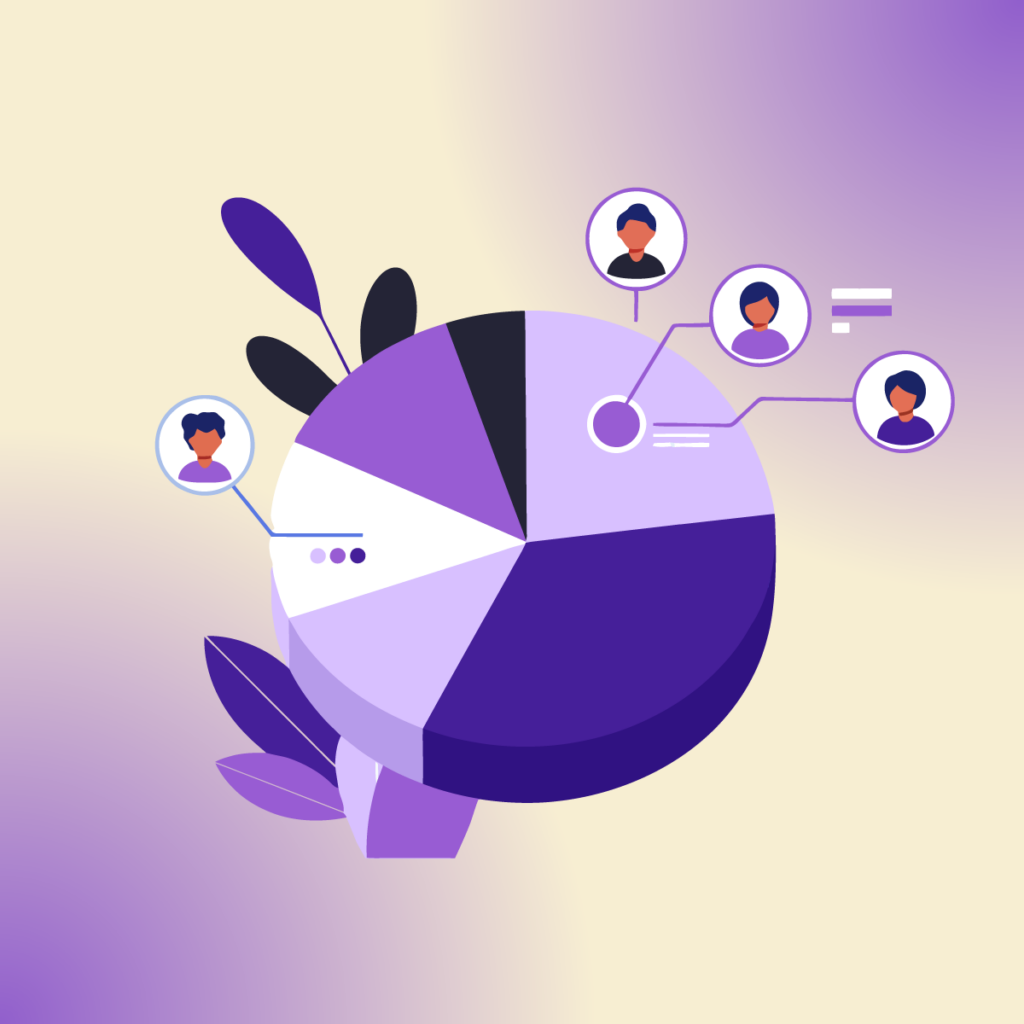
Donor segmentation is the process of grouping donors based on shared characteristics, such as common interests, giving levels, locations, communication preferences, and other traits relevant to your nonprofit. Segmenting donors allows your organization to personalize content at scale by reaching out to groups rather than individuals.

Donor Segmentation Benefits
Attentive’s 2025 Consumer Trends Report found that 81% of consumers ignore irrelevant marketing messages, and 71% are frustrated by them. Segmentation allows nonprofit marketers to send each donor relevant information that they actually want to engage with.
Think about it. Would you be more likely to respond to an email asking you to “Give to our 2026 Conservation Campaign now!” or one that says “[Your Name], your past $100 gift to our annual Conservation Campaign made a major difference for local species in our community. Will you give $150 right now to grow your impact even further?” You can see how much better segmented messages are at grabbing attention than generic messages.
Donor segmentation offers the following benefits to nonprofits:
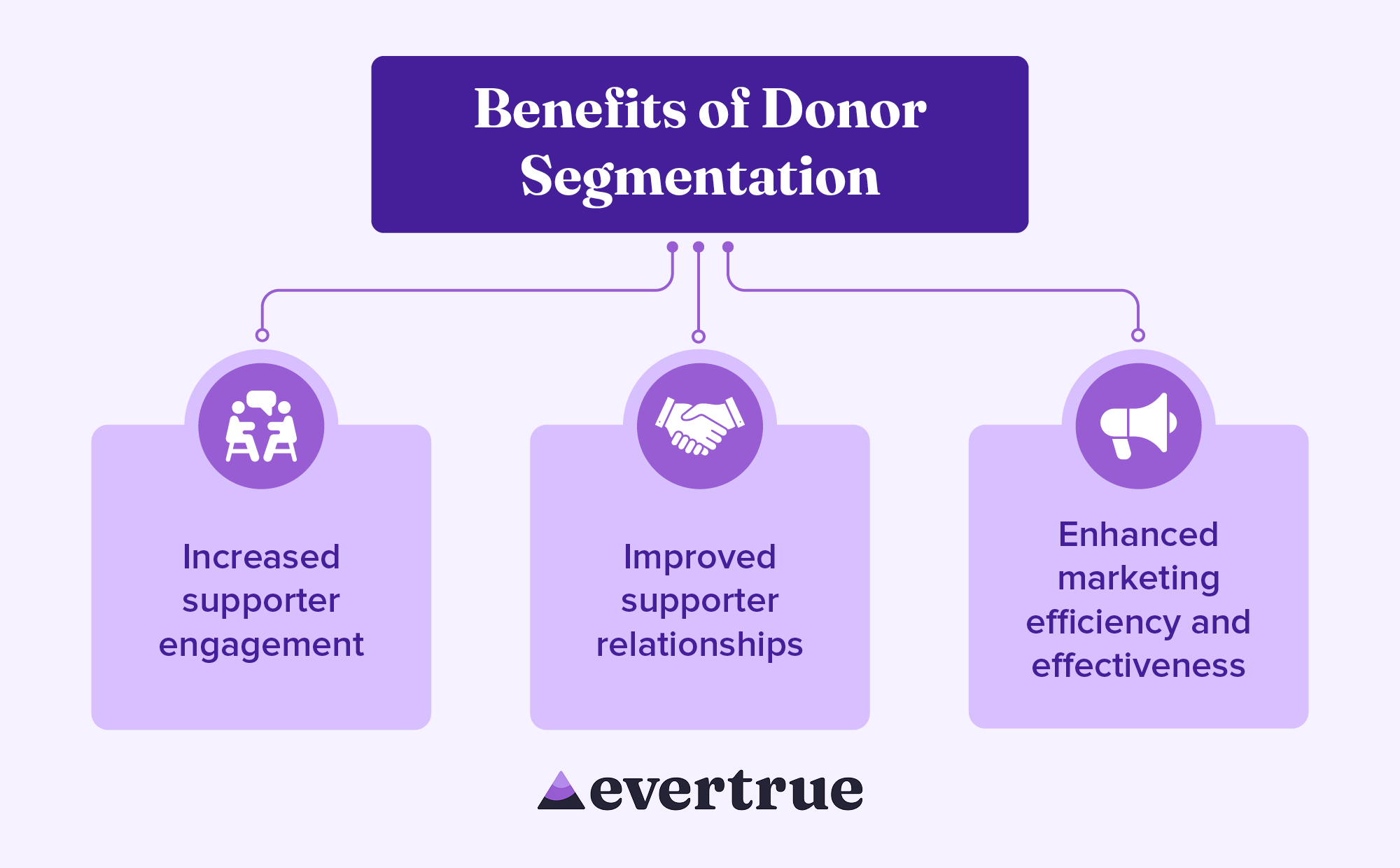
- Increased supporter engagement, including event attendance, participation in volunteer programs, online advocacy, etc.
- Improved supporter relationships, leading to better retention and larger gifts
- Enhanced marketing efficiency and effectiveness; it’s much more efficient to send one email that captures a donor’s attention than several generic messages
A segmentation strategy shows donors that you see them as unique individuals, leading to long-lasting support.
Types of Donor Segmentation
You can segment donors by essentially any characteristic. Of course, some segmentation groupings will have better results than others. Explore five common segmentation strategies and why they work for many nonprofits.
1. Demographics
Demographic segmentation allows you to group donors based on their inherent traits. You can create demographic groupings based on characteristics like:
- Age
- Gender
- Career
- Marital status
- Location
Grouping donors by demographics helps you start to understand who your donors are and identify patterns in your support base. While you might not have complete profiles on every donor—especially when they first join your nonprofit—but if you have a few pieces of demographic information, you might be able to sort them into a donor segment that fits their interests.
For example, young donors in your local area might be interested in volunteer opportunities, while older donors with professional careers might prefer to attend evening events when they have time off work.
Location specifically is a helpful segment, letting you know which donors can participate in in-person activities and which ones need online opportunities.
2. Affinity
“Affinity” can refer to a few different things in the nonprofit world. Here, we’re using affinity to describe what a donor likes about your nonprofit. Affinity-based segmentation is a catch-all for interests related to your nonprofit’s cause or a donor’s reason for giving.
Nonprofits can measure affinity by paying attention to:
- Campaigns supporters give to
- Expressed interest in specific programs
- Support for similar causes in the past
Affinity-based segmentation makes sense for marketing specific initiatives and identifying highly committed donors who may be good advocates for your cause.
For example, let’s say you create a segment of donors who all supported your last back-to-school campaign. Ahead of the next school year, reach out to these donors with a tailored message thanking them for their previous involvement and inviting them to build peer-to-peer fundraising pages for this year’s campaign.
3. Engagement History
A donor’s engagement history reveals the specific ways they like to interact with your nonprofit. Engagement history segmentation is based on characteristics such as:
- How a supporter engages with a nonprofit: Do they donate, volunteer, attend events, or participate in advocacy efforts?
- Example: A group of donors who also volunteer should receive frequent impact updates on your ongoing volunteer projects, while donors who attend your events should receive personalized email invites to upcoming experiences aligned with their interests.
- What type of donor they are: First-time, recurring, major giving candidate, or lapse risk?
- Example: A group of first-time donors should receive a “Welcome to the Family” video from your nonprofit’s program director, while lapsed donors might receive a “We miss you” re-engagement message.
- How a donor interacts with your digital content: Which links are they clicking and which pages are they visiting?
- Example: A donor who has recently clicked three separate links in your newsletter about your ongoing crowdfunding campaign but hasn’t made a gift yet should be flagged for a personal follow-up or a discovery call, as their high engagement likely signals high interest.
Understanding how a donor engages with your nonprofit is essential for stewardship, since past behavior is the best indicator of future engagement. To help track donor engagement, use a donor management system that offers predictive analytics and comprehensive donor profiles. These solutions will help you track donor data and put that information to good use by anticipating future actions.
4. Preferences
Donor preferences are the engagement signals that donors send your organization about how they want to engage with you. Sometimes donors will tell you their preferences outright, like checking a box that confirms they want to receive text messages from you, whereas others might be more subtle, like only ever making online gifts.
These include preferences like:
- Communication channel: Do they prefer email, social media, phone, or in-person communications?
- Giving preferences: Do they usually give by credit card or by mailed check?
- Online payment method: Do donors who give online prefer credit cards, digital wallets, or ACH transfers?
Adhere to donor preferences as much as possible, such as by creating unique messaging lists for each channel or spotlighting donors’ preferred payment methods in your fundraising appeals. Paying attention to even these small details is well worth the work, as they can help you build stronger relationships in the long term.

5. Giving Capacity
Giving capacity describes how much a donor can give. This type of segmentation can help you identify prospective major and planned donors. Capacity markers include:
- Stock holdings
- Real estate ownership
- Business ownership
- Past giving to your organization or other causes
- Political giving
- Foundation involvement
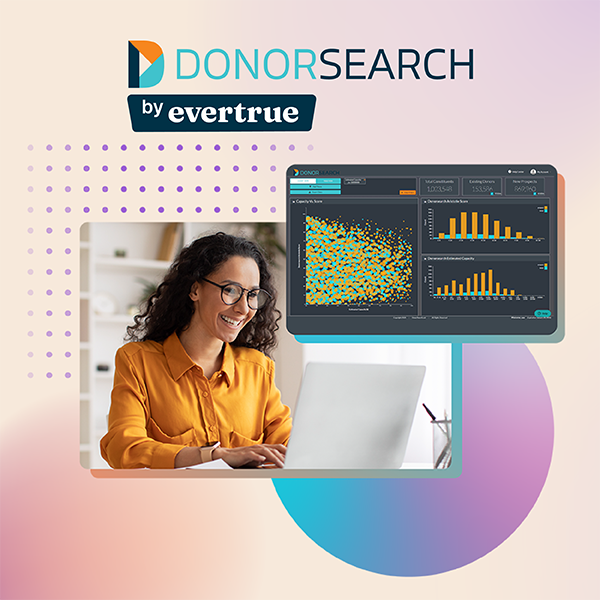
Remember that capacity and affinity go hand in hand when identifying major giving prospects. If you only look at capacity markers, you’ll just end up putting together a list of wealthy people. Find your most promising prospects by using a robust prospecting tool like DonorSearch by EverTrue.
DonorSearch uses external wealth data to identify who has the capacity and affinity to give. For each donor, DonorSearch assigns a score based on how likely they are to respond to your outreach. This way, you can prioritize not just the wealthiest donors but the ones who are the most likely to actually become major donors.
Plus, donor engagement platform Signal by EverTrue tracks real-time engagement—like which email links supporters click, how they interact with your social media, or whether they’ve recently updated their job on LinkedIn. Together, these tools give you all the data you need to reach out to high-capacity prospects at the exact moment they show interest in your cause.
Putting Your Donor Segmentation Strategy into Action
Once you’ve chosen a segmentation strategy, it’s time to put it in action by following these steps:
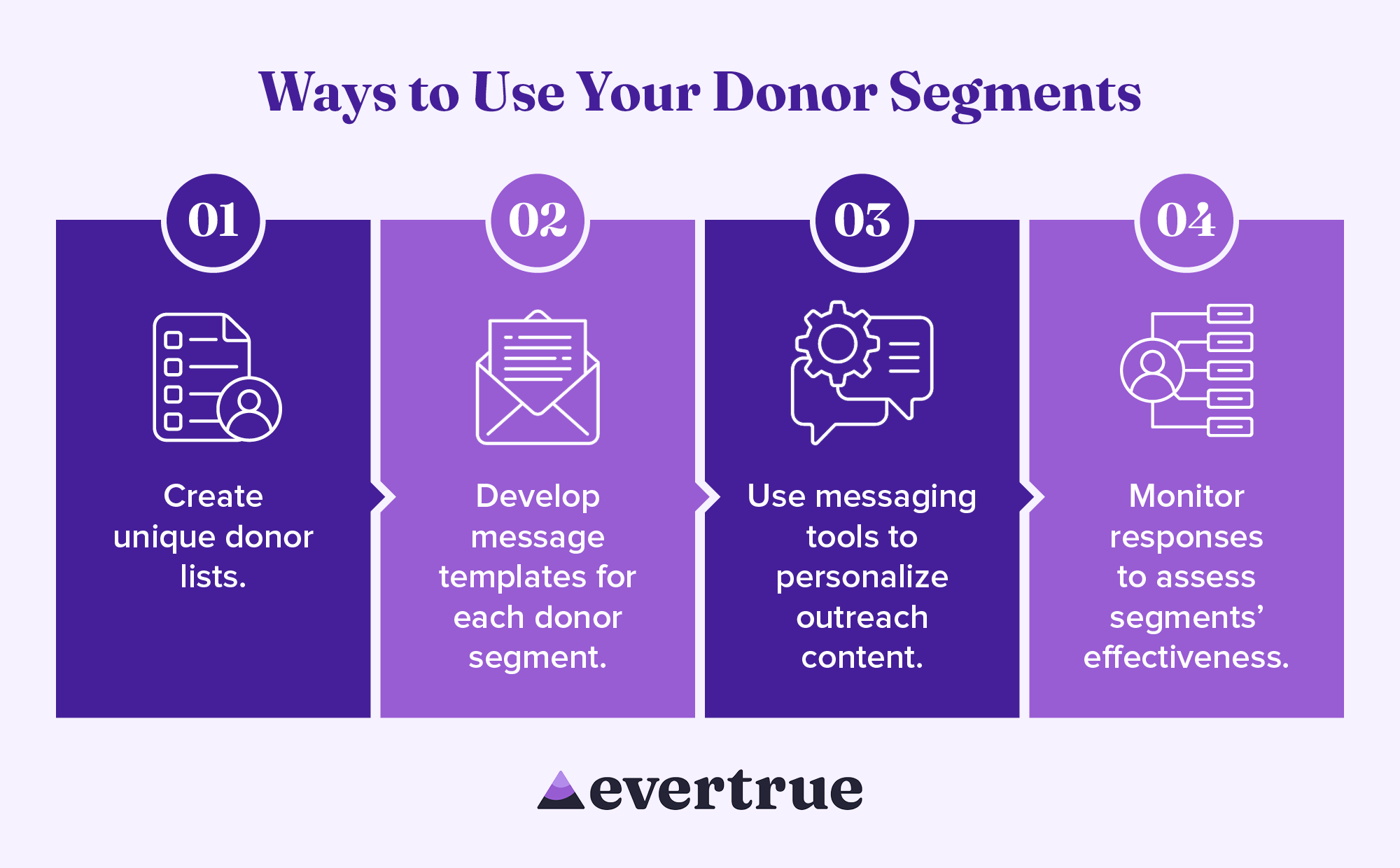
1. Use donor management software to create unique donor lists.
Don’t settle for static spreadsheets. Use your donor management software to create dynamic segments that update in real time. Ensure your software can manage tasks like:
- Automated donor stewardship: For example, when a donor makes their second gift, they should automatically move from the first-time donor segment to the loyal/recurring donor list.
- Major donor prospect identification: Create a specific list for donors whose wealth markers or high-engagement signals suggest they are ready for a conversation with a major gift officer.
- Omnichannel sync: Ensure donor lists automatically sync information across your email tool, direct mail platform, and social media listening solution to deliver consistent messaging across all marketing platforms.
Donor lists are the core of an effective segmentation strategy, and your donor management software should make it easy to create, maintain, and use them.
2. Create message templates for each donor segment.
The goal of segmentation is to acknowledge donors’ specific interests. Create tailored messaging templates for each of your donor segments that speak to their values, motivations, and engagement history.
Here are a few examples of message templates for different types of donors:
For a lapsed donor: Focus on nostalgia and FOMO.
“We missed you at [Event Name] this year! Your past support of [Specific Fund] helped us accomplish [Fundraising/Program Goal]. Can we count on you to help us out with this year’s [Campaign]?”
For an annual giver: Focus on insider access and vision.
“As one of our most consistent champions, we wanted to give you an early look at our [Year] impact report. Your [Supporter Donation Amount] annual commitment provides the stability we need to achieve [Mission Goal].”
For an alumni donor: Focus on shared identity.
“Once a [Mascot/Organization Member], always a [Mascot]. We noticed you’ve been following our updates on the [Specific Program]. Here’s how current students are carrying on that legacy today.”
You can develop similar plug-and-play templates for any segment within your donor audience. Each of these messages should focus on a specific donor group, while also adding opportunities to personalize the content to each recipient. Your CRM should be able to auto-populate these messages with the relevant details, letting you create highly personalized content at scale.
3. Use messaging tools to personalize outreach content.
Make your outreach more unique with personalized messages that grab attention and stand out in an inbox. These include:
- Personalized videos: Use tools like ThankView by EverTrue to create and send a 30-second thank-you video. A first-time alumni donor could see a video from a student scholarship recipient, while a major donor gets a personal check-in from the Dean or CEO.
- Use AI assistants to draft personalized messages: An AI tool can instantly analyze a donor’s specific program interests and their current giving level to generate a high-quality first draft of an email, allowing you to scale your personalization efforts without adding hours to your workday.
- Tailored calls to action (CTAs): Don’t ask everyone for money. For your donors with high affinity but low capacity, your CTAs should be lower-lift asks, like “Share this on Facebook” or “Sign up to Volunteer.” For example, for donors who gave to your organization to support a friend running a peer-to-peer campaign, you don’t want to come on too strong right away. Instead, reach out with requests to “Join Our Email Newsletter” or “See Our Upcoming Free Community Workshops” so they don’t feel overwhelmed.
Your job is to meet donors where they are and speak to them as individuals. These types of personalized messages show donors that you care about what they care about.
4. Monitor responses to assess segments’ effectiveness.
Assess donors’ responses to your segmentation strategy to identify what you’re doing right and where it’s getting off track. Measure these key performance indicators to ensure your efforts are having the desired impact:
- Upgrade rate: How many donors moved from a lower-tier giving segment to a higher one after receiving a targeted segment appeal? If many supporters are upgrading their giving, it’s a sign that your appeals are hitting the mark.
- Engagement rate: Are donors in a specific segment clicking more links or attending more webinars than they did last quarter? High engagement is a signal that a segment is ready for a larger ask.
- ROI per segment: Are you spending too much on direct mail pieces for donors who only ever give online? By analyzing the return on investment for each donor segment, you can reallocate resources and grow donor value over time for all of your supporters.
Your segmentation strategy shouldn’t be set in stone. If your KPIs aren’t what you expected, rework your segmentation criteria, messaging templates, and calls to action to get moving in the right direction.
The Future: AI-Driven Segmentation
If your organization didn’t have a segmentation strategy before, a manual process is definitely a major step forward for your fundraising efforts. However, AI-based segmentation can help you hit the ground running.
For example, within the EverTrue fundraising ecosystem, AI serves as a co-pilot for your fundraising team in three distinct ways:
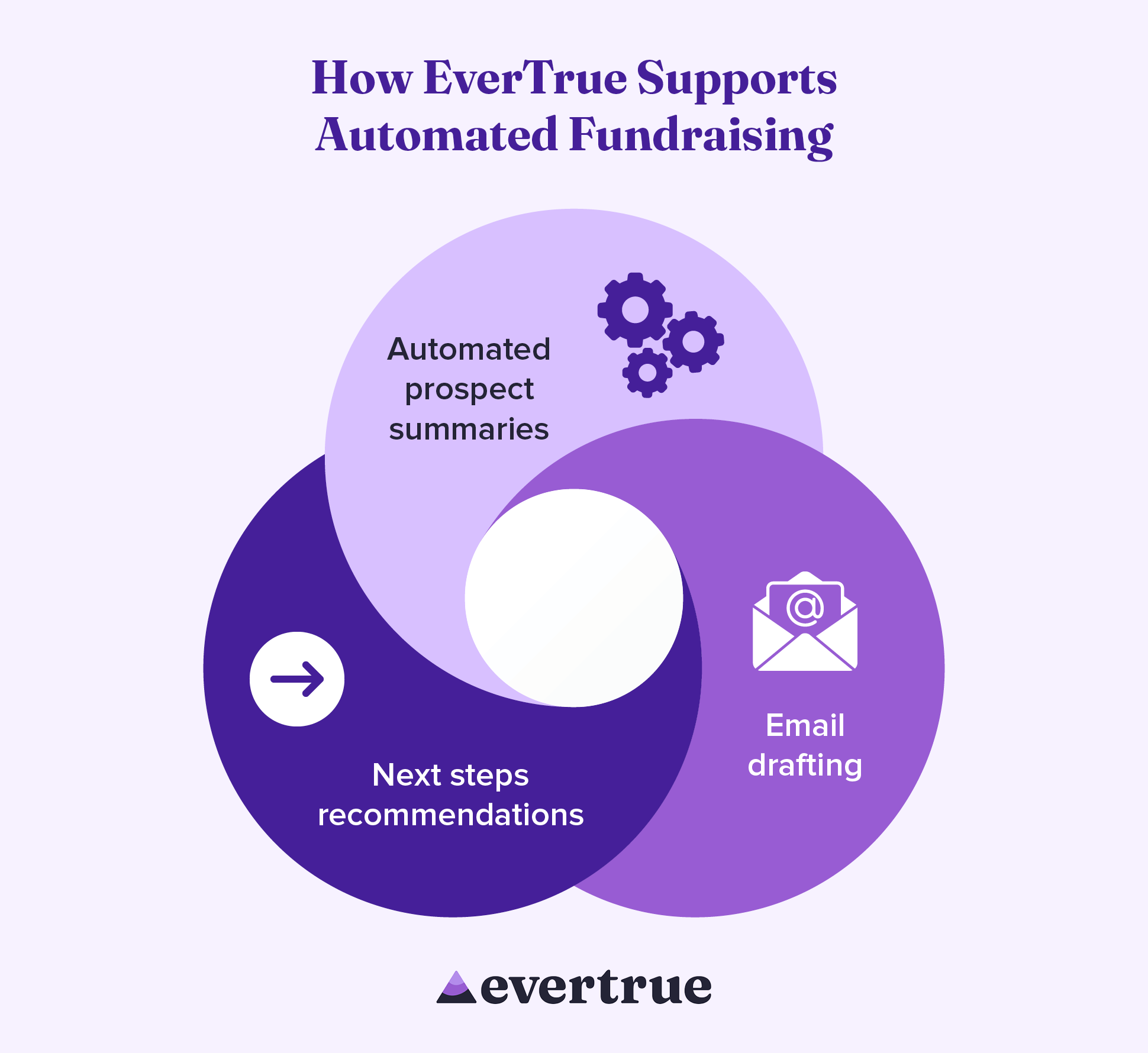
- Automated prospect summaries: Instead of a gift officer spending 30 minutes digging through a donor’s giving history and LinkedIn profile, Signal by EverTrue’s AI generates a concise relationship briefing. It highlights why a donor is in a specific segment (e.g., “High-capacity alum with rising interest in the athletics fund”) so the fundraiser can move straight to outreach.
- Email drafting: One of the biggest hurdles to personalized outreach is the time it takes to write each message. Signal’s AI Assistant can draft segment-specific emails in seconds. Because it has access to your CRM data, it can incorporate recent donor behavior into each message, like congratulating a donor on a new job or mentioning their 5-year giving milestone.
- Next steps recommendations: Beyond just grouping donors, AI analyzes behavior to suggest the best cadence for ongoing stewardship. For example, if a donor in your young alumni segment typically engages with mobile outreach, the AI might suggest a text-heavy outreach sequence. If a major gift prospect shows a spike in digital engagement, the AI might suggest sending a one-on-one meeting.
Think of AI as your editor, not your author. It provides high-quality first drafts and proposes strategic next steps based on your donor information, giving you back hours of your day to focus on things only humans can do: building genuine connections with supporters.

Additional Donor Management Resources
The most successful fundraising teams use smart strategies and tools to segment donor data to facilitate personalized outreach. When you know how to communicate with the specific, unique groups that make up your donor community, you can save your team time and build more authentic donor relationships.
Looking for more resources to help understand your donors through the lens of your data? Start here:
- Using AI to Make Giving Day Easier (Without Losing the Human Touch)
- What Your Year-End Donor Segments are Trying to Tell You
- Beyond the CRM: Building a Connected Fundraising Data Strategy