














How nonprofits connect with donors has changed dramatically over the last few years. Today’s supporters spend a lot of their time online, expect personalized content, and favor video communication. How can your nonprofit keep up with these trends?
The answer is simple: fundraising videos. When nonprofits add video to their fundraising strategy, they can build donor relationships by delivering messages that use sound, visuals, and movement to create authentic connections.
To help your nonprofit get started with fundraising videos, we’ll explore:
- Fundraising Videos FAQ
- Types of Fundraising Videos
- How to Create Fundraising Videos: 9 Steps
- ThankView: Your Fundraising Video Platform
Video does take some effort to get set up, but once your nonprofit has the tools in place, you can continue creating videos at scale to drive your supporters to take action.

Fundraising Videos FAQ
What are fundraising videos?
Fundraising videos are any fundraising or donor stewardship message delivered via video. This means that a fundraising video can be a direct solicitation, an educational video, or even a thank-you message.
As long as the video moves supporters through their donor journey and nudges them toward making their next gift, it’s a fundraising video.
What are the benefits of video fundraising?
Video marketing and fundraising have multiple documented benefits, including:
- Unmatched engagement: 87% of marketers report seeing increased sales when using video in their outreach strategy, with short-form video having the greatest impact. While nonprofits have different goals than businesses trying to make a sale, the same principle holds true: supporters are more likely to interact with video content than they are with text and visuals alone.
- Enhanced shareability: Video is one of the easiest types of content to consume, as supporters can just hit play to view your message. This makes them more likely to view your message and share it with others quickly, as compared to a long written message that requires more intentional focus to process.
- Greater emotional connection: While powerful stories can be conveyed through text and photographs, video leverages visuals and sound to create an immersive experience. When supporters can physically hear and see the faces behind your nonprofit, they’re more likely to form an emotional connection.
Incorporating fundraising videos into your outreach requires investing in new technologies and developing your video creation skills. However, these benefits can far outweigh the costs of your initial investments, making video a worthwhile strategy.
Can small teams create effective fundraising videos?
Absolutely. Like large nonprofits, small teams will need the right video fundraising tools and best practices. However, they just need to be more budget-conscious, such as by filming videos on their phones rather than investing in an expensive camera.
To deliver fundraising videos at scale, nonprofits of all sizes can benefit from outsourcing video production to volunteers. For instance, if you want to send all donors who give above a certain amount a personalized thank-you video, you might ask volunteers to create those personalized videos.
Types of Fundraising Videos
Your fundraising videos should engage supporters across the entire stewardship lifecycle. From welcoming first-time givers to celebrating major milestones, there are nearly endless opportunities to enhance your relationship with supporters via a video message.
Here are nine fundraising video use cases that apply to almost every nonprofit:
1. Direct fundraising ask
Video can be an effective medium for soliciting donations, both to individual supporters and your donor base as a whole. For example, you might feature a fundraising video urging supporters to give on your donation page, or you might segment your audience and send each group an email with a fundraising video tailored to their interests.
2. Donation thank-you messages
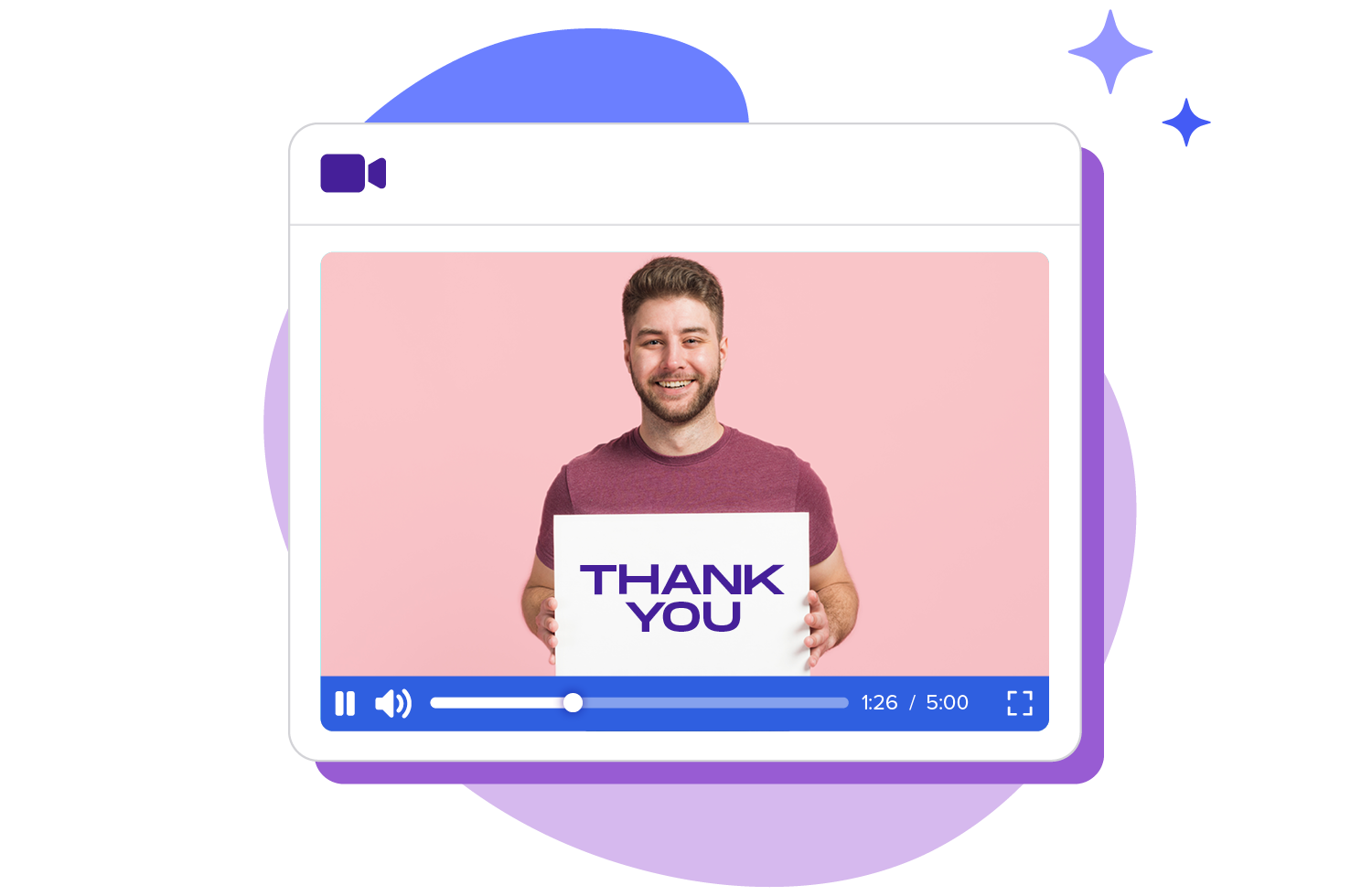
Effective thank-you messages can make all the difference in whether supporters decide to give again. Create a standardized video thank-you message you can share with all supporters in your post-gift appreciation outreach, and make personalized messages for supporters who give above a certain threshold.
3. Content marketing
Content marketing is outreach that focuses on your organization’s mission, story, and impact. These videos can be educational, raise awareness of a specific issue, or tell a story about a specific individual at your nonprofit.
While content marketing videos often end on a call-to-action to donate, their main purpose is to strengthen your nonprofit’s credibility with supporters. When prospective donors see high-value content from your organization, they’re more likely to interact with future messages from your team.
Plus, an interesting, emotional, or exciting video is more likely to be shared with others, getting your nonprofit’s name and message in front of new audiences.
4. Unique giving methods explainers
If your nonprofit leverages any unique types of giving, consider creating an instructional video to spread awareness and answer common questions. For example, the following types of giving can benefit from being paired with an explainer video:
- In-kind giving
- Vehicle donations
- Matching gifts
- Volunteer grants
- Stock donations
- Crypto donations
- Donor-advised fund giving
- Planned giving
5. First-time donor welcome messages
Send a quick, unscripted greeting to immediately acknowledge a new supporter’s contribution and establish a relationship. If your nonprofit has a membership program, an archive of educational content, or other activities that supporters may need direction to engage with, a video can be useful for both stewarding donors and helping them participate in your community.
6. Donor stewardship
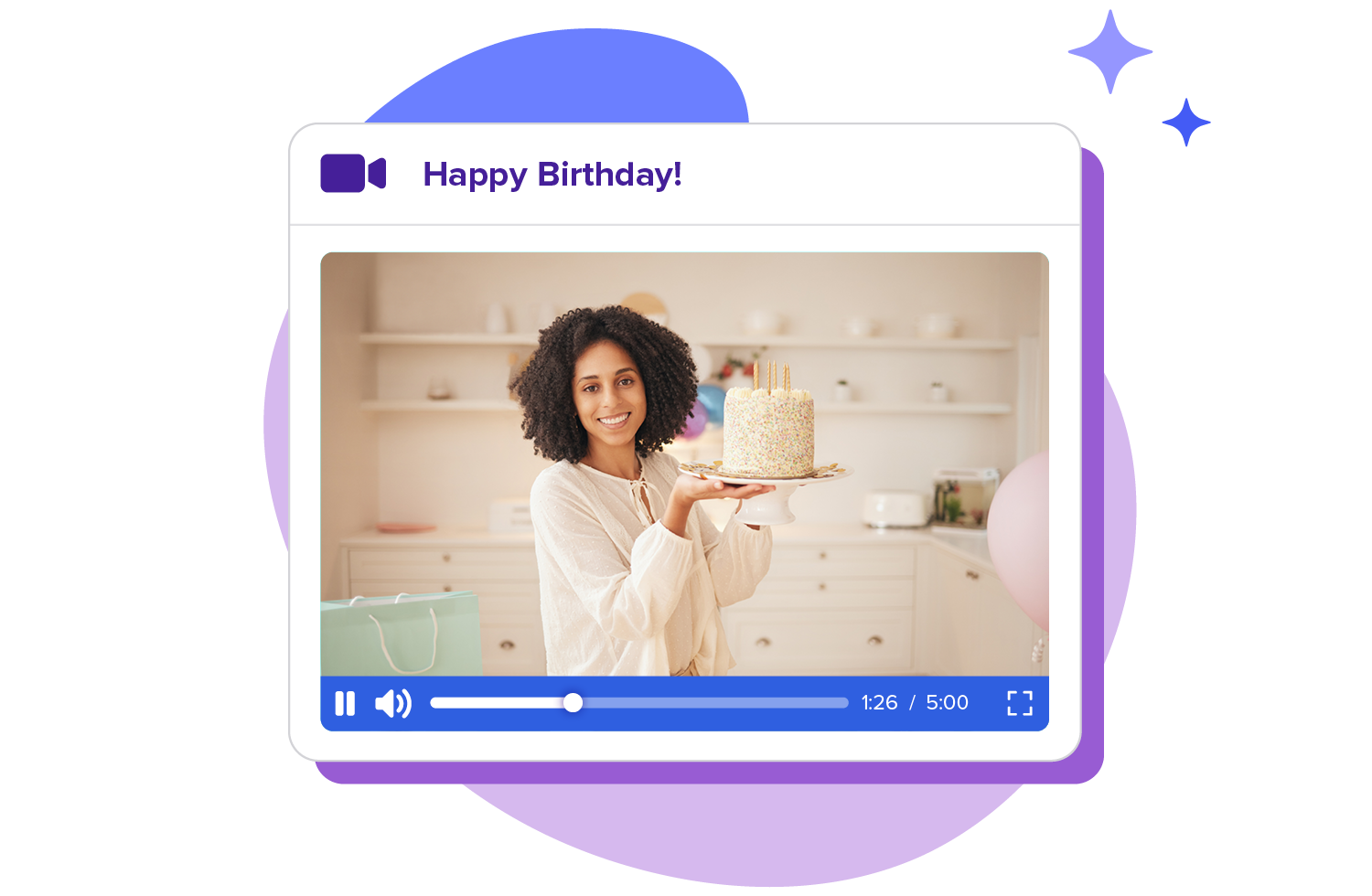
Not every fundraising video has to be about your mission. Use your videos to steward donors by celebrating various events in their lives, including:
- Giving anniversaries
- Birthdays
- Job promotions
- Graduations
- Holiday greetings
These warm, non-solicitation video messages help foster donors’ emotional connections to your nonprofit. Short, fun videos that show you care about your supporters’ lives can go a long way when they’re deciding which nonprofit to donate to next.
7. Campaign updates
Whether you’re hosting a long-running or short, high-energy campaign, regular video updates can maintain fundraising momentum. Share behind-the-scenes progress updates about your construction project for your capital campaign, discuss your fundraising stretch goals for a crowdfunding campaign, or count down the final hours of Giving Tuesday.
8. Event invitations
Increase your RSVP rates by replacing paper invitations with dynamic videos. Incorporate footage from past events and show off planned activities to preview the exciting time supporters can have by attending.
9. Annual renewal stewardship
Celebrate major milestones in your donor relationships, such as an entire year of recurring gifts. These messages show your appreciation for your supporters while also encouraging them to keep donating or even potentially increase their giving level.
Your team doesn’t need to get started with all of these video use cases right off the bat. Get your video creation process set up first, then start experimenting with different video types. Once you have your video creation and delivery systems down, you can ramp up production and thoroughly incorporate video into every part of your outreach strategy.
How to Create Fundraising Videos: 9 Steps
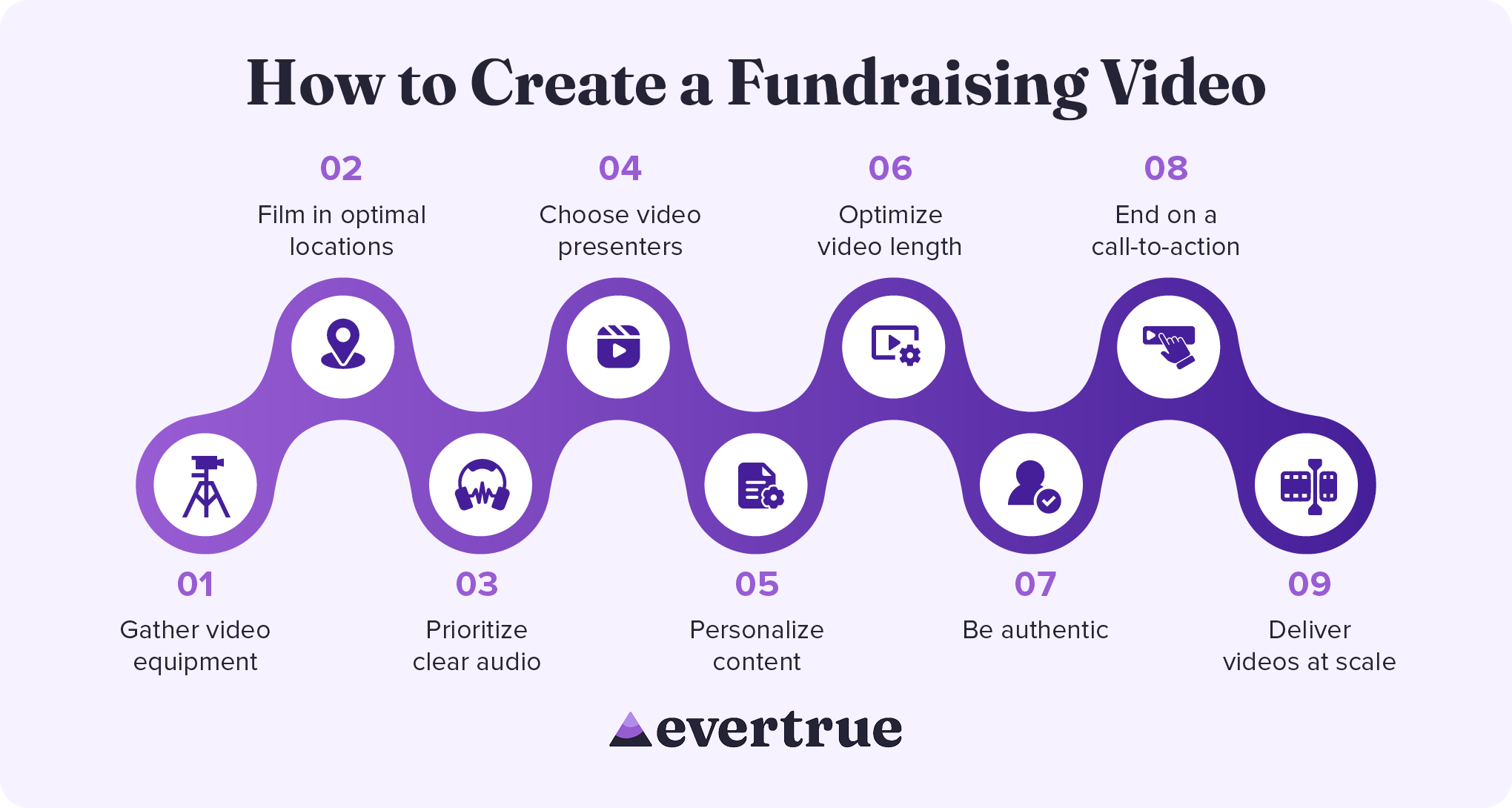
Creating high-impact fundraising videos at scale requires a standardized framework. Your approach to videos should be streamlined while still preserving the authenticity and passion that make your mission so compelling.
For your video creation process, follow these steps:
1. Gather video creation equipment.
An effective video fundraising technology stack leverages both dedicated nonprofit software and accessible, user-friendly recording equipment. For most videos, high-end production gear isn’t necessary, and your team should instead prioritize easy-to-use tools that work well with your existing communication workflow.
Specifically, make sure your nonprofit has:
- Dedicated fundraising video platform: Explore video creation and delivery tools created just for nonprofits, like ThankView by EverTrue. Our purpose-built software is designed to help nonprofits create and send videos at scale, while also providing detailed engagement data breakdowns so you know exactly who is watching your videos.
- Filming equipment: For simple videos, a phone or laptop camera will be enough, but for more complex videos, make sure that you also have equipment like microphones, tripods, and a lighting setup. Use natural light when possible and always position your primary light source in front of the speaker to avoid casting harsh shadows.
- Editing tools: If you plan to create more complex videos, consider your post-production software. Dedicated fundraising video platforms should provide simple editing tools for trimming videos and inserting extra footage.
Additionally, while donor management software isn’t necessarily a video creation platform, your database will contain essential information for effective personalized videos. Set up automatic triggers to remind your team when key donors’ birthdays, giving anniversaries, and other important personal events are coming up. Then, create and schedule videos to arrive on those special days.

2. Film in optimal locations.
In general, your nonprofit should always film in one of two types of locations:
- Quiet, distraction-free spaces. Record video messages in places where you will have clear audio, good lighting, and limited distractions. This doesn’t necessarily mean filming in an empty room. For example, a college might film interviews with students around campus in relatively quiet locations while other students walk by in the background. This approach ensures your message is easy to hear while also showing off your nonprofit’s mission and identity.
- Visually interesting environments that reflect your mission. Footage of your facilities, program sites, and events can go a long way toward helping supporters understand your impact. For these filming locations, assess the noise levels and determine whether you should capture on-site audio or record a voice-over somewhere quieter.
3. Prioritize clear audio.
Audio is everything when it comes to video. Use microphones or film in rooms with minimal echoing to eliminate background noise and ensure your speakers are easy to understand.
4 Choose video presenters thoughtfully.
Consider who should deliver your fundraising videos’ messages. Depending on the video, your presenter might be:
- An interview subject, such as a beneficiary, community member, or donor, who has direct experience with your nonprofit
- A member of your staff delivering a message to your community, such as your program director providing key information about your mission in an educational video
- A volunteer recording a video on your nonprofit’s behalf, whether to help you create personalized videos at scale or as part of a fundraising initiative, like a peer-to-peer campaign
Try experimenting with a range of presenters to see what types of speakers have the greatest impact. A heartfelt thank-you from students on your campus might show off your impact, while a polished message from your university’s president can elevate the importance of your video.
5. Personalize content when possible.
Depending on the type of fundraising video, personalization can be incredibly effective at helping you connect with supporters.
For videos like thank-you messages, create scripts that can be adjusted to include specific donor information, such as their name, giving amount, and engagement history. For example, your script might look something like this:
“Hi [Donor Name],
This is [Speaker Name] from [Nonprofit Name] here to thank you for your gift of [Donation Amount]. Every donation we receive supports [Program Impact], and we can’t thank you enough for your contribution. We know [this is your first gift/you have a long history with us], and we hope you continue to be such a valuable part of our community.”
For longer video messages, you might create your video in two parts: the first is a standardized video that everyone receives, and the second is a customized introduction or ending addressing the specific recipient.
6. Optimize video length.
The optimal length for a donor thank-you or stewardship video is between 30 and 90 seconds. This length respects the donors’ time while still giving your team enough space to get your message across.
When putting together scripts for other types of fundraising videos, consider how you can keep supporters engaged throughout the entire video and how much time is really needed to get your message across. For example, an event invitation may be just 15 seconds, while an educational content marketing video could even be up to 30 minutes.
7. Be authentic.
Video outreach is so effective because it puts a face on your nonprofit. Help supporters connect with your organization and mission by writing scripts that show off your passion while giving presenters space to be their real selves.
There is a time and place for formal, polished videos, but many supporters will feel more connected to your nonprofit if they receive a personalized video recorded on a phone by an excited volunteer rather than a tightly scripted message to a general audience from your board chair.
8. End on a call-to-action.
Fundraising videos should give supporters specific next steps. For solicitation videos, the goal is to make a donation, while an educational video might urge supporters to visit your website to learn more. For stewardship videos, such as a thank-you message or holiday greeting, you might stick to a non-solicitation ask, such as requesting that supporters continue to be a part of your nonprofit’s community.
9. Deliver videos at scale.
To make video a regular part of your fundraising strategy, adapt your content process for video creation and delivery at scale. Explore video platforms that let you schedule video delivery and recruit volunteers to help create personalized videos.
ThankView: Your Fundraising Video Platform
ThankView makes recording and delivering personalized fundraising videos easy, even for the busiest fundraising teams. Outreach that feels handwritten, no matter how many videos you send, so your team can show up for every donor relationship that matters, not just the thank-you.
Our top features include:
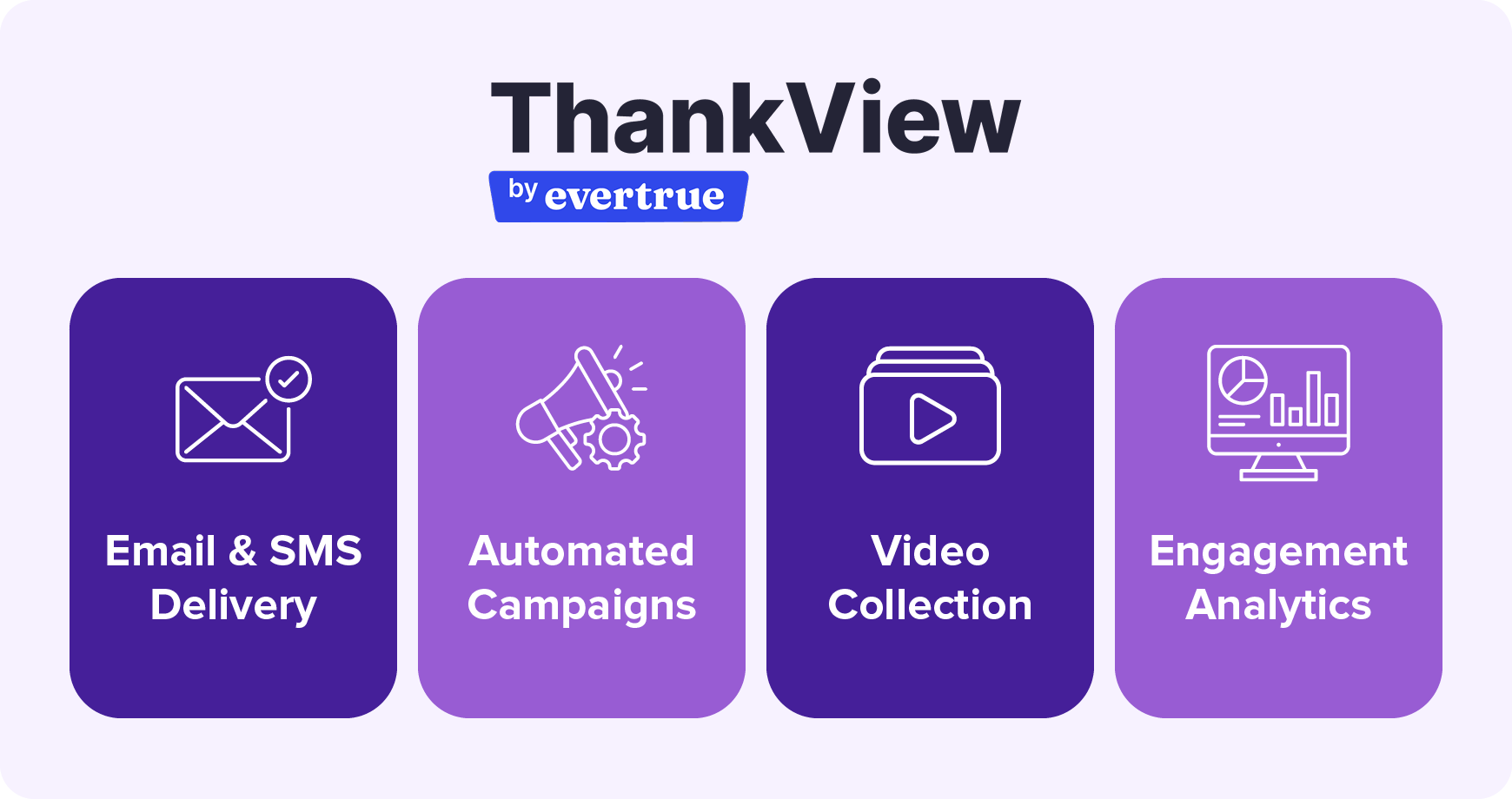
- Email & SMS Delivery: Reach your donors on their preferred channels with seamless video delivery via both branded email and SMS messages.
- Automated Campaigns: Schedule videos for special days, such as donor anniversaries and birthdays, to help build personal relationships at scale.
- Video Collection: Gathering authentic stories from staff, donors, and beneficiaries is simple with ThankView. Leverage the platform’s streamlined video request feature, have presenters record their videos, and store their videos in your archive.
- Engagement Analytics: See exactly who is engaging with your videos thanks to video opens, watch time, clicks, and responses metrics.
Send every donor video messages that feel made just for them with ThankView’s user-friendly platform, all with no editing skills required.
Elevate your fundraising video strategy today.
Fundraising videos allow you to get your nonprofit’s message in front of supporters in new, emotionally impactful ways. Make video a regular part of your nonprofit’s fundraising strategy by sending routine stewardship videos throughout the entire donor lifecycle.
For more fundraising resources, explore these top guides:
- AI Fundraising: Mastering the Future Fundraising Landscape. AI fundraising can simplify your video scripting and delivery processes. Learn how to better leverage AI for your next campaign.
- 10 Donor Management Software Solutions for Nonprofits. Donor management software ensures you know exactly when to reach out to your supporters. Explore top platforms for nonprofits.
- Why Direct Mail Fundraising Is More Important Than Ever. Video is essential for effective fundraising, but so is traditional mail fundraising. Discover how to interview your digital and direct mail outreach efforts.