








New 1:many cadences with automated emails, reusable templates, and more in Signal

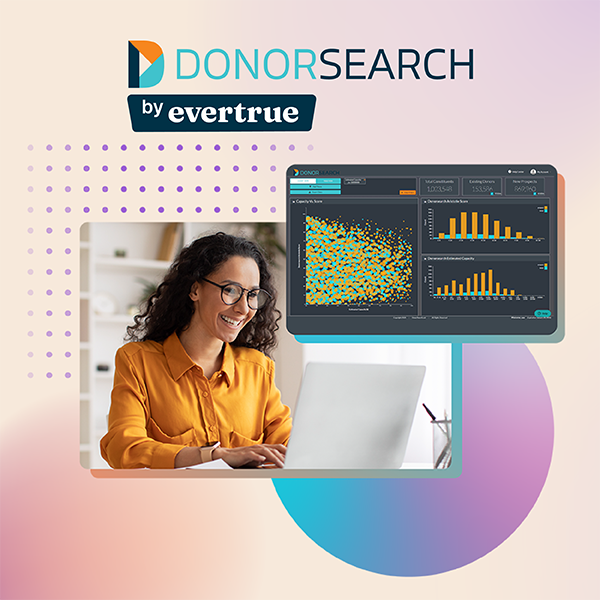
DonorSearch identifies prospects in your database with the capacity and intent to give.

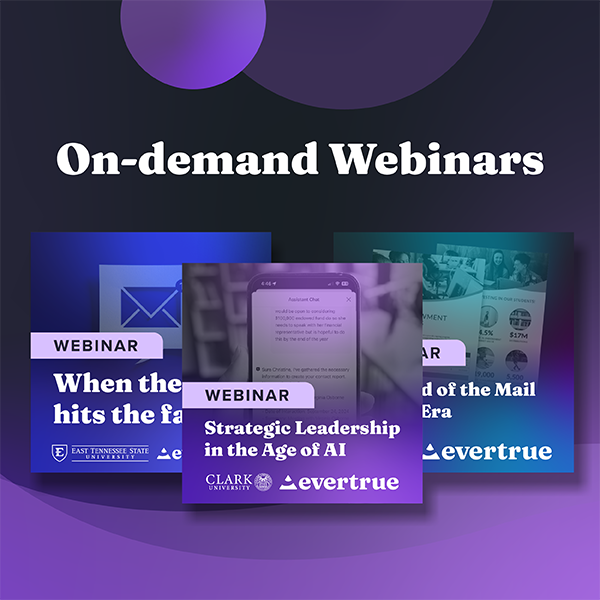
Missed the live session? Watch our on-demand webinars anytime to get guidance from industry experts.

What Are the Best Resources for Prospect Research on Home and Neighborhood Values?

When researching a potential prospect, one important aspect of the wealth capacity estimate is the value of the prospect’s property and home(s). There are several ways to gather this information, but the two that I most commonly use are assessed value and market value.

Related: Creative Ways to Discover New Prospects

For Assessed Value: Tax Assessors’ Websites

Tax assessors’ websites (you can find a listing of these websites at pulawski.net) provide you with a wealth of useful information on a property, including the market and assessed value of the property, the type of property (e.g., agricultural, commercial, industrial, residential), the structures on the property, and the location of the property.

For most prospects, I use the assessed value for the wealth capacity estimate. In some locations, however—such as Chicago and California—the assessed value is too far removed from the actual market value to be of any assistance to a researcher. In these cases, I tend to use the market value.

For Market Value: Zillow

The best resource to get an estimated market value on a property is Zillow.com. In addition to the market value, Zillow offers a variety of information similar to that found in the assessor’s database—including pictures of the property, information about the structures on the property, and the sales history for the property.

Zillow also gives an overview of the area in which the property is located, such as the values of homes in the area, the amount for which similar homes in the area have sold, and nearby schools.

For Neighborhood Estimates: U.S. Census Bureau

If you are unable to locate an assessed or market value of a particular property, you can use neighborhood estimates (based on the value of other homes in the area) to help you arrive at a reasonable value of the home. Data from the U.S. Census Bureau can be a helpful resource for determining neighborhood median home values.

For example, if Census data indicates that a prospect’s address is located in a tract with a median home value greater than $1 million, you can deduce that the prospect lives in a wealthy neighborhood.

Above: U.S. Census and Zillow data displayed in a constituent profile in EverTrue.

When looked at together, the assessed, market, and neighborhood values can give you a strong picture of a prospect’s real estate holdings—which can, in turn, help you arrive at a reliable capacity estimate for the prospect. I’ve found the above resources to be valuable, but let me know in the comments if you have any other tools to add!

Click here to learn how EverTrue’s solution for prospect research puts real estate data from Zillow and the U.S. Census at your fingertips.  

Emily Davis began as a research associate at the Indiana University Foundation and was promoted to development analyst in 2011. In addition to assisting her science- and health-related clients with research, she has completed research for the IU and IU Foundation presidents as well as on international prospects. She received her undergraduate degrees from Ball State University and her master’s degree from Indiana University Bloomington. In her free time, she enjoys completing freelance editing and formatting work when not watching Thomas the Train with her toddler.
Endowment Spending & Growth Calculator

Enter your fund's current value and adjust the return, spending, and inflation sliders to see how its value in today's dollars changes over time.

$
6.0%
0%12%
4.0%
2%7%
3.0%
0%8%
10
5 yrs25 yrs

Value in 10 years

$0

In today's dollars

$0

4. Continue to Steward Donors

Your relationship with the donors who give to your endowment doesn’t end when you secure their gifts. Because your endowment exists to make a difference in the long term, your supporters will want you to keep in touch about its progress. Ongoing stewardship means keeping donors updated about your endowment’s performance and impact. A report that strengthens your relationship with donors should cover:
  • The fund’s balance at the start and end of the year
  • Spending amounts and allocations
  • How the fund’s returns compare to your investment targets
  • A short narrative detailing the specific impacts the endowment achieved
Create a report for each endowment rather than sending an identical document to everyone. A donor who endowed a scholarship wants to hear about the students it supported, while a donor who endowed a building fund wants updates on construction projects.

5. Upgrade Your Endowment Management Tools

Your endowment management tools should make applying your spending policy across every fund easy. Investing in dedicated software is especially useful as your endowment grows. Handling unitization in spreadsheets might work for a few funds, but as you begin to manage dozens or hundreds of gifts, dedicated software can save your team time spent manually calculating gains and losses for each one.

Why Nonprofits Need Dedicated Endowment Management Software

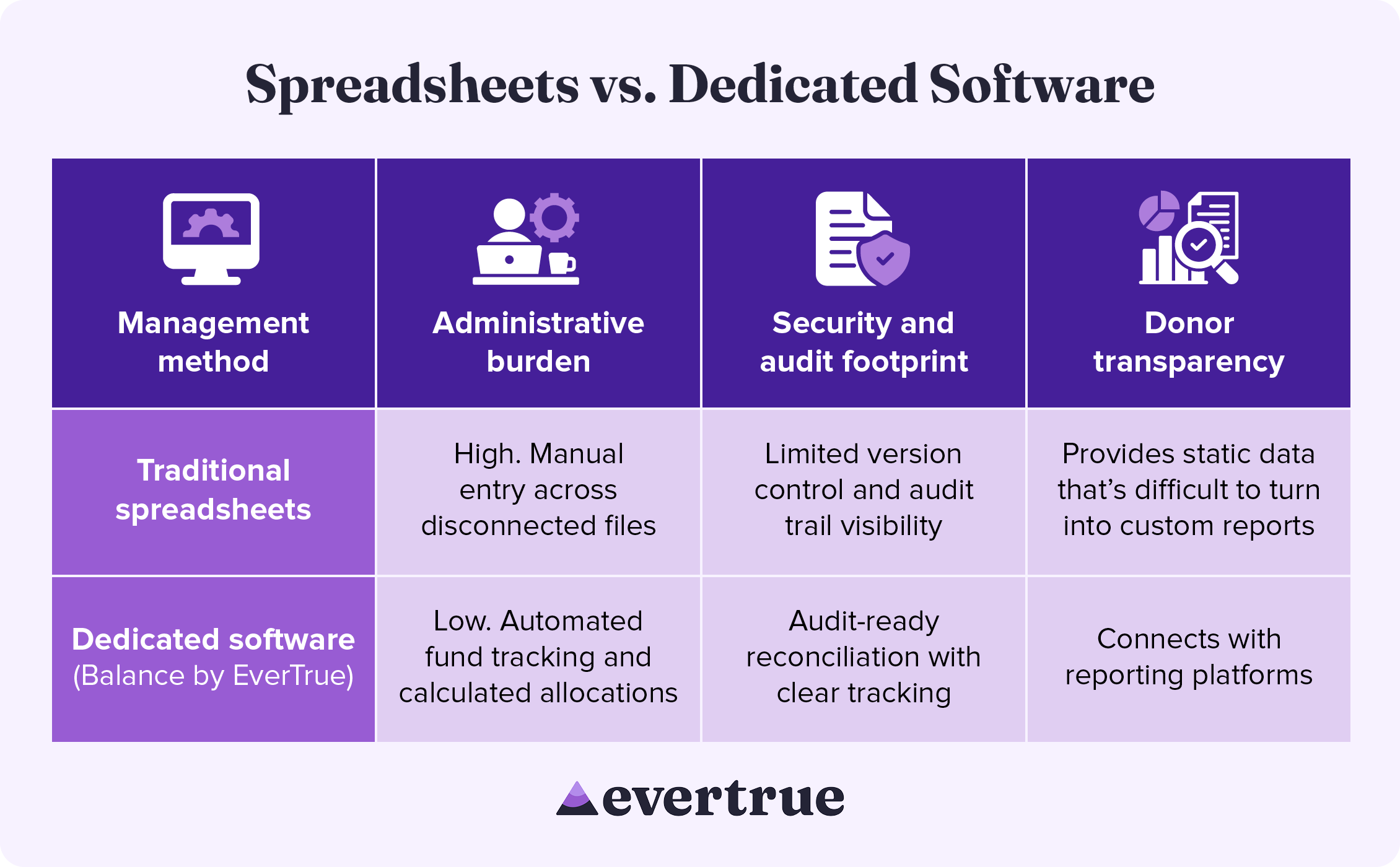
Dedicated endowment software brings accuracy and consistency to every part of the management process, from tracking individual funds to improving security. See how these solutions compare to a spreadsheet-based approach: nfographic table outlining the information below.

How These Methods Compare:

In managing your endowment with traditional spreadsheets, you may see:
  • High administrative burden: Manual entry across disconnected systems
  • Limited security and audit footprints: Reduced version control and audit trail visibility
  • Difficulty with donor transparency: Spreadsheets provide only static data that is difficult to turn into custom results.
By using dedicated software, you are likely to find the following improvements:
  • Lower administrative burden: Automated fund tracking and calculated allocations
  • Enhanced security and audit footprint: Audit-ready reconciliation with clear tracking
  • Greater donor transparency: Connects with reporting platforms
Dedicated endowment management software keeps your organization compliant while freeing up the time your team once spent manually managing spreadsheets.

Secure Your Endowment with Balance by EverTrue

Effective endowment management begins with excellent accounting. Balance by EverTrue handles unitization, applies spending rules, and produces audit-ready reports, so your team can spend more time on the donor relationships that built the fund in the first place.
  • Turn your data into a clear picture of long-term impact. Combine accurate fund accounting with donor reporting that showcases impact.
  • Connect with the tools you already use. Pair Balance with Impact by EverTrue and ODDER by EverTrue to create and deliver compelling digital endowment reports that you can send to donors with ease.
  • Know where every fund stands in real time. Check market values, gift history, and available spending for any fund. Then, share view-only versions with your team, so everyone stays informed.
With Balance, your team can stop spending all your time on manual management and instead add balance to your endowment workflow.

Additional Resources

To learn more about managing your endowment and other ways that technology can help your organization, check out these additional resources: Less stress, higher endowment funds. Discover how Balance provides the organization, security, and accuracy your endowment needs. Request a demo.
0 0 votes
Article Rating
Subscribe
Notify of
guest
0 Comments
Oldest
Newest Most Voted
Inline Feedbacks
View all comments
0
Would love your thoughts, please comment.x
()
x