












Who are your nonprofit’s best donors? How do you know they’re your best donors? Why do these people choose to support your cause? And how can you convince them to give more?
These questions are essential for any nonprofit fundraiser to consider. And as fundraising has become increasingly data-driven, your organization needs tools to optimize its limited resources by focusing on probable donors and tailoring outreach strategies to each individual’s values, desires, and inclinations.
One of these tools that you can leverage is donor RFM scores. In this guide, we’ll answer the following common questions about this rating method:
 MLR scores, an original development of the DonorSearch by EverTrue prospect research platform, take a more comprehensive approach to data analysis to pinpoint supporters who are likely to make high-value gifts in the next 12 months. Especially when used in conjunction with the other AI-powered predictive models DonorSearch can produce and the rest of the EverTrue suite of donor management solutions (especially Signal, our donor engagement tool), MLR scoring provides more in-depth insights into prospects’ viability.
- What is a donor RFM score?
- What does the RFM model look like?
- Why are donor RFM scores important for fundraising?
- What other information should your nonprofit learn about its donors besides RFM scores?
- Are there other effective donor scoring systems besides RFM?

What is a donor RFM score?
A donor RFM score is a numerical rating describing a current or potential donor’s propensity to give along three axes: Recency, Frequency, and Monetary. It’s also a way to rank prospects on a scale from most to least aligned with your organization’s fundraising needs, and to predict and shape future interactions with those supporters.What does the RFM model look like?
Donor RFM scoring typically rates each potential donor on a scale of one to five across the three aspects of the system. Here is a quick breakdown of what the components of an RFM score mean:Components of a Donor RFM Score
Recency
The number of days since a donor has made contact with your nonprofit.
Frequency
How often a donor gives to your organization.
Monetary
How much a donor has contributed to your mission over their lifetime.
Need help surfacing accurate RFM data and other prospecting insights?
Demo DonorSearch by EverTrue- Recency considers the number of days since a donor has made contact with your nonprofit, which can be as small as visiting your website or liking a social media post, or as large as attending an event or volunteering. The lower the number, the more recent the connection, and the higher their likelihood of contributing is.
- Frequency demonstrates how often a donor gives to your organization. All other factors being equal, someone who donates monthly is likely a better prospect for outreach than someone who donates annually or who donated five years ago but hasn’t given since.
- Monetary value evaluates how much a donor has contributed to your mission over their lifetime (also known as their lifetime value). Again, all things being equal, larger-dollar donors generally make better prospects than small-dollar ones.
Why are donor RFM scores important for fundraising?
The RFM model offers a way to clearly evaluate likely donors using hard numbers. It’s a helpful factor to consider when analyzing donor data and segmenting supporters for many fundraising initiatives, especially those that would benefit from major gifts. Plus, an RFM score provides your organization with a more informed sense of how much revenue comes from repeat donors as compared to new donors, and which levers you can pull to boost supporter satisfaction and retention. By leveraging this intel, your nonprofit can spend more time cultivating donors who are likely to make a significant impact on your mission over their lifetime.What other information should your nonprofit learn about its donors besides RFM scores?
Despite their usefulness, RFM scores only show a partial snapshot of donors’ giving potential. To fully understand whether potential supporters are willing and able to give large amounts to your nonprofit, you’ll need to conduct comprehensive prospect research that surfaces a wide range of data points (also known as markers or indicators) across these three categories: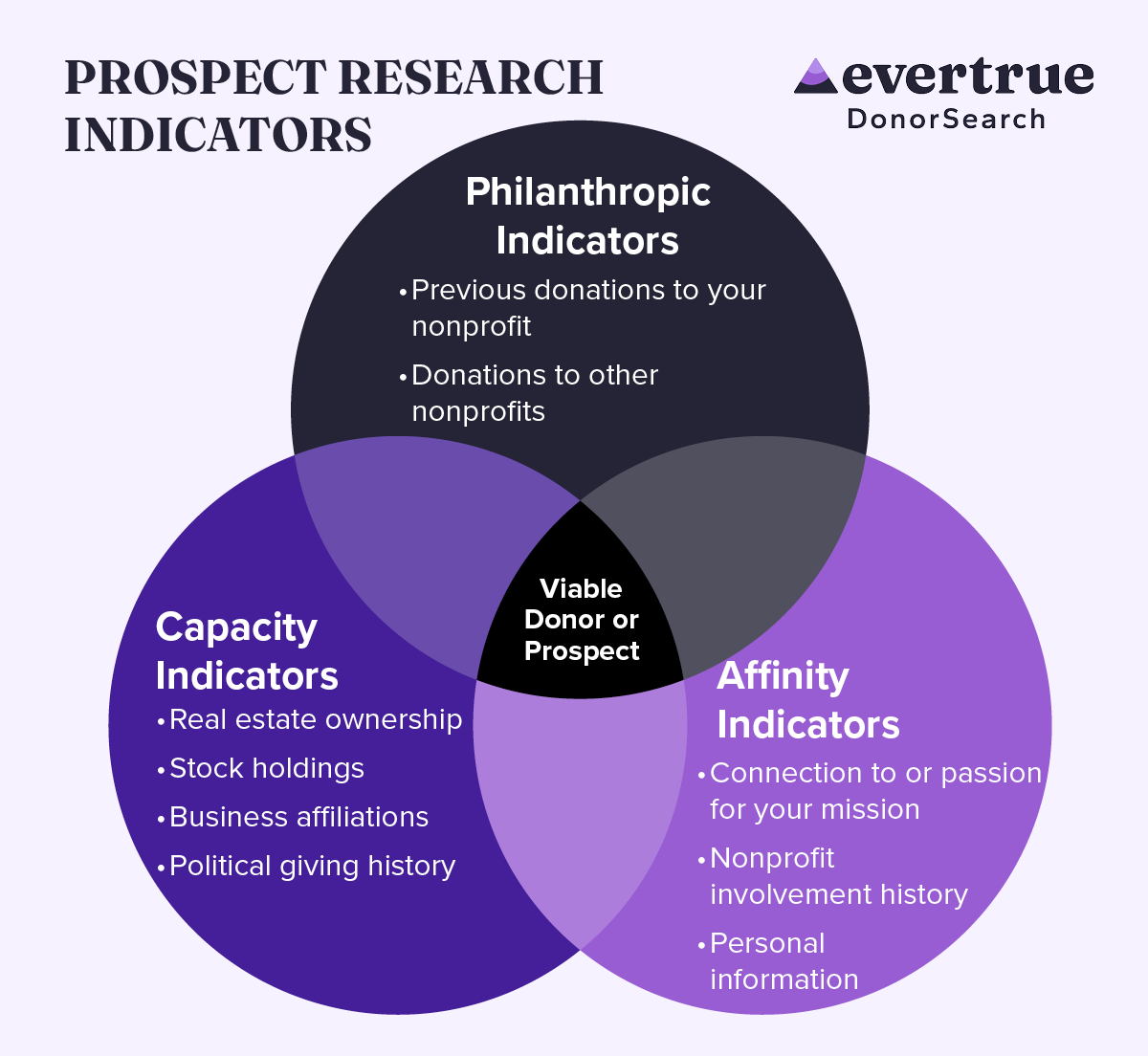
- Capacity indicators provide deeper insights into prospects’ wealth and financial giving ability beyond past contributions to your organization. They include real estate ownership, stock holdings, business affiliations, and political giving history.
- Philanthropic indicators demonstrate whether prospects have charitable tendencies and include past donations to other nonprofits, not just to your organization.
- Affinity indicators show if prospects are inclined to support your specific nonprofit in meaningful ways. A connection to or passion for your mission, a history of non-donation nonprofit involvement (volunteerism, event attendance, advocacy, board service, etc.), and personal information like interests and values are all relevant here.
Are there other effective donor scoring systems besides RFM?
Yes. In addition to not providing a complete picture of giving propensity, RFM scoring points to future donation behavior, not whether a potential donor would be open to outreach in the first place. However, there is a scoring model that compensates for both of these shortcomings: Most Likely to Raise, or MLR.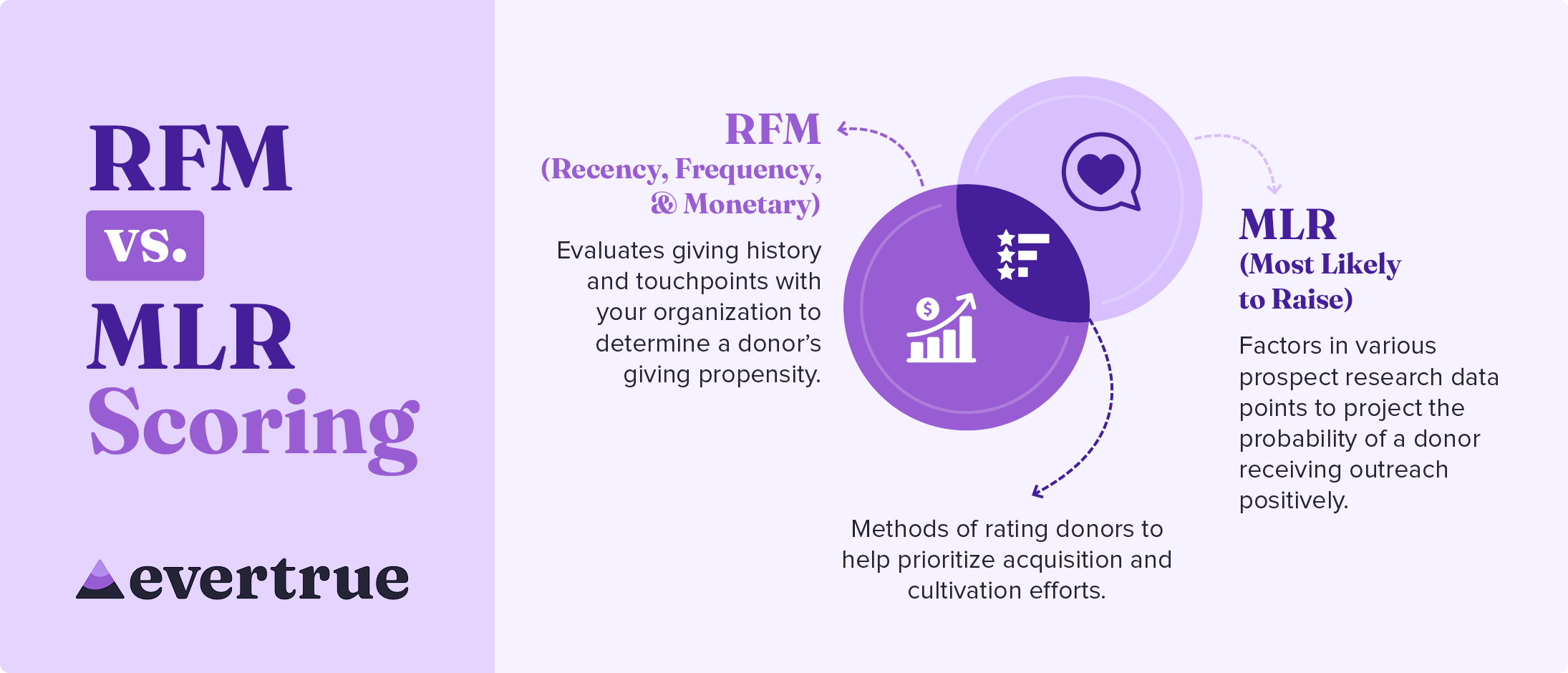 MLR scores, an original development of the DonorSearch by EverTrue prospect research platform, take a more comprehensive approach to data analysis to pinpoint supporters who are likely to make high-value gifts in the next 12 months. Especially when used in conjunction with the other AI-powered predictive models DonorSearch can produce and the rest of the EverTrue suite of donor management solutions (especially Signal, our donor engagement tool), MLR scoring provides more in-depth insights into prospects’ viability.
Final Thoughts
Despite their shortcomings, donor RFM scores are a solid foundation for identifying strong prospects for your nonprofit’s major giving needs. Just remember to pair them with more comprehensive prospect research (like the screening DonorSearch by EverTrue provides) for a complete picture of whether potential donors are a good fit for your organization’s fundraising priorities. For more information on nonprofit fundraising, check out these resources:- AI Fundraising: Mastering the Future of the Fundraising Landscape. Discover how artificial intelligence can power prospect research and other areas of fundraising.
- Fighting Donor Fatigue: What It Is and How to Prevent It. Learn about the real but frequently misunderstood phenomenon of donor fatigue, especially in major giving.
- 14 Fundraising Software Solutions for Nonprofits in 2026. Explore additional platforms that can support various aspects of donor engagement, cultivation, and solicitation.