









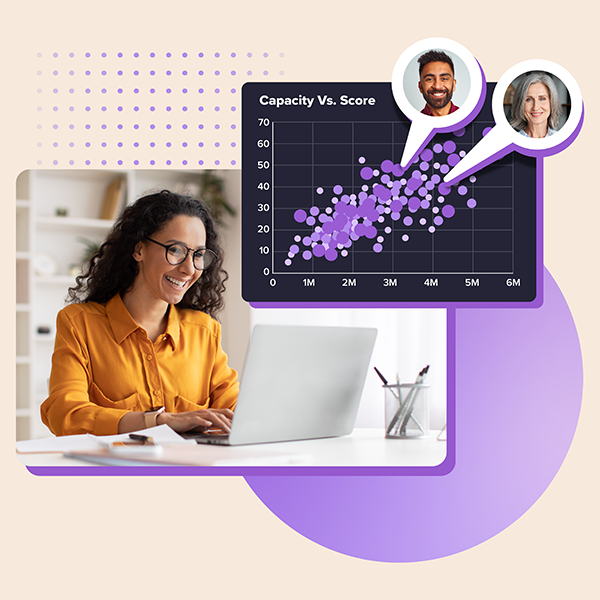
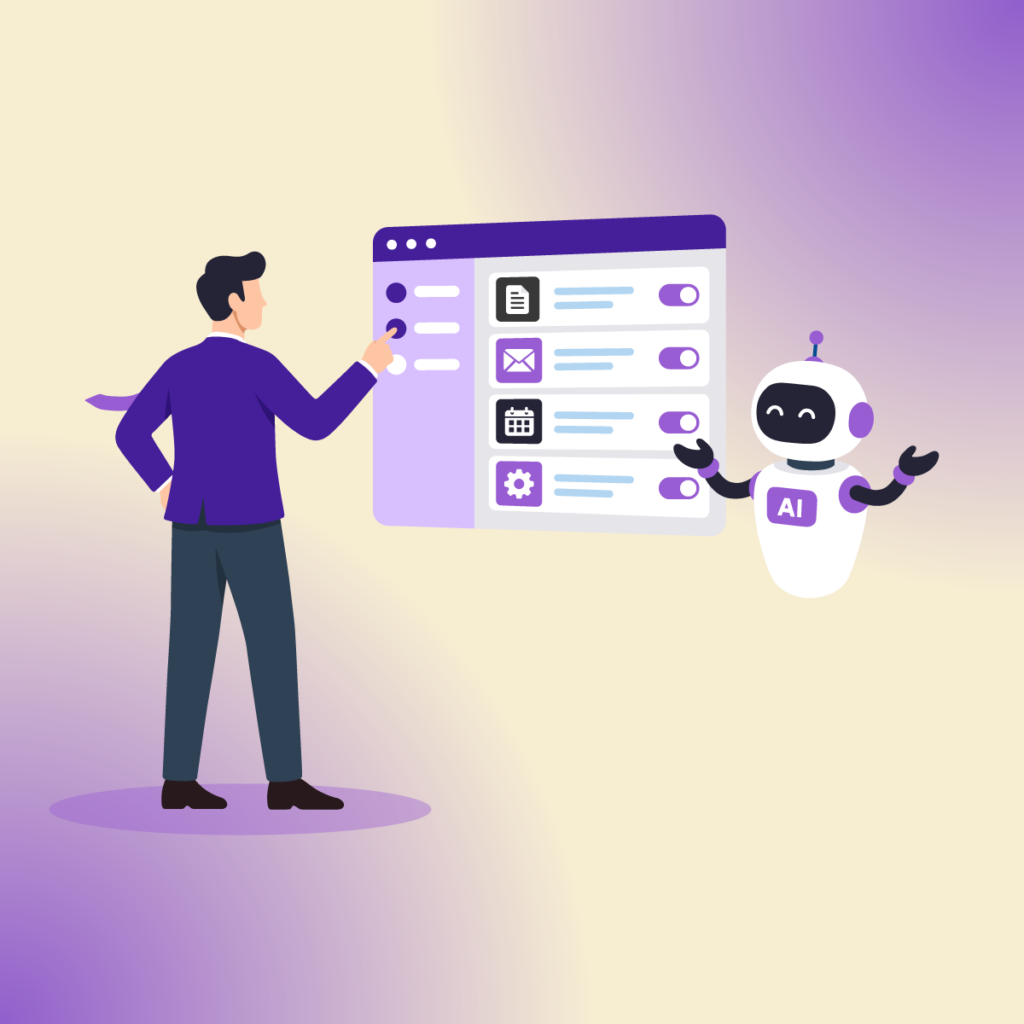
In recent years, artificial intelligence (AI) tools have taken the world—and the nonprofit sector—by storm. But while 92% of nonprofits said they were using AI in some form as of early 2026, only 7% have reported major impacts from it. One of the potential factors behind this disparity is the need for organizations to commit more intentionally to understanding, promoting, and using AI responsibly.
In this guide, we’ll cover everything you need to know about responsible AI for nonprofits, including:
- Responsible AI for Nonprofits FAQ
- A Responsible AI Framework for Nonprofits
- Best Practices for Using Nonprofit AI Responsibly
Let’s get started by discussing what responsible AI for nonprofits is and why it matters.

Responsible AI for Nonprofits: Frequently Asked Questions
What is responsible AI for nonprofits?
Responsible AI is the practice of leveraging AI technology in a way that promotes privacy, security, ethics, inclusiveness, accountability, and transparency. Anyone can commit to using AI responsibly, but it’s especially important for nonprofits like yours because you may work with vulnerable populations. Plus, furthering your mission relies heavily on building trust with supporters and stakeholders, which responsible AI use can help foster.
What are the benefits of responsible AI use for nonprofits?
When your nonprofit leverages AI fundraising tools in transparent, ethical ways, you can experience various advantages, such as:
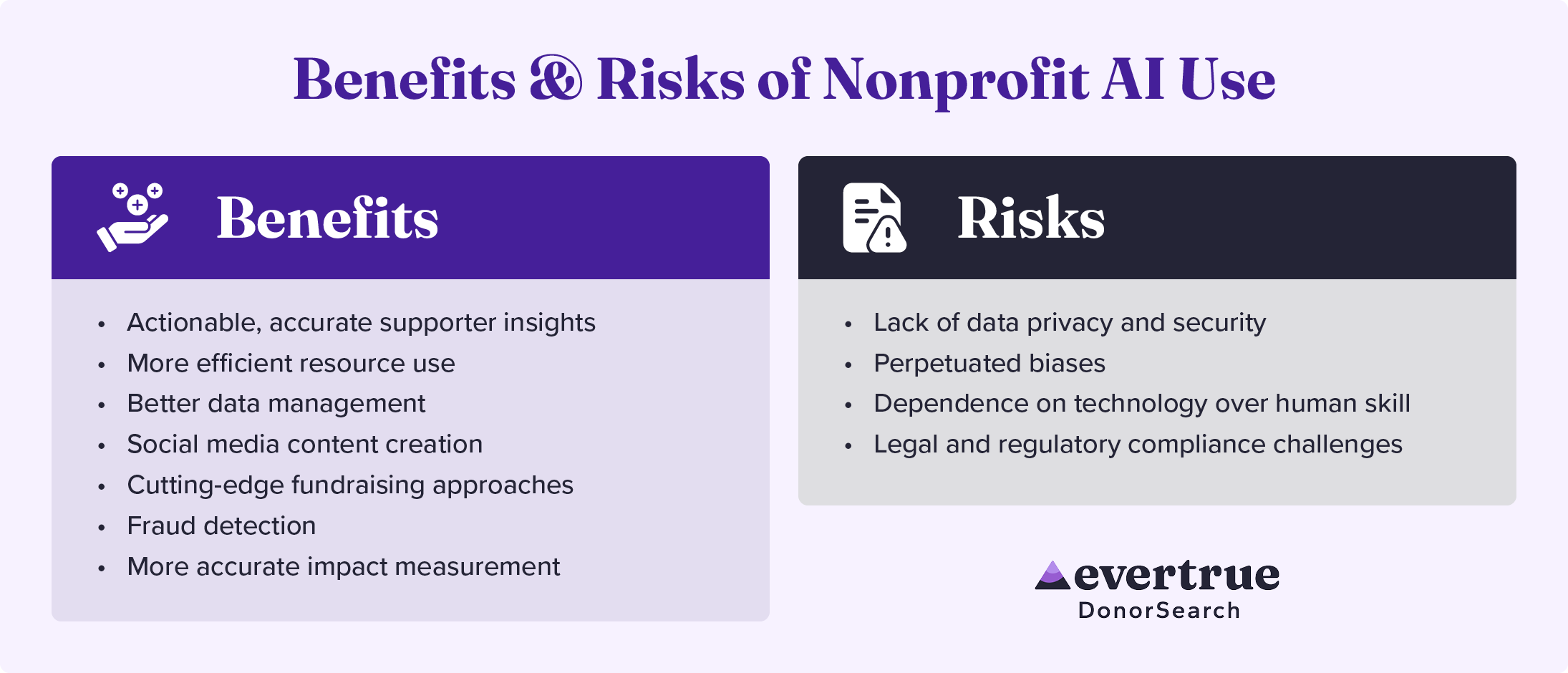
- Actionable, accurate supporter insights. AI can uncover patterns in your supporter data that help you engage your supporters more effectively, whether you’re seeking major giving prospects, personalizing event invitations, or exploring new donor recognition methods.
- More efficient resource use. As a nonprofit professional, you’re likely familiar with the concept of limited resources. You can save time, money, and energy by automating menial tasks with AI or using it to make complex tasks easier on human workers.
- Better data management. With AI, you can clean and organize your data, detect security threats, and visualize information to make smarter decisions.
- Social media content creation. In the world of social media, you need to ensure your content meets your audience’s needs, keeps up with current trends, and aligns with each platform’s unique requirements. AI can help you with all of these considerations and give you insights into how your social strategy is performing
- Cutting-edge fundraising approaches. Involving AI in your fundraising work can take your campaigns to the next level, whether you’re encouraging donors to ask Alexa to make a donation for them or inviting supporters to create Facebook fundraising pages, which algorithms will then promote to their friends.
- Fraud detection. AI tools can detect transactions, donations, or grant distributions that appear out of place and identify fraud-indicative language, helping you keep your resources safe and remain accountable to your stakeholders.
- More accurate impact measurement. AI takes the guesswork out of the impact you’re having on your community, helping you better articulate outcomes and opportunities for improvement in your programs, campaigns, and projects.
What risks come along with using AI irresponsibly?
Without best practices and safeguards in place to ensure your organization uses AI responsibly, you may fall victim to AI-related risks that could ultimately erode trust in your nonprofit, such as:
- Lack of data privacy and security. AI often requires organizations to share information about their supporters or beneficiaries, which can raise concerns about how your nonprofit protects and uses sensitive information.
- Perpetuated biases. AI technology is developed by humans, and humans have biases and prejudices. The algorithms or data an AI tool is provided with can lead to discrimination if they aren’t vetted for inclusivity.
- Dependence on technology over human skill. Relying on AI to make perfect decisions or produce perfect deliverables without human input or editing is unrealistic. Plus, this approach can leave human workers worrying about their job security.
- Legal and regulatory compliance challenges. AI is still evolving, and so is the legal landscape around it, and these regulations can sometimes be difficult to keep up with.
In most cases, the benefits of nonprofit AI outweigh these risks. But to maximize the benefits of AI technology while minimizing potential risks, your nonprofit needs to hold itself to a high standard for AI use.

A Responsible AI Framework for Nonprofits
To help your nonprofit think systematically about its AI use, the Fundraising.AI collaborative (of which EverTrue is a member) has developed a Responsible AI Framework you can follow. Its tenets include:
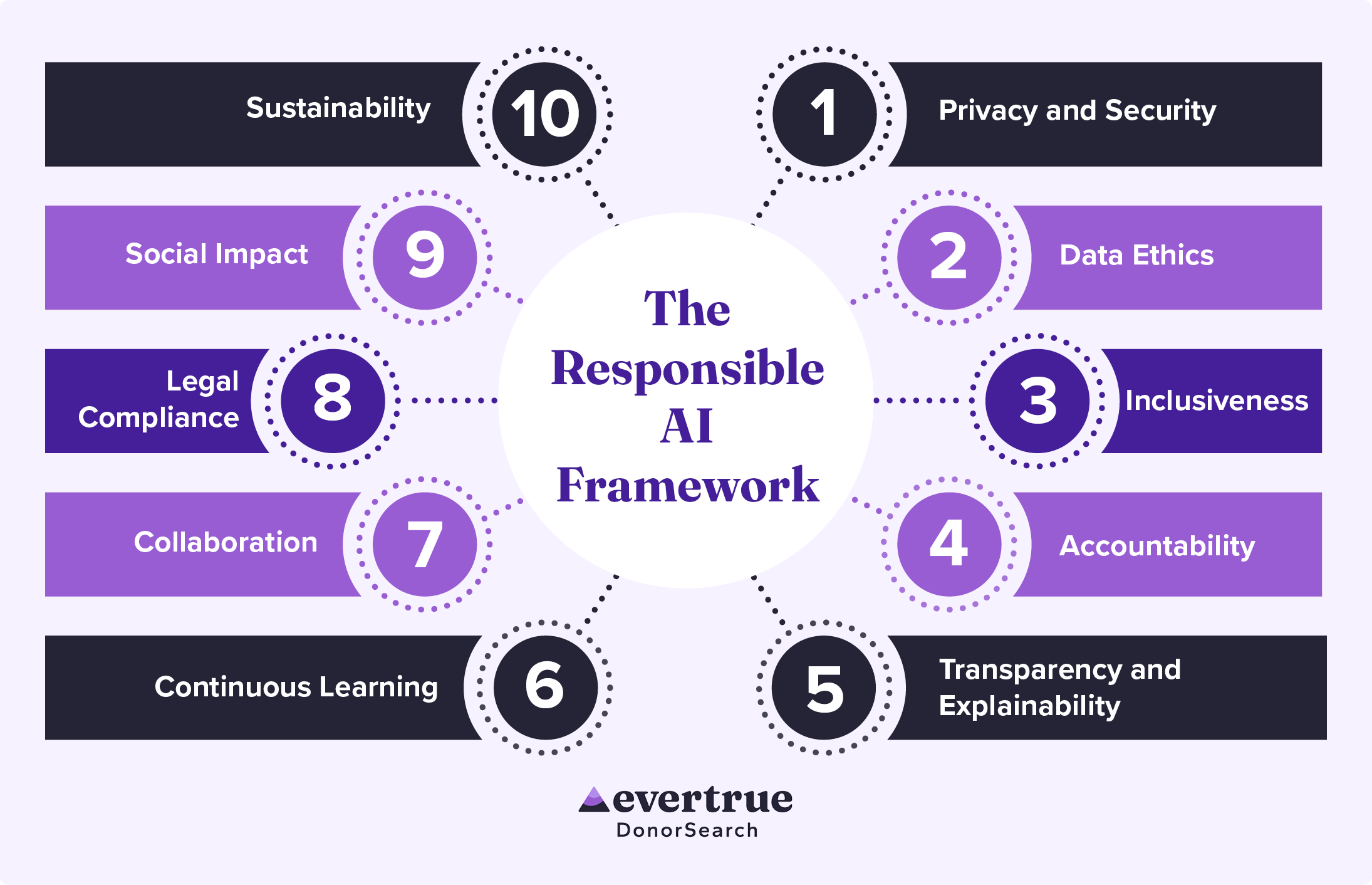
- Privacy and Security: Fundraising AI Actors must protect personal and sensitive data by following robust security standards within our respective roles, maintaining compliance with relevant data protection regulations, and respecting the privacy of donors, beneficiaries, and stakeholders. These principles should be part of all phases of the AI system lifecycle, including:
- Consent,
- Control over the use of data,
- Ability to restrict data processing,
- Right to rectification,
- Right to erasure,
- Adherence to privacy laws.
- Data Ethics: Commit to ethical data collection standards, including, analysis and usage practices, ensuring that the data used is accurate, relevant, and collected with proper consent.
- Inclusiveness: Actively address biases and disparities throughout the entire AI system lifecycle, by developing a framework to monitor, evaluate and design the AI systems through principles including;
- Non-discrimination and prevention of bias,
- Representative and high-quality data,
- Fairness,
- Equality,
- Inclusiveness in impact,
- Inclusiveness in design.
- Accountability: Share accountability with Fundraising AI Actors for the AI applications that we develop, deploy, or utilize in the fundraising profession, ensuring that they align with our organization’s or client’s mission, values, and ethical principles that are;
- Verifiable and replicable,
- Auditable,
- Appealable,
- Remediable,
- Liable.
- Transparency and Explainability: Within reasonable efforts to safeguard corporate IP, will be transparent in the development, deployment, and utilization of AI technologies, providing, requiring or requesting clear explanations of AI methodologies, results, reporting, measurement, and potential impacts on participants. In addition, we will provide adequate visibility to consumers of our AI ecosystems outputs when autonomous AI has been utilized.
- Continuous Learning: Commit to the responsible use of tested and untested resources while staying informed about the latest developments in Responsible AI, incorporating best practices into my work within the fundraising profession, and to share the responsibility of helping educate the broader fundraising community on Responsible AI best-practices.
- Collaboration: Actively engage with and learn from my peers in Fundraising.AI, sharing my experiences, challenges, and successes in Responsible AI for fundraising.
- Legal Compliance: Commit to being aware of, and abiding by, applicable laws, regulations, and best practices concerning AI development and operations pertaining to fundraising, data protection, and AI systems.
- Social Impact: Strive to maximize the positive social impact of AI in fundraising while minimizing any potential harm by focusing on the needs of beneficiaries and communities.
- Sustainability: Commit to considering the long-term sustainability and environmental impact of AI technologies and advocate for sustainable AI practices within my organization and the broader fundraising community.
To get the most out of your nonprofit’s AI tools, use this framework as a guide for developing an internal AI usage policy. Only about 20% of nonprofits have an AI use policy, and this guideline is often the deciding factor in whether your organization can leverage AI both ethically and impactfully.
Best Practices for Using Nonprofit AI Responsibly
In addition to creating a policy based on the Responsible AI Framework, here are a few best practices for using AI responsibly at your nonprofit: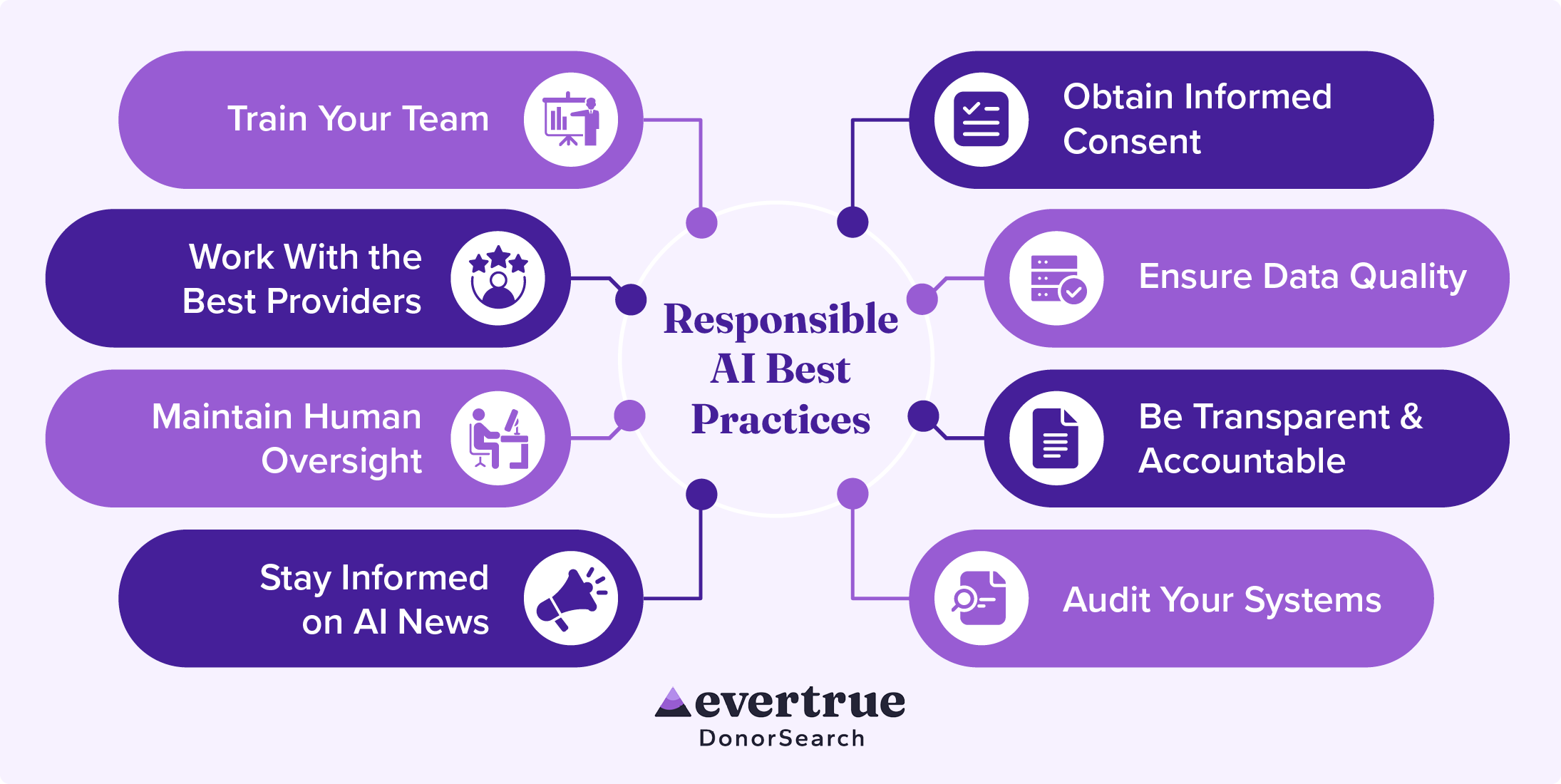
- Thoroughly train team members on responsible AI usage. If each individual team member sees the value of using AI responsibly, you’ll set your organization up to not only improve results by using your AI tools but also maintain trust with your community.
- Obtain informed consent before using individuals’ information. When you know you’ll be using supporter or stakeholder data in an AI system, give each person an opportunity to consent. Be specific about which data you’ll use, how it’ll support your goals, and how you’ll keep it private and secure.
- Maintain high-quality, inclusive data. Mitigate bias and disparities by collecting accurate, up-to-date data that reflects your community’s diversity so your AI tools have a solid foundation from which to draw conclusions.
- Prioritize AI transparency and accountability. Communicate with supporters and stakeholders about how your organization is leveraging AI tools and what steps you’re taking to use those tools responsibly and ethically.
- Conduct regular audits of your AI systems. Review your AI tools regularly to identify potential risks, address any issues you find, and ensure high-quality outputs.
- Stay informed about developments in the AI world. As this technology continues to evolve, keep track of current events and discussions about AI in the nonprofit sector. Being informed can help you stay ahead of the curve in responsible AI use.
- Maintain human oversight. Don’t leave thinking and decision-making to algorithms—instead, collaborate with your AI tools to make final decisions. Review AI outputs and edit as needed, always giving your strategies and outreach materials a human touch.
- Work with the best providers. When considering what AI solutions your nonprofit should invest in, vet your top choices by critically examining each provider’s values and commitment to responsible AI so your platforms support your policy.
Final Thoughts
A commitment to responsible AI for nonprofits is a commitment to continual improvement and learning. Remain open-minded and flexible as you continue to learn how to make the most of AI in an ethical way, and future-proof your operations by implementing responsible AI best practices and working with top nonprofit AI providers like EverTrue. For more information on nonprofit technology, check out these resources:- Nonprofit Analytics: How to Harness Data & Amplify Impact. Explore essential data points for your nonprofit to track and incorporate into its AI analytics processes.
- Donor Segmentation: How Organizing Donors Boosts Retention. Learn how to group donors for more effective analysis and to confirm data inclusivity when using AI.
- 14 Fundraising Software Solutions for Nonprofits in 2026. Discover the top nonprofit fundraising systems on the market today, including some powered by AI.