












The Ultimate Guide to Major Gift Fundraising
Maximizing Revenue & Impact: An EverTrue Guide
Between a donor’s capacity to give and a fundraiser’s ability to reach them, something gets lost. That’s where major gifts go unrealized: the prospect who was ready to give never gets a call, and the longtime supporter whose next gift could fund a whole program was never properly asked.
Giving USA’s 2025 report put total charitable giving at $617.2 billion. But as EverTrue broke down previously, the topline number isn’t the real story. Individual giving is growing, but it’s concentrating into fewer, larger gifts tied to bequests, donor-advised funds, and wealth events like business transitions, rather than broader participation. This is the same dynamic behind the familiar 80/20 stat, and exactly why major gift strategy matters more every year, not less.
The hard part is catching the moment. A donor who looks quiet right now might be six months from a liquidity event and the biggest gift of their life. Timing is what separates the teams who catch that from the ones who miss it.
This guide walks through how to build or sharpen your major gift program, and how EverTrue’s philanthropy-first intelligence turns that potential into results. Let’s get started.
That’s what this guide is about.
Major Gift Fundraising FAQ
Whether your organization is just getting its major gift program off the ground or you’re looking for a refresher to evaluate what’s working, here are answers to the questions we hear most.
Why does major gift fundraising need a strategy of its own?
A missed prospect or a slow follow-up costs more here than almost anywhere else in a development shop. Annual giving forgives some inefficiency because it runs on volume. Major gifts don’t, every relationship has to be found, understood, and nurtured on its own timeline.
It’s also why we built EverTrue the way we did. DonorSearch tells you who’s ready to give. Signal turns that into a daily action plan. ThankView and Pledgemine keep the relationship personal at every touch, from first outreach to the thank-you after the gift closes. The rest of this guide covers the strategy and where each piece fits.
How large does a donation need to be to qualify as a major gift?
In short, it depends. Every organization has a different major giving threshold depending on its size and fundraising history. You can calculate what qualifies as a major gift at your organization with three steps:
- List all of the individual donations you’ve received over the past year.
- Order the list from largest to smallest gift amount.
- Average the top 10–20% of contributions.
A small, community-focused organization might set its major giving threshold at $1,000, while a global nonprofit, large healthcare system, or prominent university might set it at $20,000 or more. Your threshold will likely shift as your organization grows, so it’s worth revisiting every year, not setting once and forgetting.
What nonprofit initiatives benefit most from major gifts?
Because “major gift” is a broad term, there are many ways your organization can put one to work. Most major donors designate their contributions for specific purposes, so it’s worth thinking through which designations best serve your goals and lead to agreements that work for both sides.
The first stage of these targeted, large-scale efforts (the quiet phase) focuses almost entirely on major giving, with 50–70% of total campaign revenue typically coming in during this phase.
For many organizations, about 60% of annual fund revenue comes from major gifts. Since the annual fund usually finances operations and other general expenses that major donors don’t always think to designate gifts for, how you frame these requests around your mission matters more than usual.
New community programs often need startup capital, which a major gift can provide. Other major donors might designate gifts toward expanding an existing program or contributing to an endowment that funds it consistently.
Major gift fundraising is also closely tied to legacy giving, since planned gifts are often just as impactful. Not every major donor is a planned giving candidate and vice versa, but the two programs should stay connected rather than run in silos.
How can I tell if my organization’s major gift fundraising efforts are successful?
Like most nonprofit work, tracking the right data is how you know what’s working and what needs to change.
Essential Major Gift Fundraising Metrics
| Major Donor Acquisition Rate | How many donors made a first major gift this year? |
| Major Donor Retention Rate | How many previous major donors gave again this year? |
| Donor Lifetime Value (LTV) | How much will each major donor be worth to your organization over their entire engagement? |
| Major Gift Request Success Rate | How many total major gift requests have you made, and what percentage resulted in a gift? |
| Major Gift Fundraising ROI | How much are you spending on major giving efforts compared to what you're bringing in? |
| Major Gift Propensity | What share of your file scores as likely to make a gift of $10,000 or more? |
These metrics work together, not in isolation. Acquisition and retention rates show whether your program is growing or losing donors. Request success rate and ROI show how efficient your asks are. And major gift propensity shows you who’s worth asking next, before you spend months finding out the hard way.
As you evaluate these metrics, set realistic benchmarks. If your major gift request success rate was 50% last year, a reasonable target this year might be 60%, a number that pushes your team without setting them up to fail.
What should my nonprofit look for in a potential major donor?
Only a select few of your supporters have what it takes to make one of your most impactful gifts, and wealth alone doesn’t tell you who they are. Just because a donor can make a major gift doesn’t mean they want to. To find candidates who are both able and willing to give, you need comprehensive prospect research across three kinds of indicators. A strong candidate shows up across all three, and the more markers they carry, the higher they should sit on your outreach list.
- Philanthropic indicators: previous donations to your nonprofit, donations to other nonprofits or causes
- Capacity indicators: net worth, real estate ownership, stock holdings, business affiliations
- Affinity indicators: connection to or passion for your mission, nonprofit involvement history
This is exactly where DonorSearch’s philanthropy-first methodology earns its place: wealth indicators and philanthropic behavior together provide a holistic look at a donor. Most prospect research platforms focus on wealth, which tells you what someone could give. DonorSearch tells you who they are as a donor, giving you a more complete picture.
What does the major gift fundraising lifecycle look like?
The major gift lifecycle follows the same stages as the broader donor management lifecycle: acquisition, cultivation, solicitation, stewardship, retention, and upgrade. The difference is that moving a donor through it takes a more strategic, tailored approach, often called moves management. The stages below hold true across organizations, but every donor’s path through them will look a little different.
Acquisition — Making first contact with a potential major donor
- Conduct prospect research and assign priorities for outreach.
- Create a profile for the prospect in your donor database to track the relationship.
- Contact the donor individually to set up an introductory meeting.
This is where DonorSearch does its heaviest lifting, and where Signal picks up the handoff, surfacing which of those newly-profiled prospects are already engaging with your organization so outreach starts with context, not a cold call.
Cultivation — Building a relationship ahead of a first donation
- Meet with a prospect one-on-one to get to know them and introduce your mission.
- Follow up regularly with mission updates or organizational connections.
- Offer opportunities to see your nonprofit at work: events, volunteering, tours.
Signal keeps this stage moving with structured cadences and meeting prep, and ThankView gives you a way to mark a career move or life event Signal surfaces with a personal video instead of a formal email.
Solicitation — Requesting a first major gift from a prospect
- Make data-driven decisions about donation request amounts and timing.
- Present your ask to the prospect in a live meeting.
- Work out gift details and sign a donation pledge together.
This is where DonorSearch keeps earning its keep. The same giving history and capacity indicators that built the prospect’s profile are what calibrate the ask itself, so the number on the table is grounded in evidence, not a guess.
Stewardship — Recognizing major donors and expressing gratitude
- Contact the donor within 48 hours of receiving their gift to confirm it.
- Ask for their consent for public recognition (and send a card or gift if they decline).
- Choose and follow through on appreciation strategies: annual report mentions, social shoutouts, donor events, awards, naming rights.
This is ThankView’s moment: a personal video thank-you, often featuring the people or programs the gift supports, lands very differently than a form letter for a gift this size.
Retention — Keeping major donors engaged post-donation
- Update donors on how their contribution has moved your mission forward.
- Ask for feedback on their experience as a donor so far.
- Keep them in the loop on organizational news and other ways to engage.
Pledgemine can turn a retention touchpoint into a personalized piece instead of a mass mailing, an impact update or a giving-anniversary note that reflects that donor’s specific gift and the program it supported, not a generic “here’s what we’ve been up to.
Upgrade — Encouraging major donors to increase their giving
- Monitor engagement and prospecting indicators to time the next ask.
- Make another fundraising ask for a larger amount or a more consistent giving schedule.
- Recognize the donor, then resume retention efforts to set up the next upgrade.
DonorSearch’s predictive AI Upgrade model flags who’s likely to move up a giving tier, making that donor rise on the priority list in Signal’s cadence workflow.
How EverTrue Powers Major Gift Fundraising Success
What does the major gift fundraising lifecycle look like?
The major gift lifecycle follows the same stages as the broader donor management lifecycle: acquisition, cultivation, solicitation, stewardship, retention, and upgrade. The difference is that moving a donor through it takes a more strategic, tailored approach, often called moves management. The stages below hold true across organizations, but every donor’s path through them will look a little different.
DonorSearch: the intelligence foundation
DonorSearch by EverTrue is the prospect research and predictive intelligence platform built for teams who need more than a wealth screen. It combines wealth and capacity data with 200 million+ charitable gift records and predictive AI scoring, giving you a complete, philanthropy-first view of every constituent. DonorSearch starts where most screening tools stop, going beyond net worth to surface giving history, philanthropic motivation, and the indicators that actually predict who’s ready to give to you.
- 850+ data points per constituent, combining real giving history with wealth data.
- Insights pulled from trusted sources including SEC and FEC records and other nonprofits’ public filings.
- Integrates with 40+ popular donor databases and fundraising platforms, so intelligence sync directly into the system you already use.

DonorSearch Core, Enhanced Core, and Ai
DonorSearch is one product with three levels of predictive intelligence. Choose the path that fits your team:
- DonorSearch Core: one national model, Most Likely to Raise (MLR), which predicts which donors are most likely to make the highest-value gifts in the next 12 months.
- DonorSearch Enhanced Core: includes MLR and lets your team build a scoring package from five national predictive models, each tied to a specific fundraising strategy: Acquisition (likelihood a non-donor or lapsed donor becomes a first-time donor), Retention (likelihood a donor gives again), Sustainer (likelihood a donor gives four or more gifts), Upgrade (likelihood a donor moves up a giving tier), and Major Gift Propensity (likelihood a donor makes a gift of at least $10k).
- DonorSearch Ai: two custom Acquisition and Retention models built on your organization’s own giving data (and clinical data, for healthcare), for the highest predictive accuracy available.
For major gift work specifically, Acquisition, Retention, Upgrade, and Major Gift Propensity are the models to invest in. Clients using Enhanced CORE’s Major Gift Propensity model see $23.9M more in predicted top-prospect revenue than when using capacity screening alone. For DSAi clients, they have seen 81% prediction accuracy in donor retention, an 85% increase in response rates for new donors, a 20% increase in average gift size for new donors. Donors identified through DSAi have shown up to 20x greater lifetime value, and major gift pipelines have moved 17% faster.

Signal: turning intelligence into action
A prospect score only matters if someone acts on it. Signal is EverTrue’s donor engagement platform, layering in behavioral signals, social engagement, and career moves your CRM can’t see, then giving your team structured cadences, trip planning, meeting prep, and a mobile companion for the field.
This is the timing problem from the intro, solved. A donor moving toward a liquidity event doesn’t show up in last year’s giving history, but a career move or a spike in engagement often surfaces well before the gift does. Your CRM tells you what happened. DonorSearch tells you who’s ready to give. Signal tells you what to do next and gives you the tools to take action.
ThankView: showing up personally, before and after the gift
A major gift relationship lives in the moments between asks, not just in the ask itself. ThankView is EverTrue’s video engagement product, built for teams who care about hundreds of donors but don’t have hundreds of hours to reach them personally. It delivers personal video through email and SMS for the moments that make a relationship real: the welcome, the cultivation touch, the celebratory thank-you the moment a gift closes.
- Video requests bring your community in, so a thank-you can be told by the student, patient, or program the gift actually supports.
- Built-in editing and branding mean any team can produce a polished, on-brand video without a production department.
- Detailed analytics turn every send into a signal for what to do next, feeding right back into how Signal prioritizes follow-up.
For a donor writing a five- or six-figure check, a generic thank-you letter undersells the relationship. A personal video doesn’t.


Pledgemine: personalized outreach at the volume major gifts need
Not every major gift touchpoint happens over video or in person. Pledgemine is EverTrue’s variable-data direct mail product, built so the copy, imagery, and ask in a printed piece reflect who that donor is, not just their name. With Pledgemine, a campaign appeal or pledge reminder can be tailored to each recipient’s giving history and program interest without a new design for every version.
- No minimums for on-demand: a tightly targeted batch of 50 major prospects gets the same production quality as a run of 10,000.
- Segmentation can pull from Signal and DonorSearch intelligence, not just whatever fields happen to sit in a CRM export.
A 2026 EverTrue Innovator example: West Chester University Foundation (Best Data-Driven Direct Mail Strategy Award) paired Pledgemine with ThankView and grew cyclical donor re-engagement from about 8% to 12%, generating an additional $80,000 through a refreshed year-end mail strategy.
Real-World Major Gift Fundraising Powered by EverTrue
Drawn from the 2026 EverTrue Innovators, picked here for how directly they apply to major gift work.

U.S. Naval Academy Alumni Association & Foundation (Field Fundraising Innovation Award, Signal):
The Naval Academy Alumni Association and Foundation used Signal to bring portfolio visibility and engagement insight to a growing team of frontline fundraisers. That consistency helped drive the Foundation’s first-ever $100 million fundraising year, including two eight-figure gifts and a $15 million gift built through long-term stewardship. Leadership annual giving officers managed portfolios of roughly 250 donors each while raising about $1 million per officer in their first year.

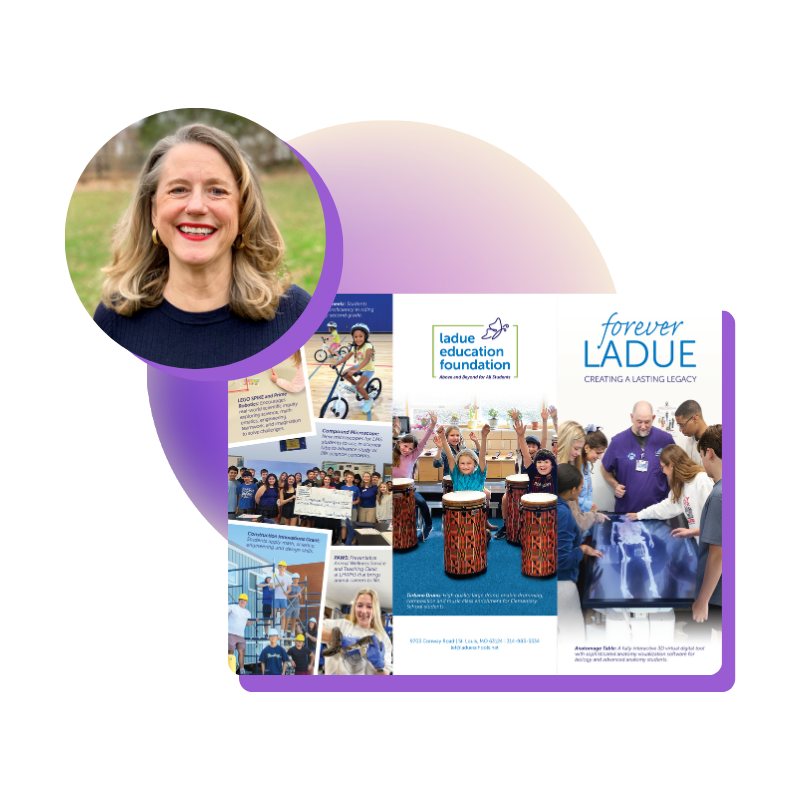
Ladue Education Foundation (Solo Fundraiser Impact Award, DonorSearch):
With just two staff supporting a district of 4,000 students, Ladue used DonorSearch to move beyond annual and event-driven fundraising into a focused endowment strategy grounded in donor capacity, engagement, and giving history. That work turned a broad donor base into an actionable prospect list that guided the silent phase and board engagement for a $5 to $10 million endowment campaign.
University of Arkansas (The Donor Experience Excellence Award, Signal):
Arkansas used Signal by EverTrue to launch a Donor Experience Officer program to expand personalized, structured engagement across a large alumni network. The program re-engaged previously unresponsive donors and uncovered a $500,000 planned gift opportunity, proof that consistent outreach surfaces major-gift-level opportunities most teams would otherwise miss.
Final Thoughts
Major gift fundraising works the same way generosity does: it isn’t automatic. Somewhere between a donor’s capacity to give and your team’s ability to reach them, opportunities get missed, unless you have the intelligence to see them and the workflow to act.
Keep relationship-building at the center of the work, and let EverTrue do the rest: DonorSearch to know who’s ready, Signal to know what to do next, and ThankView and Pledgemine to make every donor feel like more than a name on a list. That combination, not more data alone, is what turns potential into realized generosity.
Major gift fundraising is a major deal, but it doesn't have to be majorly difficult.
Lay the groundwork with philanthropy-first intelligence from DonorSearch, then let Signal, ThankView, and Pledgemine help your team act on it.