











Beyond the Wealth Screen: A Guide to Predictive Scoring for Nonprofits
How to move beyond capacity and build a smarter fundraising strategy
Most fundraising teams have a wealth screening process. What they’re missing is everything that comes after the capacity estimate — the giving history, the philanthropic patterns, and the predictive scores that tell you who’s actually ready to give to you. This guide is for the researchers, advancement services directors, and development leaders who are ready to ask the next question.
1. Why Capacity Screening Has a Ceiling
Wealth screening changed prospect research. Fundraising teams could now pull a list of constituents ranked by estimated capacity — net worth, real estate, business affiliations — and hand gift officers a starting point for portfolio development. That was a genuine step forward, and capacity data still matters.
But somewhere along the way, capacity became the answer instead of the starting point. And that’s where most prospect research programs hit a ceiling.
A high capacity score doesn’t tell you whether a constituent has ever made a charitable gift. It doesn’t tell you which causes they care about, whether they’ve given to peer institutions, or how likely they are to respond to an appeal from your organization specifically. It tells you ceiling — not intent, not likelihood, not readiness.
The best-performing programs have learned to ask a different question. Not just who can give, but who has given, and who is most likely to give to us next. That shift — from capacity-first to behavior- and intent-first research — is the evolution happening across the sector right now.
The tools that make it possible are called predictive models. And they don’t require a data science team, a custom build, or a massive implementation lift. They require the right data, the right methodology, and a clear understanding of what your program actually needs.
That’s what this guide is about.
2. The Four Questions Every Fundraising Program Should Be Able to Answer
Here’s a practical test for your current prospect research infrastructure. Can your team answer the following four questions — not by instinct, not by pulling manual reports, but with a reliable, data-driven answer?
- Who in our non-donor pool is most likely to make a first gift?
- Which first-time donors are we at risk of losing before they give again?
- Who in our current donor base has real room to give significantly more?
- Who should we be cultivating for a recurring giving program?
If any of those feel hard to answer with confidence, you’re not alone – and you’re not failing. Most teams are working from a combination of capacity scores, instinct, and whatever their CRM surfaces on a given day. That’s not a research failure. It’s a tooling gap.
Each of these questions corresponds directly to a type of predictive model — a scoring system trained on giving behavior, engagement data, and philanthropic patterns to identify who in your file is most likely to do a specific thing. The teams that can answer all four questions have built a scoring infrastructure around their program’s goals. The teams that can’t are leaving real opportunity on the table.
Why These Questions Matter More Than Portfolio Size
A common misconception in prospect research is that the answer to most challenges is more names — a larger portfolio, more prospects, more outreach. But most teams don’t have a volume problem. They have a prioritization problem.
Gift officers are already working more names than they can meaningfully engage. Researchers are already running screens and building lists. The question isn’t how to generate more activity. It’s how to make sure the activity is pointed at the right people.
Predictive scoring answers that. Not by replacing research judgment, but by giving it a stronger foundation. The researcher who can walk into a portfolio review and say “these 40 names scored highest on our upgrade model and here’s why” is having a fundamentally different conversation than the researcher who sorted by capacity and flagged the top quartile.
3. Matching the Right Model to Your Program's Goals
When most people hear “predictive modeling” or “machine learning,” they picture something that requires a dedicated data science team, months of implementation, and a six-figure investment in infrastructure. For enterprise organizations with custom needs, that might be true. For the vast majority of nonprofits, it isn’t.
Built by a vendor using training data from thousands of organizations. These models are calibrated against broad giving behavior patterns and can be applied to your file without any custom data science work. You provide your constituent data; the model scores it against national benchmarks. Accuracy is strong for most programs — and the lift over capacity-only screening is significant.
Built from scratch using your organization’s own data — your giving history, your engagement records, sometimes clinical data for healthcare institutions. These models reflect your donors and your mission, not an industry average. They require more data, more time, and a data science team to build and maintain. The accuracy ceiling is higher, but so is the investment.
For most teams — particularly those new to predictive scoring, or those without dedicated data science resources — national models are the right starting point. They're accessible, fast to deploy, and deliver meaningful improvements in prospect prioritization without the complexity of a custom build.
What the model actually looks at
| Charitable giving history | Has this person given to causes like yours? How often? At what level? |
| Wealth and capacity indicators | Real estate, business affiliations, estimated net worth |
| Engagement signals | Interaction history with your organization |
| Philanthropic indicators | Board service, foundation connections, patterns of giving to peer institutions |
| Demographic and lifecycle signals | Employment data, recency, and frequency of past giving |
Each constituent in your file gets a score from 0 to 100. The higher the score, the more closely their profile matches the patterns associated with a specific giving behavior. A score of 85 on a retention model means this donor looks a lot like donors who gave again. A score of 20 means they don't — and your team's attention is probably better spent elsewhere.
What data your organization needs to provide
This is where teams sometimes hesitate, worried their data isn’t clean enough or complete enough to run models. In practice, the bar is lower than most teams expect. For national models, the core requirements are:
- Constituent file — names, addresses, basic demographic fields
- Detailed gift transactions — 4+ years of history is the standard
You don’t need perfect data. You need enough data. A file with 4 years of clean gift transactions and a constituent list is sufficient to run most national models.
4. Matching the Right Model to Your Program's Goals
One of the most common mistakes teams make when implementing predictive scoring is trying to use every available model at once. More scores aren’t always better. The right approach is to identify your program’s most pressing goal right now, select the model built to address it, and build your workflow around that score.
Here’s a breakdown of the six national predictive models available through DonorSearch Enhanced CORE — what each one predicts, when to use it, and what program goal it serves.

Predicts: Which donors are most likely to make the highest-value gifts in the next 12 months. Included with every screening for no additional fee.
Use when: You’re preparing for a special event or campaign and need to prioritize who gets the ask.

Predicts: Which non-donors (or donors who have not given in the last 4 years) are most likely to make a first-time gift in the next 12 months.
Use when: You’re heading into a campaign and your current donor pool won’t get you to goal. You need to know who to cultivate from your broader file.

Predicts: Which donors who have given in the last 4 years are most likely to give again in the next 12 months and those who are likely to lapse.
Use when: You want to reduce lapsing among new donors before they become inactive. The window to retain a first-time donor is narrow — this model identifies who to prioritize.
Predicts: Which donors are most likely to move up at least one defined giving tier in the next 12 months compared to the last 12 months in which they made a gift.
Use when: You’re building a mid-level or leadership annual giving pipeline and need to identify who has real room to move up.
Predicts: Which donors are most likely to make a gift of at least $10,000 in the next five years.
Use when: You’re making long-term cultivation investment decisions and need to identify who deserves major gift attention now.
Predicts: Which donors are most likely to make at least four gifts in the next 12 months.
Use when: You’re launching or growing a recurring giving program and need a targeted list of prospects to approach with a sustainer ask.
Choosing Your Model: A Decision Framework
| Heading into a campaign and your prospect pool isn't big enough? | Acquisition |
| Losing too many first-time donors before they give a second time? | Retention |
| Want to grow your mid-level program and identify who's ready to give more? | Upgrade |
| Building or expanding a sustainer program? | Sustainer |
| Running a broad annual fund appeal and need to prioritize the ask list? | MLR |
| Making major gift portfolio decisions and want to flag long-term high-value donors? | Major Gift Propensity |
Get your team comfortable using the scores, incorporate it into your workflow, and see what it surfaces. Then layer in additional models as your program's needs evolve.
5. What This Looks Like in Practice


A Museum Rethinking Its Year-End Appeal Segmentation
The Musical Instrument Museum, a global museum celebrating musical traditions from cultures around the world, had historically segmented its appeal audience into two groups: museum visitors and concert attendees. Each group received different messaging, especially during the fall appeal. The approach had worked for years — but the team began to wonder whether it actually reflected how donors engaged with the museum, or whether it was built on assumptions that had simply never been tested.
To find out, they analyzed four years of fall appeal data and built a predictive model — integrating donor screening and ratings to score and prioritize their constituents. The model ranked roughly 25,000 constituents by likelihood to give and surfaced new prospects who had never been included in a prior appeal — donors already in the database but invisible to the old segmentation rules. It also reinforced a single, unified appeal message centered on the museum’s Artist Residency program.

A Two-Person Team Building a Multi-Million Dollar Endowment
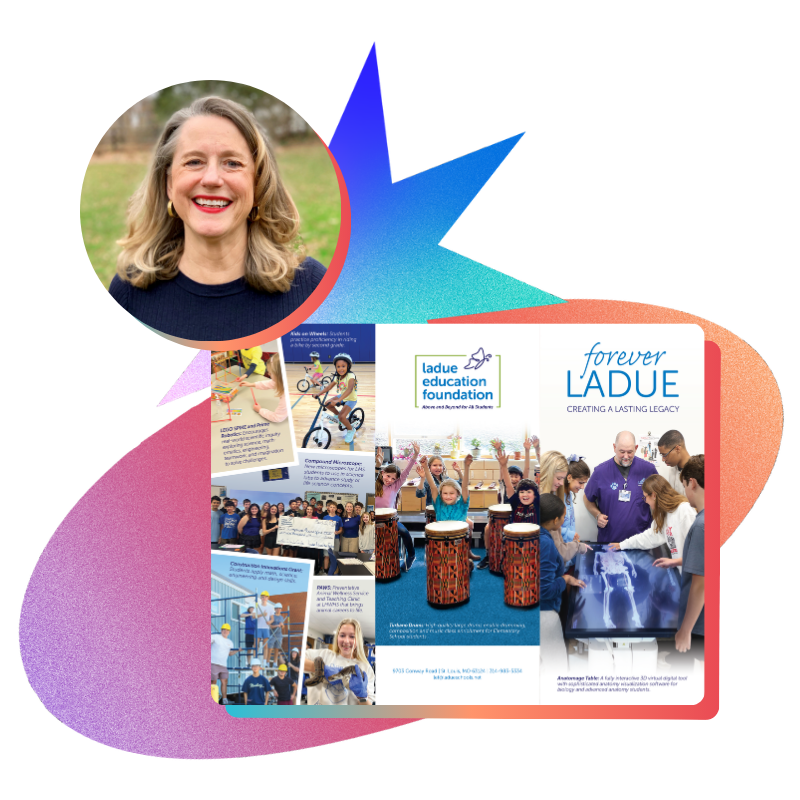
The Ladue Education Foundation supports a public school district of about 4,000 students, with a staff of exactly two people. The foundation had relied heavily on events and annual giving — effective, but increasingly strained, with shrinking volunteer capacity and unclear returns on the time invested.
The team had a bigger goal in mind: shifting from annual fundraising to a long-term endowment in the $5 to $10 million range. But a goal that size usually comes with a research team or a consulting engagement attached — neither of which a two-person shop could realistically take on.
Using DonorSearch, they layered giving history, engagement, and capacity signals onto their existing donor list to see where real opportunity actually lived. Even small past gifts became useful signals once they had the right context.
The outcome: a clearer, more focused view of the foundation’s strongest endowment prospects, a confident silent-phase strategy to bring to board leadership, and a shift from reactive, event-driven fundraising to a focused, relationship-driven approach — all without adding a single new hire.
Common Use Cases Among Program Types
Beyond capital campaigns and sustainer programs, advancement teams use predictive scoring across a range of workflows:
- Major gift portfolio review: identify who in a large unmanaged pool deserves managed attention based on Major Gift Propensity or Upgrade scores
- Direct mail segmentation: use MLR scores to tier your appeal list and allocate ask amounts more precisely
- Leadership annual giving pipeline: Use Upgrade scores to identify donors ready to move from annual fund to leadership-level giving
- Lapsed donor reactivation: Combine Retention scores with recency filters to prioritize who to re-engage
6. What to Look for in a Predictive Scoring Solution
Data Foundation
The quality of the underlying data determines the accuracy of every score. A model trained on thin or stale data produces unreliable scores — and unreliable scores erode team trust fast.
Ask: How many records are in the philanthropic database? How frequently is it updated? Does it include charitable giving history, not just wealth indicators?
Model Recalibration
Donor behavior changes. A model trained two years ago may not reflect today’s giving patterns. Models should be retrained and recalibrated regularly.
Ask: How often are models retrained? Are recalibrations included in the base package, or do they cost extra?
CRM Integration
Scores that live in a separate platform — disconnected from the CRM where your team works — create friction and reduce adoption. Seamless integration means your team always works from the complete picture.
Ask: Does the integration push scores automatically to our CRM, or does it require manual exports? Which CRMs are supported?
Visualization Tools
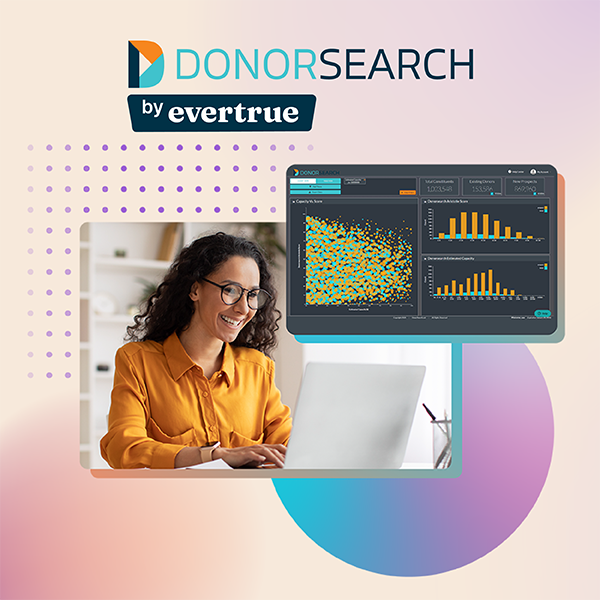
Raw scores in a spreadsheet are hard to act on. A visualization tool that lets researchers filter, segment, and explore the data — without needing a data analyst — dramatically increases the value of the scoring investment.
Ask: Can our team use the visualization tool without technical support? Can we toggle between models, filter by segment, and export the results?
Segmentation depth
The more data points available for segmentation, the more precisely your team can target outreach. Look for platforms that go beyond the scoring models themselves to offer rich filtering across constituent attributes.
Ask: How many data points are available for segmentation? Can we filter by wealth indicators, giving patterns, and more?
Data science support
For national models, the vendor’s data science team is doing the heavy lifting. Understanding their methodology, their responsible practices, and their ongoing support model matters — especially as you scale.
Ask: Who built and maintains the models? What does onboarding and ongoing support look like? Is there a dedicated team or a ticketing queue?
Pricing model and file size
Screening credits, marketing list credits, and tier structures vary significantly between vendors. Understand what’s included before you compare price points.
Ask: Are data refreshes and model recalibrations included? What are the screening credit limits? Can we screen a larger portion of our file at the base tier?
The Donors Worth reaching Are Already In Your Database
The most common response we hear from teams after implementing predictive scoring isn’t “we found donors we never would have found.” It’s “we found donors who were already there — we just didn’t know to call them.”
That’s the gap this technology closes. Not by replacing the researcher’s judgment or the gift officer’s relationship — but by making sure the right intelligence is in the room before the conversation starts.
Capacity tells you the ceiling. Predictive scoring tells you who’s ready to reach it. The teams that understand both are having better conversations, building stronger portfolios, and making fundraising decisions based on evidence rather than instinct.
DonorSearch Enhanced CORE is how we put that intelligence in your team’s hands — built on 240 million+ philanthropic records, six national predictive models, a point-and-click visualization tool, and 40+ CRM integrations. No data science team required.
See what your prospect pool looks like with philanthropy-first scoring.
Book a discovery call with our team.