





The Fundraiser’s Guide to FY27
A practical resource for anyone in fundraising: gift officers, annual giving, prospect researchers, solo fundraisers, and full advancement teams alike.
Every new fiscal year brings the same quiet tension: more donors to reach, more channels to manage, higher expectations for personal outreach, and rarely more time or people to make it happen.
That’s not a reflection on you or your team. It’s just what fundraising looks like right now. FY27 isn’t going to be won with more hours in the day. It’ll be won with clarity, knowing exactly who to focus on and why, so the work you’re already doing finally turns into results.
1. Where most teams get stuck
That tension shows up the same way whether you’re a major gift officer managing a 150-person portfolio or a one-person shop running the whole operation. The size changes. The tension doesn’t.
A few patterns tend to repeat every year:
- The team is busy, but not always confident they’re focused on the right donors
- Good prospects get missed simply because nobody got to them in time
- Follow-up happens when there’s bandwidth, not on a consistent schedule
- Portfolios were built once and haven’t been revisited since
- Results plateau even though everyone is working just as hard as ever
None of this is a motivation problem. It’s a clarity problem, and it’s worth naming before the rest of FY27 fills up.
2. Start with a clear picture of who to prioritize
Every fundraising plan comes down to one real question: who are you going to spend your time on this year?
For a lot of teams, that answer is built on a gut feeling, a wealth screening that hasn’t been refreshed in a year or two, or simply whoever’s top of mind that week. That’s completely normal, it’s how fundraising has worked for a long time. But real opportunity doesn’t always look like opportunity. It often lives in a donor’s actual behavior, not just their capacity, which makes it easy to miss without the right lens.

That’s what predictive modeling is for. Instead of relying on gut feeling alone, you get a real score built from actual giving behavior, not just wealth. A couple of teams have already put that to work, Boca Raton Regional Hospital Foundation, a 2026 EverTrue Innovator, used predictive segmentation to shift outreach based on donor readiness instead of habit. Annual giving grew from $1.1 million to $3.1 million, donor participation rose from 284 to 488, and average gift size increased by 64 percent.

HonorHealth Foundation used DonorSearch by EverTrue to evaluate capacity and affinity indicators across their database, surfacing a prospect that traditional screening would have missed. That single relationship led to a $2 million gift within six months.
Both stories point to the same idea: real prioritization comes from behavior, not a one-time guess.
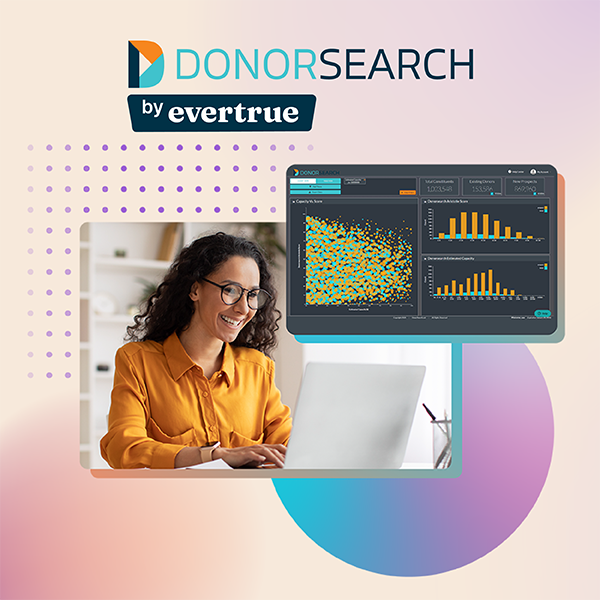
DonorSearch Enhanced Core,combines six national predictive models: Most Likely to Raise, Acquisition, Retention, Sustainer, Upgrade, and Major Gift Potential.
Together they tell you who’s ready to give again, who’s likely to upgrade, who’s already lapsed but worth re-engaging, and who’s quietly capable of a major gift, all refreshed regularly so the picture stays current.
3. Keep the relationship going after the ask
If prioritization tells you who to focus on, what happens next is how you keep them. And it’s usually the first thing that slips when a team gets busy, which is exactly the wrong time for it to slip.
Losing a donor is a lot more expensive than thanking one well, and it’s rarely a budget problem. It’s a bandwidth one: a genuine thank-you takes time most teams don’t have to spare for every donor, every gift.

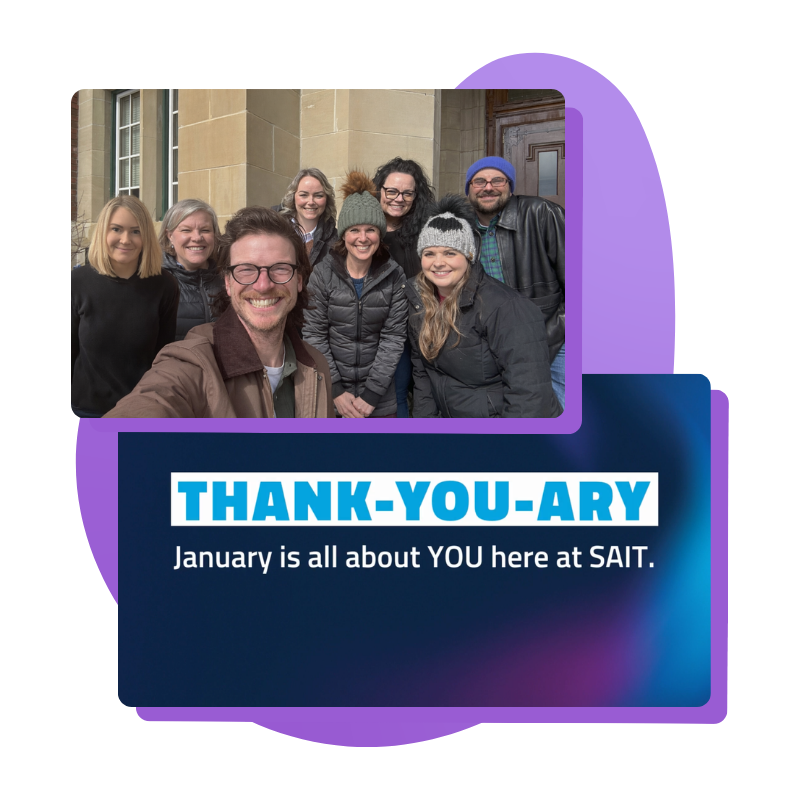
Southern Alberta Institute of Technology (SAIT), 2026 EverTrue Innovator, turned an entire month into a donor appreciation push called Thank-YOU-ary, built around segmented ThankView videos and student storytelling. Unsubscribe rates stayed below 1.4 percent, list health retention held above 56 percent, and video completion rates reached as high as 98 percent.


Indiana University of Pennsylvania, 2026 EverTrue Innovator, brought humor into the mix with an Office-inspired ThankView series written and produced largely by student workers. It earned a 68.6 percent open rate, nearly double the industry average, and a reminder that a thank-you doesn’t have to be polished to be memorable. It just has to be real.
Engagement isn’t only reserved for email. West Chester University Foundation, 2026 EverTrue Innovator, paired ThankView with Pledgemine to bring personalized video into its direct mail strategy, meeting donors wherever they actually respond instead of betting everything on the inbox. Cyclical donor re-engagement grew from about 8 percent to 12 percent, the second-ask segment got noticeably stronger, and a refreshed year-end strategy generated an additional $80,000, all without adding headcount to make it happen.
Several other teams from Western Kentucky University to the University of North Dakota are putting personalized engagement to work in their own ways. See the full list of 2026 EverTrue Innovators.
4. What this looks like layered together
Prioritization and follow-up aren’t separate initiatives. They’re two halves of the same fiscal year.
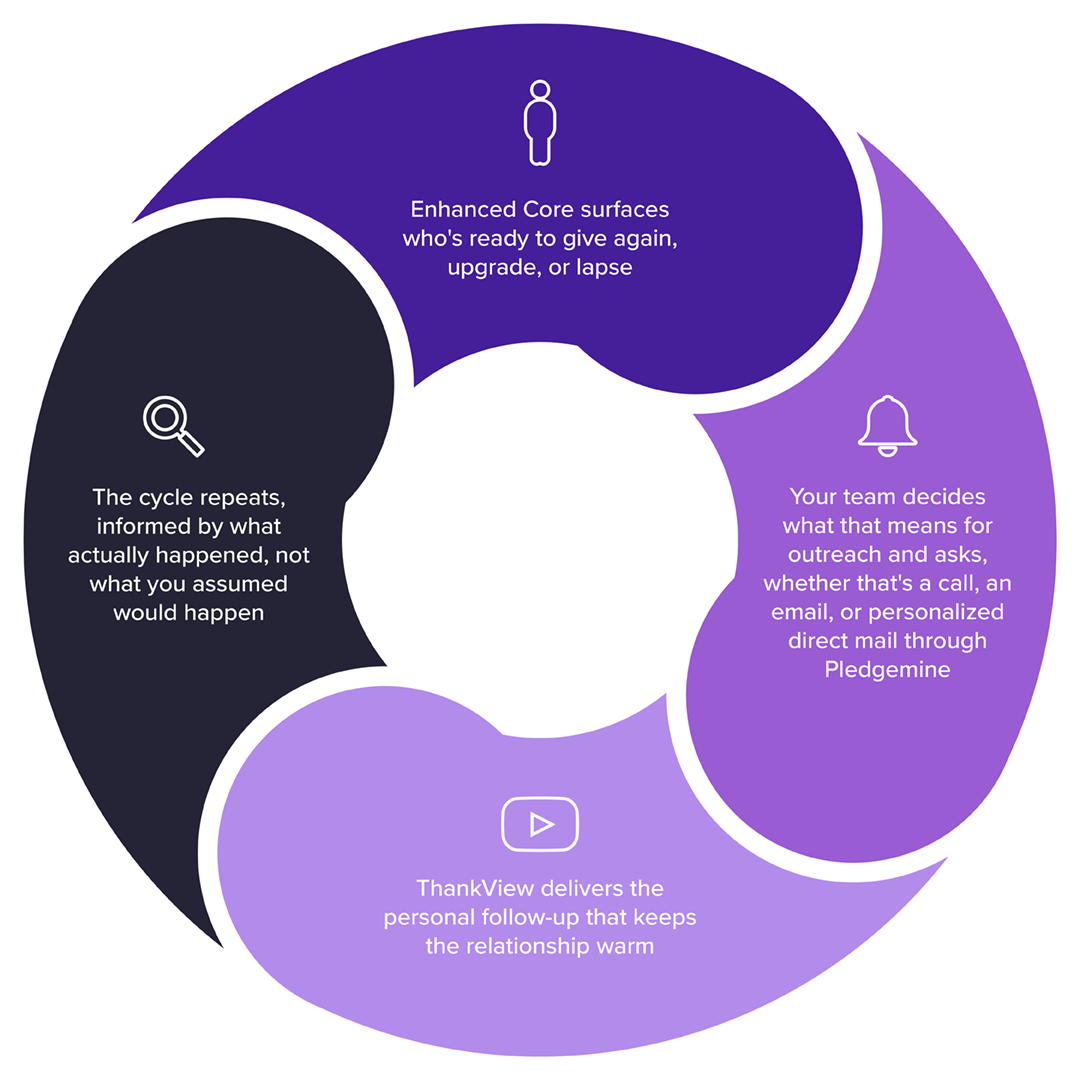
- Enhanced Core surfaces who’s ready to give again, upgrade, or lapse
- Your team decides what that means for outreach and asks, whether that’s a call, an email, or personalized direct mail through Pledgemine
- ThankView delivers the personal follow-up that keeps the relationship warm
- The cycle repeats, informed by what actually happened, not what you assumed would happen
None of this is a story about better technology on its own. It’s a story about teams that finally had a clear enough picture to act with confidence.
5. Your FY27 calendar, not just a checklist
Fiscal years don’t run in neat 30-day blocks, they run on a fundraising calendar. Here’s where the rest of FY27 tends to matter most, and where you’re likely standing right now.
| Quarter | When | What tends to matter most | Why |
|---|---|---|---|
| Q1 FY27 ← likely here, on a July–June year | July–Sept | Get prioritization right before the busiest ask season | What gets fixed here pays off all year. What gets skipped compounds. |
| Q2 FY27 | Oct–Dec | Giving Tuesday and year-end | The highest-volume ask window, and where a shaky system costs the most |
| Q3 FY27 | Jan–Mar | Following up on everyone who gave (or didn't) at year-end | Donors are won or lost in the weeks after the biggest ask, not during it |
| Q4 FY27 | Apr–Jun | Review, rebuild portfolios, set up FY28 | Closing the loop makes next year's Q1 easier than this one |
If you’re reading this in Q1, the move isn’t a 12-month plan today. It’s fixing one thing before Q2 hits.
6. What still has to stay human
Worth saying plainly, because it’s easy to lose in a planning conversation: none of this replaces the fundraiser.
- Building trust with a donor
- Making the ask
- Navigating an emotional conversation
- Exercising judgment on a complicated gift
- Leading a team through a hard year
- Deciding who to call first
- Drafting the outreach
- Keeping follow-up from falling through the cracks
- Producing a thank-you that would otherwise take hours per donor
We handle the intelligence, the prioritization, and the next best step. You handle the conversation that makes a donor feel known.
7. Where EverTrue fits
Between a donor’s capacity to give and a fundraiser’s ability to reach them, something gets lost. That’s the gap this whole guide has been circling, and it’s the reason Enhanced Core and ThankView are two of the ways we help close that gap, one on the prioritization side, one on the relationship side, built to work together as part of one platform.
DonorSearch Enhanced Core gives leadership a complete, continuously refreshed view of opportunity across the full donor file.
ThankView turns donor outreach into something personal, at the scale of a mass email. Pledgemine does the same for the mail, personalization at scale that doesn’t require more headcount to pull off.
Wherever you are in FY27 right now, that’s exactly where to start.
See how our research and engagement tools work together on your donor file.
Book a discovery call with our team.