















The average gift officer has 81 meetings a year. They log interactions with 45.5% of assigned prospects. And most MGOs spend less than 60% of their time fundraising.
Yikes.
At EverTrue, we’ve always known something was wrong with this situation. These data points mean that less than half of prospects in a portfolio are getting personalized outreach from someone whose sole job is to build relationships with them. And gift officers are spending more than 40% of their days doing administrative tasks (most of which could be automated).
After ten years of working hand-in-hand with the best prospect researchers, gift officers, and alumni relations folks in the country, we devised a strategy-people-technology solution to address the gift officer activity problem that we observed. And just about two years ago, we decided to pilot our solution. We called it Donor Experience by EverTrue.
Two years later, here’s what we’ve learned after partnering with dozens of institutions to manage thousands of their best, overlooked prospects. DXOs at the University of Nebraska booked 69 meetings in their first month. Donor Experience Officers at Emory had 225 donor conversations in their first two months. Donors who met with a DXO gave 98% more than they did in the prior year.
So, it’s working.
We want to share the lessons learned from our DX partners because we are passionate about moving this industry forward. So, read on to learn about the gift of Polite Persistence and 7 Ways to Book More Meetings, courtesy of our innovative DX partners.
So check out the recording, or continue reading for the full recap.
Tune in to our webinar, Polite Persistence: How to Book More Meetings
Polite Persistence
In the for-profit world, it takes 14 touchpoints for a company to receive a reply from a target customer. We gathered data from all of our DX partners and found that while this number is significantly lower for higher ed institutions (thanks to built-in brand recognition and affinity with your alums), frequent, thoughtful outreach is still the name of the game.
It takes an average of 6.6 actions to earn a meeting. We call this Polite Persistence, and it’s a cornerstone of the EverTrue DX approach.
Haley Ashley, a Donor Experience Officer at Western Kentucky University, gives a perfect example of what’s possible through Polite Persistence. She reached out to a disengaged donor. Every 30-60 days she called him, sent a personal email, or sent him a LinkedIn message. Eventually, he became re-engaged and Haley became “his favorite person from WKU.” When he decided to make a gift, he knew to call Haley directly.
Western Kentucky University’s DX Program launched last year in partnership with EverTrue. (You can read the whole story of the WKU DX program here.) She has access to the tech tools and training that make cadence outreach scalable to thousands of donors. But there’s so much of her story that we can all borrow and replicate.
Here are 7 tips, brought to you through the #PolitePersistence of our DX partners. They will help you book more meetings.
Tip #1: Show 'em you know 'em
Personalization is always the answer. When you reach out to a prospect, do your research. Include the name of a professor or classmate they know in your email subject line. Refer to their interests: past social media posts that they engaged with, other non-profit involvement, and prior giving patterns. Search past contact reports for keywords to get insights on what they’re interested in.
EverTrue tip: view your prospects’ interests, career information, addresses, contact info, social profiles, and more in the TrueView profiles.
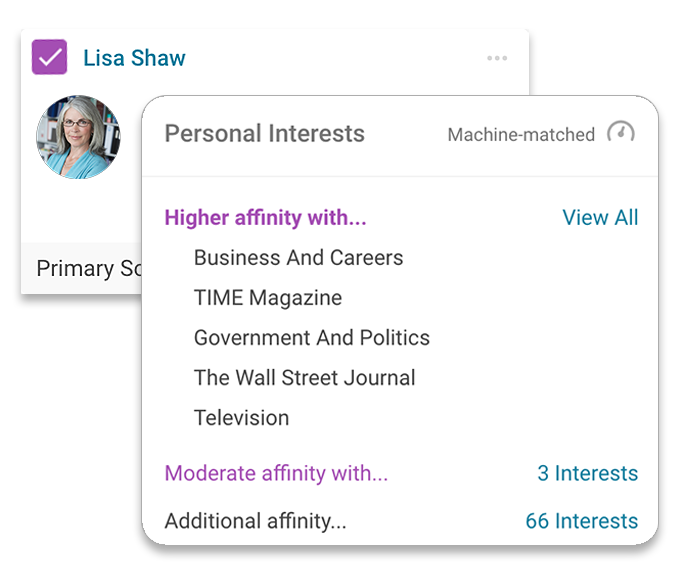
Make sure each touchpoint is worthwhile by personalizing each communication with your donors.
Tip #2: Don't write from scratch
If you’re reaching out to lots of people, you’re going to be saying the same things over and over again.
Even if it’s just in a Google Doc, build templates of your most-used emails to work more efficiently.
Here’s a peek behind the EverTrue curtain. These are some examples of templates we built so that we could send thousands of personalized invites to the Polite Persistence webinar without actually writing thousands of individual emails.
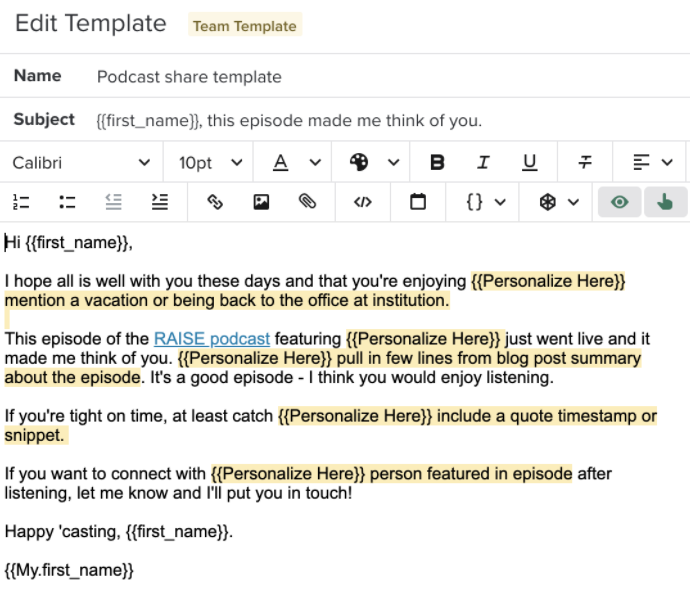
This advice is timeless: work smarter, not harder.
Tip #3: Video = 26% More Replies
Did you know that using video in sales emails increases reply rates by 26%?
And that one-third of all online activity is from users watching videos?
And that after watching a video, 64% of people are more likely to buy a product?
Video is really important. Which is why DXOs use video in their first email outreach to new prospects. Here are some tips we learned from DXO introduction videos that get the best responses:
- Use a mini whiteboard to write personal or recognizable notes that will show up in the video thumbnail.
- Make your background recognizable (i.e. your school’s logo or a familiar landmark on campus). Prospects don’t know you, but they do know their alma mater.
- Keep it short – get right to the point.
- Make one, clear CTA in your video. Ask to book a meeting!
DXO Jahari Burnett shows us how it’s done.
Tip #4: Use a 1-2 punch
In the sales world, 80% of the top 100 cadences included both a phone call and email on the same day — often as the first step in the cadence.
And our own EverTrue data from DX partners shows that using both email and phone throughout the introduction cadence resulted in 2.6X number of meetings.
So, call a prospect. What makes a good call?
- Start with “Did I catch you at a bad time?”
- Tell them why you’re calling.
- Listen more than you talk.
- Set a follow-up before you get off the call.
If you don’t catch them, leave a voicemail. What makes a good voicemail?
- Keep it short.
- State your full name, organization, number.
- Repeat the number at the end.
- Send an email.
In the follow-up email, include a subject line like “NAME – just left you a voicemail.” That will help to catch their attention and start connecting the dots.
Tip #5: Lean into the best digital tools
In the last year, the shift to digital jumped 5 years ahead of where it was predicted.
But, professionals spent 4 ¾ hours every work week to schedule 9 meetings.
The solution to this is integrations. Integrate Zoom with whatever calendar you use to schedule meetings. Integrate a scheduling app like Calendly that allows prospects to view available time slots on your calendar and schedule a meeting with you. Integrate Thankview so that it’s accessible and natural to incorporate video in your donor outreach.
EverTrue tip: EverTrue customers have the ability to create and manage virtual meetings on any video platform, including Zoom.
Tip #6: Break up with them
We’re all about Polite Persistence here at EverTrue. But, we’re not too big to admit – in love and in fundraising – there comes a time when you must move on.
We know that it takes an average of 6.6 actions to book a meeting with a new prospect. But, what is it about that fifth or sixth outreach point to a donor that grabs their attention?
Well, lots of DXOs have embraced sending a “breakup” email after a number of unanswered outreach attempts. And, as we all know, no one likes to be broken up with. So, more often than not, they receive a positive response from donors.
Tip #7: Track and follow up
“They just fell through the cracks.” We hear that from gift officers all the time. And, of COURSE donors fall through the cracks. How can you possibly keep track of who you’ve reached out to if you’re using spreadsheets and sticky notes?
Our DXOs manage portfolios of 1,000. They speak with 100% of the prospects in their portfolios multiple times a year. Their prospects don’t fall through the cracks. This is partly because the DXOs that we hire with our partner institutions are talented, hard-working, dedicated employees. And it’s also because we equip them with the right tech tools that make managing 1,000-person portfolios doable (and, dare we say, fun).
EverTrue tip:
Using EverTrue’s Launchpad, gift officers can customize “stages” for their portfolio and use the drag-and-drop feature to move prospects throughout stages after they’ve been contacted. Launchpad will let you know who in your portfolio is overdue for a touchpoint.
ROI
How do we know that these 7 tips will help you book more meetings? Well, we believe that experience is the best teacher.
After almost two years of testing, iterating, and honing our DX craft in partnership with some of the most talented and innovative teams across the country, we have the data to prove that the DX approach is working.
First of all, we learned that it takes an average of 6.6 actions to earn a meeting. So, if you want to book more meetings with more prospects, Polite Persistence is a non-negotiable.
Here’s another important data point. For donors who met with a DXO in the past year, it was the first meeting in 2+ years for 96% of donors.
And 81% had never experienced a 1-1 conversation with a gift officer!
But, as we know, dollars are the bottom line. Donors who met with a DXO in the last year gave 98% more than the prior year. And 41% more than two years ago.
Dr. Nick Linde at the University of Nebraska built a team of 3 Donor Experience Officers earlier this year. Here’s the full story of how he got organizational buy-in to launch the new idea, or catch this clip of him explaining the ROI of the DX program after just a few months of DXO outreach.
The DXbyET Starter Kit
Moving thousands of donors through outreach cadences takes a carefully curated mix of strategy, people, and technology. Our DX partners have the dedicated support of the EverTrue Donor Experience team, and lots of ongoing training, coaching, and sharing of best practices with other EverTrue DX partners.
For those of you who aren’t quite ready to go full-on with the gift of polite persistence and the DX approach, you can still use these 7 tips to start booking more meetings. We built the EverTrue Donor Experience Starter Kit to help you test a cadence on a small group of your next-best prospects.
Test it out, and let us know how you do!