






ON-DEMAND WEBINAR
150 Prospects, One Gift Officer
Why portfolios got bloated, why that breaks execution, and where AI actually helps
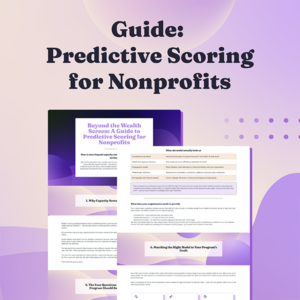
Hope that your weeks are going well so far. We have a really great session on deck for you today. I'm personally very excited to be in the audience for this one as well. And so we will get right to it in just a few minutes, but we wanna allow everyone a few minutes to, join us here and make sure that you don't miss any of the great content. So while we're waiting for folks to join in, if you could, in the chat, just let us know who you are and where you're tuning in from and maybe what a fun summer highlight you've had so far is or something you're looking forward to in the next month. I'm someone who comes from a family of school teachers, and so it's always you get to, you know, August first ish time, and it's always a little bit scary. But now being outside of that, I feel like I try to hold on for as much as I can. So share some of your fun summer plans, and let's keep the good vibes rolling because it's still July, and I will stick to that. Andy from Greenwich. I'm also in Connecticut, Andy, so it's nice to see a fellow New Englander in here. But we will get started. So, again, if you're just tuning in, please let us know who you are, where you're tuning in from, and any kind of some fun summer plans that you have to keep the good vibes going. For those who don't know me, I'm Hannah Davis. I'm on the marketing team at Evertrue. I come from a fundraising background before joining the Evercrew about four years ago, and now I am focusing on just creating content that can hopefully help provide some inspiration in your day to day workflow. So would love to connect on LinkedIn. If we are not already, I can drop that in. And I'm joined by my colleagues, Scott Rosencrantz. He is our head of AI growth at Evertrue, and he is our subject matter expert of the hour. So I'm not gonna talk for too too much longer, but I do wanna just give an overview of what we will cover today and what to expect throughout the session. So as we move through, we're gonna cover very quickly who we are at Evertrue, why a hundred and fifty prospect portfolios can break down, how AI can help this, and where it may not help it, where you can keep things still a little bit more human. We'll talk about some real examples of smarter fundraising action, and then we can talk about how intelligence and outreach can work together. Throughout the chat or throughout the session, you will see in the chat as many of you have already found it. That will be public through the entire session. So as you have questions for Scott or any member of the Evercrew, please feel free to drop those in there, and we can either get to them live throughout the session. And if not, we will make sure that we have someone follow-up with you so that no questions go unanswered. But for those of you who may not know who we are at Evertrue, I'm gonna spin through who we are very quickly. We at Evertrue believe fundraising has always been about relationships and that technology matters most when it can help people build stronger connections. Our role is really to help fundraising teams turn information into action by knowing who to prioritize, how to engage them, and what to do next. So that's why everything that we build focuses on understanding the person behind the profile so that you can spend more less time managing data and more time building relationships that lead to that gift. For more than fourteen years, we have partnered sorry. Fourteen, fifteen years. I gotta remember which year I'm in right now. We've partnered with organizations year and year. Yeah. Navigating the same challenge that many teams feel today, you know, being asked to personalize more and move faster and steward better while also uncovering new opportunities often without adding headcount. And so that's why we know innovation and fundraising isn't just about the Shiny tools. It's actually about helping teams like yours do more of what works with less friction. So today, more than fifteen thousand organizations trust our solutions because they need practical ways to create more impact across multiple teams. Evertrue really exists to make sure that generosity is realized, and so we bring the intelligence, the tools, and the partnership to help every fundraiser succeed in finding the right donors, building real relationships, and turning generosity into lasting impact. There are three motions that are really happening all of the time here as you can see here. First up is intelligence, and so that's really understanding who your donors are, their potential, and their readiness to engage. Second, outreach. So turning those insights into meaningful action through personalized communication and coordinated engagement. And then third, that stewardship and reporting element, which we know is very important, showing the impact, managing funds responsibly, and then strengthening trust over time. That's ultimately where our tools come in. So different products may serve different moments, but, ultimately, they're designed to work together so that insight can lead to action. Action can lead to relationships, and relationships lead to that long term impact. And once that foundation is in place, AI becomes far more powerful, and that's what we'll talk about a little bit today. But because now it can enhance the entire system, not just one isolated task. So now that we've set the baseline of who we are, I'm going to take a step back and, again, introduce our head of AI growth, Scott Rosencrantz, who has a great session on deck for you today. I will be off camera for the rest of the session, but I'll be in the chat. So if you have questions, I will make sure that those get flagged. And, again, we'll follow-up either during the session or afterwards. And with that, Scott, I'll let you take it away. Wonderful. Thank you, Hannah. And I think I'm gonna take your approach and hold on to the summer as long as possible and remind myself or forget about the fact that August is only a couple of days away. I'm gonna really try to milk this summer for as much as I can. Welcome, everyone. I'm really excited to be here tonight. I'm excited that you're all joining me. Just by way of introduction, I am Scott Rosencrantz. I'm head of AI growth at Evertrue, as as Hannah said. I've been in the nonprofit sector for twenty years now. On the mission side, I started in mental health therapy and realized very quickly that I was gonna burn out. And so I decided to move into fundraising where burnout is not anything that anybody ever has to worry about. Right? So I made a pretty strong decision there. But like many of us, falling into nonprofit fundraising, it just kinda I I got stuck in it. I fell in love with with the impact that we make. I started as a prospect researcher and just fell in love with the power of data, but also realized that it often goes underutilized. So that got me into playing with data analytics, predictive modeling. Along the way, I met my my colleague, Nathan Chappell, and we've been delivering custom predictive AI models for the past ten years now. I co wrote a book, Nonprofit AI, which came out last year, and I co host the Fundraising AI podcast. And so I think about fundraising and nonprofits and AI a lot. But I also think about where we are as a sector and some of the challenges that we're facing, such as the generosity crisis, with donors down and dollars down, nonprofits having funding challenges, both federal funding challenges that started a year and a half ago, but funding challenges prior to that as well. Right? Increasing goals by getting harder and harder every year to hit those goals. The burnout crisis. There's surveys saying that seventy percent of nonprofit employees are looking to lead their organization because they're constantly asked to do more or less. All of this to say, like, we it's what we do is hard, but what we do is also impactful. And so it's important for us to stay and do the work that we're doing. You're all doing incredible work. I think a lot of the challenges that we face come from what we're gonna be talking about today. How did we get to this whole hundred fifty portfolio? I usually like to ask people when I'm doing this person to raise their hand if you have a hundred fifty names in your portfolio. And, usually, like, sixty percent of hands go up, seventy percent of hands go up. Sometimes I'll push that number higher. Like, do you have three hundred? Do you have five hundred? And then, like, there are people that have almost a thousand names in their portfolio, and it's just madness. And so I I've gone through a couple different articles and and trying to figure out, like, where did this number come from? Being a prospect researcher, like digging into the data and finding the story and origin story and everything, and the number actually comes from anthropology. Robin Dunbar was an anthropologist and was studying primates, studying how chimpanzees and bonobos and apes, how the size of their brain correlated with a number of other individuals in their community that they would care for, that they would clean and prune and interact with. And so extrapolating that, the size of their brain, to the size of a human brain, Robin identified that humans can manage one hundred and fifty social relationships, hundred fifty stable social relationships. That's all well and good, but that's a hundred fifty as a human. Right? And if we have a hundred fifty in portfolios as a gift officer, the only way that that's gonna work is if we tell our families, our loved ones, our friends, even our coworkers like, hey. I gotta cut off this relationship. This is no longer working. I need to be solely dedicated to my job as a fundraiser, and I only have room for a hundred fifty names, and that's exhausted by my portfolio. So how did we get here with a hundred fifty names? If we know what the number came from, like, somebody identified that number, why did it get applied to fundraising? Well, in my twenty years of fundraising or in my twenty years of nonprofits, I have yet to meet a nonprofit that has enough staff to manage everybody in their database. Most organizations are managing point one percent to one percent, maybe two percent at best, of their database. And so the tip of the spear is coming through those major gift officers. And so we're trying to identify who are we putting in front of these people. These gift officers are the ones that are bringing in the gifts that are allowing us to hit our goals quicker. Right? They're managing the relationships of those who are supporting our our organization, our nonprofit, our mission. And so we need to feed those portfolios as big as possible. So if someone came along with the number of a hundred fifty because that's the the social stable relationship limit, let's just max those portfolios out at a hundred fifty. That just became the norm. Right? But if you have a hundred fifty people in your portfolio, how many people can you realistically, like, think of their names right now? Right? How many people can you, without looking at a list, could you just rattle off their names out of that portfolio? You could probably hit twenty easily, maybe thirty, probably pushing it at forty. And so if these are the people that you're supposed to be prioritizing above all else, your entire role is focused on establishing relationships with these people and bringing them closer into the fold with your organization, but you can only remember a quarter of them at best, there's something amiss. There's something awry and something that needs to be fixed. And so by not having enough staff to manage the top, we just keep pushing more and more name. But how do we get names into those portfolios? Oftentimes and I've come across couple of nonprofits that are changing things that have been prioritizing different things, but primarily, and I saw this as prospect research myself, capacity is the number one way. Capa someone's estimated capacity is the number one way that they get prioritized into a major gift officer portfolio. Gift officers come and say, hey. You know, this billionaire just moved into town, or my neighbor introduced me to this person, and they were driving a a Bentley or a Lamborghini or whatever it is. Let's find out information about them, and let's see how we can make a ask on that person. It shouldn't be about capacity. The reason that capacity gets prioritized is because it's easy to understand, and it's very easily accessible. It's easy if I say so and so has a capacity of a hundred thousand dollars. Everyone here on that call knows what that means. If I say so and so has an engagement of a ninety seven, it's much harder to interpret that, to figure out what that means. How do you use that data point? Capacity is also accessible. Like I said, it's you can look at someone's real estate and get a sense of, like, okay. Well, how well off are they? Right? Are they living in a five hundred square foot home or a five thousand square foot home? Do they have one home or three homes up and down the East Coast and one on the West Coast? Right? Like, it gives you a sense of just how much what their net worth generally is, but net worth is not tied to philanthropic potential. Elon Musk is the world's wealthiest person ever in the history of the world, has the most wealth out of anyone ever. He has enough right now to give half a million dollars to every nonprofit in the US, but he doesn't because he doesn't care. He's not engaged with all one point eight million nonprofits. Where he gives his gifts, where he gives to him, the organizations he supports are the ones where the hit their mission aligns with his personal mission. And where that alignment is strongest, he gives more of his capacity. So engagement is the priority. Engagement should be the priority. It should be let's find the people who are raising their hands, who are showing up, who are saying, hey. I love what you're doing, but oftentimes getting overlooked, and then find out what their capacity is. But instead, we look at capacity first because it is so easy. And I think that is the root cause of why we're seeing the generosity crisis, why we're seeing the burnout crisis. Because when we ask these people, they don't wanna give because they aren't engaged, and then all the time is spent trying to foster relationships or build a relationship where there isn't one naturally, and it's a waste of gift officers' time and prospect researchers' time, and it just leads to the challenges that we're seeing. Gift officers are experiencing, and I was a gift officer for a little bit after my prospect research days, and I saw this myself, having a list of names, you start your day. You go into the office, you log into your account, open up your laptop, and you're looking at a list of to dos. You're looking at a list of all these names, people that you need to follow-up with, people that you called last week that didn't answer your phone call so you gotta pay them again, People that are going month after month after month of of not having a gift or not making a gift, and you need to figure out a way to warm them up, to soften that relationship, to foster that relationship. It becomes this decision fatigue. It starts wearing down on the gift officers, and they carry that into other conversations. They carry that throughout the day, and then they have to wake up and start all over again the next day. There's no clear action on what they're supposed to do and or who they're supposed to call today. But even when they are calling the people, they're oftentimes calling people that don't wanna pick up or don't wanna they're emailing people that don't want to reply to the email. Trying to set up meetings with people that don't wanna have that meeting, again, because it's prioritized for the wrong thing. And so since we're trying to push these names into these portfolios, what we're prioritizing is activity. If a gift officer had fifty meetings this week or fifty calls this week, whether or not there was a conversation, whether or not I actually moved the the individual further along into making a gift, that call is what we're prioritizing. And so we're just prioritizing activity instead of productivity or progress. Right? And, again, it leads to, well, how do we change this? Did a study in twenty twenty three looking at gift officers and looking at the activity that they have, right, assessing the data that's coming through our systems. They found that when looking at the past year, when organizations have a hundred fifty or more in their portfolio, ninety percent of the people that were assigned had no meeting at all. Seventy percent had fewer than three touch points, and thirty five percent had zero interactions all year. And it was five touch points that led to a gift. So if seventy percent have fewer than three, you're never gonna get that gift. And what's interesting here is we push names into a portfolio based on their relationship, based on their capacity, the large gift that they made. And so we're treating them as, hey. We wanna establish a closer relationship with you. But if they fall into the ninety percent of people that we aren't meeting with that year, they're also not in any other outreach opportunity. They're not getting emails. They're not getting appeals. They're not getting any other letter because we're prioritizing those touch points, but we aren't having those touch points. And so from that donor's experience, they made a gift, elevated them to a major gift level, and then they never heard from the organization again. They went a year or two years without hearing from them until a campaign come up came up, and they needed another gift. And so they called and asked for that gift, and then that was it. And they fall into this cycle, and donors don't want that. That leads to donor fatigue. Right? Like, you only engage with me for a gift, but you're not bringing me to the fold to show me the impact that my gift has made. And so the system is broken. It's not leading to anything that's helping gift officers, that's helping organizations, but the solution is easily accessible and readily available. So how do we go there? It's not about managing more people. It's about finding the right people. It's about using the data to prioritize the donors. All of your organizations are tracking data, have been tracking data historically. So there are patterns in there that maybe we as humans cannot assess effectively, but someone can, something can track that data and say, hey. This person is really showing a lot of interest and increasing their interest over time. They're clicking through emails more often. They're clicking through more varied emails that you're sending to them. They're coming to your website. They're purchasing season tickets. They're giving increasing level of gifts and giving them more often. Those data points are all there, but nobody can assess the entire database to figure that out all on their own. That alone do that for every person and over and over and over again. So instead of just pushing names based on capacity, we wanna use the data to find the right people and prioritize those that are already engaged with us. This will reduce decision fatigue. Steve Jobs, he reduced decision fatigue by making sure that he wore the same outfit every single day. That when he woke up in the morning, he had his routines. He knew exactly what he was gonna do. So that way, his decision capabilities extended throughout the day for the more challenging decisions. Every one of us experiences decision fatigue, and by the end of the day, we're making decisions that are just easier whether or not they're the right decisions because we just can't manage all that much. And as we move into a more digital age, like, it's just been even worse. And so we want to reduce decision fatigue where we can by making sure that the information we're putting in front of a gift officer gives them the confidence that they need to take that next step and confidence that there's gonna be a positive result at the end of that conversation. We wanna protect that human energy. We want we're, again, all doing great work here. You're making an incredible impact in the work that you're doing. But if that work is depleting, that's not sustainable. And so we wanna make sure that you're feeling energized and feeling passionate about the work that you're doing and coming in excited every single day. I have another list of people that I get to call, that I get to engage with that are excited about the impact that we're making and excited to engage with us further, and I get to give them those opportunities. Like, that's where we want everyone to be, but we just haven't been able to do that for so long. And so we need to start with engagement. Oftentimes, again, capacity is the first question get that gets answered, but the last question that should be asked. Engagement should be first. Finding the people in your database that are raising their hands, showing up, showing up over and over and over again. Regardless what their capacity is, who is prioritizing you, thinking about you when maybe you weren't thinking about them? Once you find those people, once the markers are there and the tools are providing that information for you, are they philanthropic at all? I could care about your organization. I could wear sweatshirts. All my clothing, all my apparel could be have your logo all over it. But if I've never made a philanthropic gift before, it's gonna be hard for you to get a gift from me. If I've been philanthropic, if I've seen the value of philanthropy, if I've seen the value of stretching my gifts over years for philanthropic purposes, then you know that I understand the impact that it has. And if I'm showing up for you in other methods of engagement, I can show up for you within with philanthropic potential as well. And then lastly, capacity is third. Capacity should say us, okay. Well, then how much? What is the potential there? They love us. They've given before either to us or organizations. How much do we think that we can get them to stretch? How much of an impact can it make for our organization? We need to flip the prioritization so we're focusing on the right people at the right time. And this has been done. It's not just like, you know, I'm I'm throwing ideas out there and and no one's done it. People are doing this. Organizations are doing this and breaking the mold of let's just push one hundred and fifty names in there. Northwestern, David Lively at Northwestern, he did this by putting that whole one hundred and fifty to an end. Right? He started portfolios of forty individuals and, over two years, analyzed their efforts. There was increase in asks, increase in gifts, and increase in dollars raised. And it's all because they aren't burnt out from before they even had their morning coffee. Right? It's all because that was a manageable list. You can remember forty names in your head, maybe know, given thirty minutes or so, but effectively, you can go through and remember all those names and remember something about them. So they're all closer into that circle with you, and you have that natural instinct to want to engage in that relationship and keep them involved and connected with you. It's not so much a task as a desire, as, oh, I wanna talk to that person because I haven't heard about how is their granddaughter's birthday party. These people become more than just prospects for names on the list. They become individuals, and they're all able to stay at that level because you've shrunk the prioritization down to a manageable few and then still seeing better results at the end. So how does AI get us there? Well, first, predictive is the first step. I truly believe you know, there's many different methods of of artificial intelligence. There's predictive. There's generate there's agentic. I truly believe the only tool that's gonna get us out of the generosity crisis of donors down, dollars down, is predictive AI. Once we're out of the generosity crisis, then your organizations have more funds with less effort. So they can put additional resources to fundraising, to staffing, to then prevent the burnout crisis, then prevent the staffing crisis that we're seeing. But it all starts with predictive AI. Oftentimes, predictive AI gets underutilized, overlooked because it's a little bit harder to understand. It's not as easily accessible, but it's here. It's been around for a decade, and this is the tool to push make all make the sense of all the data that you've been capturing diligently for so long and actually put it to use. So using Predictive AI to identify those that are rising up the ranks, that are showing more and more interest in you, raising their hands more often and saying, hey. Again, I really like what you're doing. I'm looking for more opportunities to engage. Please tell me what else I can do for you. That can turn into not just philanthropy, but volunteer. It can turn into marketing efforts. They're, like, more likely to share their story with you that then you can put into appeals to bring other people into the fold, they're willing to do whatever it is because you are their priority and the data is showing that. Once you have the tool to prioritize the right people, then use generative AI to research those people. Find out what information you can get on them. Again, as a prospect researcher, I was actually just on a panel with APRA Pennsylvania yesterday on the future of prospect research. Generative AI is not gonna replace prospect research. It's gonna augment the role. It's gonna allow you to focus on more strategy, more storytelling, more finding the meaning in the the data points that are being surfaced to you. AI, generative AI, can surface two hundred fifty different websites in a matter of ten minutes. No human can do that. So it doesn't make sense for us to limit the tool. There's gonna be maybe some hallucinations. Hallucinations get fewer and fewer every new model release. You can even use another generative AI tool to validate. The human element is gonna be what's in making justification of the model's telling us this person. Here's all the information I know about this person, and here's the story that we can connect to why we wanna engage in that individual right now. Agentic AI can also help with outreach. Agentic AI is the new wave of artificial intelligence. It really became more publicly accessible in December of twenty twenty five and making a big push in in the first half of twenty twenty six. So we're gonna see more about this. But this is a step past generative where it can actually take action. It can execute on workflows. It can export list, pull list, extract information, craft emails, send them out, mark them as sent in your database, and then schedule the next action item all without human input once you schedule that agentic activity. But it can help with the outreach. And so what this means is if we're using the tools to tell us the right people, to tell us what we need to know about them, and helping us engage with them to open up those doors, that saves more time for the human to prioritize that relationship and the human to stay in that relationship. This is where we should be going with AI. AI is not gonna be relate replacing that human to human connection. It maybe it can. Maybe some organizations are using it that way, but it shouldn't. There's lot of things that AI can do, but that doesn't mean that we need to allow it to do all of those things. And so we need to draw that line on what is important for us as an organization, what's important for us as a sector. Trust is key for nonprofits, nonprofit fundraising, and trust is only there when there's accountability, when there's empathy, when there's someone someone sitting across from the table with you hearing your story and really understanding the meaning and the value that what their mission means to you and what their story means to them. And so by keeping the human in the center is really where we're going for all this. Let the AI of technology surface that information so you can go into those conversations confident that it's the right person, that you know everything you need to know about them, and then spend your time being present within that relationship. This is something, you know, I I get asked about AI a lot and and what it can do and and all the capabilities and so on. Again, like I said, AI can do a lot, but it's up to us to drill that line. And so the the practice that I follow is keeping AI relational and keeping hue I'm sorry. Keeping AI informational and humans relational. AI can surface data. AI can find patterns far better than any humans can. AI can gather data and synthesize data and package it in a way that's valuable to you in a way that you can easily understand, but AI cannot be empathetic. AI cannot have accountability. AI cannot just sit there and listen to that person and hear that person and get chills thinking about the the meaning and the passion that that person has about your organization. AI can maybe fake those things and probably get better at faking those things, but it's gonna become very apparent when someone is truly caring about you or a bot is pretending to care about you. And so we need to protect that space of human to human relationship and allow the AI to help us craft more time and carve out more time to prioritize those human to human relationships. And when you do this, your gift officers get focused because they know what needs to happen next. They are attentive. They're able to listen to the conversations. They're they're engaged because they know that this person is prioritizing them and wants to enact in a a true two way relationship. They have energy because each good conversation leads into each next good conversation. I remember when I when I started back in the days doing phone a thots. I hated phone a thons. And calling people I usually call them around dinnertime so nobody wants to take a phone at dinnertime, let alone make a gift to an organization that they're not really thinking about at dinnertime. Right? But still something we have to do. So calling people and getting no after no after no. I knew that next call, I probably had ninety percent chance that I was just gonna annoy this person and not get a gift. And so my energy was matching that and mirroring that. I was calling them. Maybe I wasn't a skilled phone a phone caller, so I probably could have worked on that. But even still, whether I hit it or not, my energy was matching the fact that, like, I knew this is not what you wanna do, and I feel like I'm taking away from your family time. If I was getting yes after yes after yes, I would be so excited to have that next call. I would be so excited to present someone else with the opportunity that I presented these past ten people that have jumped on that. And so your gift officers will feel that too. They'll know the consistency. They'll start seeing trust in the model, trust in the results, and knowing, hey. Maybe this person doesn't look like someone that I've prioritized in the past, but I've seen great results from what we've done so far, so I'm just gonna go with it. Is it there's consistency in the results of these predictive AI models because, again, they can dig deeper than I could, than any human could. And they also have more time to prepare. They have the data surfaced for them. The data is coming from all different systems gathered and synthesized together into one clear package, and that gift officer doesn't have to spend time looking in your CRM and then logging through all the emails and then checking other systems to see what they did in HubSpot on marketing emails. It's all packaged for them so that they can just sit there, mentally prepare, and then feel confident in that conversation. We've seen organizations do this. When prioritizing the right people with predictive AI tools, we found we worked with Children's Healthcare of Atlanta. They found someone who had a max gift of five thousand dollars They're giving five thousand dollars as most of that organization, but they had a very high engagement score. All the other indicators showed that they were so invested in what Children's Healthcare of Atlanta was doing. They also found that this person had given a very large gift to another organization. So engagement was there, philanthropy was there, they looked at capacity. Capacity potential was one hundred thousand dollars They went in and asked for a fifty thousand dollars gift and closed that in two weeks. I spoke to the gift officer who did this. They told me an update from that conversation was that donor then turned it into a seventy five thousand dollar gift. So they converted a five thousand dollar donor into a seventy five thousand dollar donor in a matter of weeks, which closing a seventy five thousand dollar gift is, in a matter of weeks, is usually unheard of. Right? But this person, they weren't they didn't need to be convinced. They didn't need to be convinced to make another gift or to stretch their gift. They were waiting for that opportunity to be asked. And because they weren't getting asked, they didn't think it was necessary. And so it wasn't until they were identified through the tool and all that information was prepared for the gift officer to go in there confidently that they could easily convert this five thousand dollars donor into a more significant donor and also bring them into a closer relationship with the organization, which is exactly what that person wanted in the first place. And so we don't want to automate the relationships. Although there's a lot of information that's coming through prepping us for going in and having those conversations, we're drawing that line. So we don't wanna just throw AI into, well, let's just email everybody. Let's just have generic content and just send out to everybody just because we can. Again, you can do a lot of things with AI, but that doesn't mean that you should be doing it. So what are the meaningful touch points that your individuals want to hear from you? How do we make sure that we're using AI to not just tell the same story to every single person the same exact way because they aren't showing up the same way in a relationship with us? And so how do we meet them where they're at? And how do we use AI to identify, hey. These are the people that I'm looking at right now. Are they worth my time? Are they able to be at a place where they want to hear more about us? Are able to hear what the opportunities are and and be interested in what those opportunities are? Or are they just gonna, like, you know, tuning us out and they're tuning every other nonprofit out too because everybody's knocking on their door? Right? We don't want to automate the relationship itself. We wanna automate the tasks. And so, again, using it, drawing that line, and putting that information where it belongs in front of that gift officer so that they can have those relationships and and be meaningful in that connection. So where we're gonna go here is looking at what are the tools that are bringing you this capability, this option. Alright. We talked about predictive. We talked building that confidence. There's generative that allows you to be confident in the tasks, looking at, oh, here's the activity of this person and what they've done. Here's a good suggested next action for them, but not actually taking that action on its own. And then the human confidence in I have everything I need. I'm able to prioritize. So the first steps for you as a organization is you wanna shrink the priorities up. You have too many individuals. Your database is way too large. So how do you make sure that you're getting in front of the right people at the right time? Use the tools that you have. If you're using donor search, we have capabilities for you. But making sure that the data that surf that you're tracking in your database is surfacing those people so that you are spending your time as efficiently, as effectively as possible. And that doesn't mean that we're just gonna shift the hundred fifty from here to over here be done with it. Engagement is dynamic. And so people are constantly changing, increasing, or decreasing their engagement as they move along. I may not care about my local hospital now, but maybe in a month or two something happens and they're all I can think about, how they maybe saved a loved one's life or something. So engagement is dynamic. We need to constantly be assessing this and not just treat individuals as a static score. They were engaged at a level of ninety seven a year ago. They're probably the same, and that's it. We need to constantly be leveraging that data that we're using to shrink the priorities set into a manageable list of individuals. And then using the information to say, okay. Now I know this person. What are the next action items? Using AI to remove the administrative tasks that often get in the way and bog you down from what it is that makes you truly passionate about the work that you're doing. Microsoft came out with a study not too long ago about their work index report where they ask people who are using generative AI what it's been what it's allowed them to do. So they ask thirty thousand people across thirty different countries, and ninety percent of them say it allows them to work faster, focus on the tasks that are more important to them, be more creative. But more importantly, it allows them to feel better about their work, feel more energized and passionate about their work. When someone gives you the tools that allows you to clear up the things that are getting in the way of what you're passionate about, that energy comes back. And so let's use the technology that's available, that's connecting all those dots between all those systems so that you don't have to jump from window to window, from application to application, let technology do that for you so that you can spend more of your time in those face to face meetings, hearing the stories of the donors who are so invested in what you're doing, who have the incredible stories of why they decided to make that gift to you in the first place or the impact that your organization has had on them and their loved ones' lives, protecting that meeting time. If you use AI to help you find the right people and help you automate those tasks, but then just do more of the same, just send out more emails and fill up with more administrative tasks, that's only harming yourself. It's making sure that we're protecting that human to human element, the things that give us joy, give us passion, and focus on what's moving the impact of the organization along that much further. And so key takeaways. And then I have two resources, and then I'd love to open up for any questions that anyone has. But if you remember nothing else, AI should make it easier for you to manage those relationships. It should make it easier. The tool should be working for you, not making more work for you. You have so many different platforms that are tracking information and pulling in and connecting dots. But if it's just adding to the layers that you have to go through to actually execute on your tasks, then it's not working for you. It's making more work for you. So it should lower that friction around the relationships. Better portfolios and even smaller portfolios lead to better outcomes, lead to better results. It's a matter of the right people and using technology to find those right people. Doing so in a way that is prioritizing their engagement, then the philanthropic potential, philanthropic history that they've had with you and with other organizations, and then capacity at the very end. It works best to support the relationship, not automate it. There are key things that humans will always be able to do that AI can never do no matter how sophisticated it gets. And so we need to lean into those human element capabilities and authenticity and meaningful and finding value and and connection with an individual and empathy and accountability, those are things that AI will never be able to do. That's what we lean into. That's where we hone when we have a relationship with an individual who's meeting us where they're at and and want to share the the generous capabilities that they have. The goal isn't more outreach. It's more meaningful conversations. So limit that size to those who wanna engage with you and then use the tools to help you have those relationships at the very beginning. So I want to thank you for coming today. We do have time for questions. But before we get there, I wanted to show you we're opening up an AI and fundraising survey. We'd love to hear your thoughts. There's so many conversations about what tools you're using and what capabilities you're doing with those tools. Tools change every single day. Oftentimes, it's not the tool that moves an organization further, it's the culture. And so we wanna dig into what's getting in the way, what's helping you move a little bit further along, but maybe what's getting in the way of you moving further along. And so how can you use the tools that you have accessible or bring on new tools, but what are the cultural things that need to change for you to see a greater impact in your fundraising efforts? So love for you to take the survey. We're gonna have it open for about two months. Would the QR code is here. I think that they just dropped the link as well. And then we also have a blog on predictive scoring. Again, maybe I'm biased because I've been in predictive modeling for ten years back way before Chatuchi BT, but it is underutilized. Only two point three percent of nonprofits are using predictive AI to identify mid- and major level donors, and ninety two percent of nonprofits are using generative AI. Generative AI is not gonna raise more money for you. It's just gonna allow you to do more, execute more tasks, but it's not gonna be able to find the right people or prioritize the right people. And so look into what predictive models are available. Again, at DonorSearch, at Everture, we have EnhancedCore, a suite of predictive models that are accessible for anyone from day one of signing a contract. So we'd love to be able to talk to you about what the capabilities are and how you can get more results from the work that you've already been doing by just shuffling the deck of who you're prioritizing. So I'll leave this up, but I'd love to hear any questions. I haven't had a chance to go through, so I don't know, Hannah, if you've seen any questions on in the chat that we could be addressing. Let's see. What trends have you seen in portfolio size in the last few years? Have you seen portfolio sizes creep up again as more automation AI tools are used? I think this is I've seen portfolio sizes stay around the same. Where I have seen a change is at the the mid level. I think there's more approach on mid level donors or mid level portfolios where a list of a thousand is actually manageable because, yes, you're not keeping a thousand names readily available in your head, but the tools are surfacing all that information for you so you're even lowering that decision fatigue. You're not having as consistent touch points as you would with a major gift officer portfolio of forty or so, but you're able to reach out to the people who are at that lower level and looking to elevate them. And the AI, the technology is putting all that information in front of you so it it is meaningful connections just at a a bit more varied instance. So I've seen that more instances of those come into place, those thousand or so portfolios at the lower level. But, honestly, major depositor level, I've seen it's still hovering in the hundreds. It's still too many people have, you know, hundred fifty, two hundred, two hundred fifty or so. So it's that hasn't changed yet, and I'm I'm hoping to see significant changes. But I again, I think unless the tools are shifted, AI and automation is not gonna prioritize the right people. Our our agentic AI and generative AI is not prioritizing the right people, so the tool needs to be shifted to do that prioritization. What metrics do you propose for meaningful conversations versus activity? This is a a big one that we've been talking about for a while. Oftentimes and, again, this is a leadership conversation. Goals, monetary value, activity is are often KPIs for a gift officer. Right? How many touch points have you had? But if those are not moving an individual further into a relationship with you, then what's the point of having those? So things like three year giving average or three year retention. How are people showing up? How are they continuing to engage with you? Not just now, not just for this one gift that you're you have for this year's goal, but how does that continue across time? Also, donors don't abide by our fiscal years. Right? Donors donors don't think in our fiscal years. Donors don't think in our campaign cycles. And so how do we make sure that we're meeting them where they're at, where their life opportunities or life changes or retirement or selling a business or whatever it is? They get to leverage their experience when it's meaningful for them more than just it's meeting our goals. And so by being in touch within the person, hearing about their story, knowing what's going on, it's not driven by you and your goals and your target. It's driven by them and what their conversations are leading to. And so having those engaged conversations, a lot of organizations are are have been putting more of a push onto substantive conversations and marking that in the CRM. So just calling them, sending them a letter, like, that's not doing anything. But if I talk to them and had thirty minute conversation and I learned these three things or we decided the these two things, it was just catching up on, you know, how their cat is doing after surgery. It's meaningful in terms of of the conversation that we're having, tracking that into the system as a substantive activity. I get that AI can do this kind of thing, but how do you actually use it? Fortunately, that's a very large question. There's a lot of different AI tools with a lot of different capabilities and objectives that they're addressing. Right? Predictive AI is less of a chatbot. You're not using it like you are OpenAI or or Anthropic or Quad or any of those tools. It's more of a tool that's built behind the scenes, and you have a dashboard where you're able to segment and sort and filter on individuals based on certain data points within the system that are are saying, hey. Here's a person to prioritize. Generative AI is more of that a chatbot where you open it up and say, hey. Can you do this? That's turning into more automations and agentic where you can build out workflows. Claude Anthropix AI tool, Claude, just released where you can record a script. You can have it record your screen while you're going through some things and and explain what it is that you're doing, and then it can remember that and execute that on your behalf. So there are different ways to use the different tools, but there are a lot of good resources on LinkedIn, a lot of people to follow on LinkedIn. Follow me. I'd I'd love to to kinda put you in contact with anyone that that might be able to help there as well. What from this deck an individual group officer actually do other than basic word processing, email drafting? I mean, you have control in the fact that you are the the, again, the tip of the spear. Right? All major gifts that are coming through are coming through relationships that you have. So if you are not getting valuable information either on the people that you're going to reach out to or valuable information in terms of who you're reaching out to, like, you're just not getting the results, then it needs to be a conversation with leadership saying, hey. The the resources are not meeting my needs. I'm not getting in front of people that want to continue to engage. I know that there's plenty in our database. Here's the people that have done the thing, but most of the people that are in my portfolio have not done the thing. So we need to invest in other tools that allow us to prioritize the right people. Once you have that, then there are there are other capabilities. CRM signal is a thing that Aperture has, which is a dashboard, which again puts those people in front of you with all the information you need. It's not just word processing or email drafting. It's also brainstorming, practicing those solicitations. Oftentimes as a gift officer, we don't get to practice until we're actually in ask or solicitation. So being able to kinda use it as a thought partner on, hey. You know, I really wanna get a sense of this person. This is their profile. This is their their giving history and things that they've been interested in. What is a way that I can show them some of the impact that we're having and get them interested in some other opportunities that we might have for them? So using it as more of that that strategic partner, connecting some of those dots between the person and the organization. Hannah, anything else I missed? Are there any other questions that are coming in that I have some time to answer? K. Well, thank you all. It's been a pleasure sitting here with you and and talking to you. I hope this has been helpful. Again, we have resources for you, so please take a look. The recording will be sent out, and we'd love to engage and and continue this conversation. So please reach out to us and and let us know what we can do. Hope you all have a great day, and enjoy the rest of your summer.
If your organization’s porftolios have crept toward 150 names — or 300, or 500 — you’re not alone, and it’s not a discipline problem. It’s a design problem. The number itself has nothing to do with fundraising: it comes from anthropologist Robin Dunbar’s research on primate social groups, borrowed decades ago and applied to donor portfolios without anyone checking whether it fit.
In this session, EverTrue’s Head of AI Growth Scott Rosenkrans walks through why that borrowed number quietly reshaped how teams prioritize, and why capacity keeps winning out over engagement even though engagement predicts giving better.
You’ll also see where predictive AI, generative AI, and agentic AI each fit into a healthier prioritization model — and where EverTrue draws a hard line to keep the human in the relationship.
What you’ll walk away with
- The real, non-fundraising origin of the “150” portfolio number — and why it was never a good fit
- Why engagement, not capacity, should be the first filter for who lands in a portfolio
- A 3-step reprioritization framework: engagement first, philanthropic history second, capacity third
- Where predictive AI, generative AI, and agentic AI each belong in the gift officer’s workflow — and where they don’t