











Donor relationships are the bedrock of a successful fundraising strategy. When supporters feel connected to your cause and organization, they’re far more likely to give more frequently and at higher giving levels. But how do you actually build these essential relationships?
Consistent, strategic donor outreach turns scattered data into tangible fundraising outcomes. However, with the advent of fundraising AI tools, changes in donor communication preferences, and shifting engagement priorities, developing a successful donor outreach strategy requires consistent forethought and adaptation.
To help your nonprofit build a reliable donor outreach framework, we’ll explore:
- Donor Outreach Channels
- 7 Donor Outreach Strategies for Every Nonprofit
- EverTrue: The Donor Engagement Tools Your Nonprofit Needs
With the right channels, strategies, and tools, your nonprofit will be set to engage every corner of your giving pyramid.

Donor Outreach Channels
Your outreach efforts will be shaped by your communication channels. Before developing marketing materials or diving too deep into your strategy, consider what channels you’ll use to reach donors and how that might influence your approach.
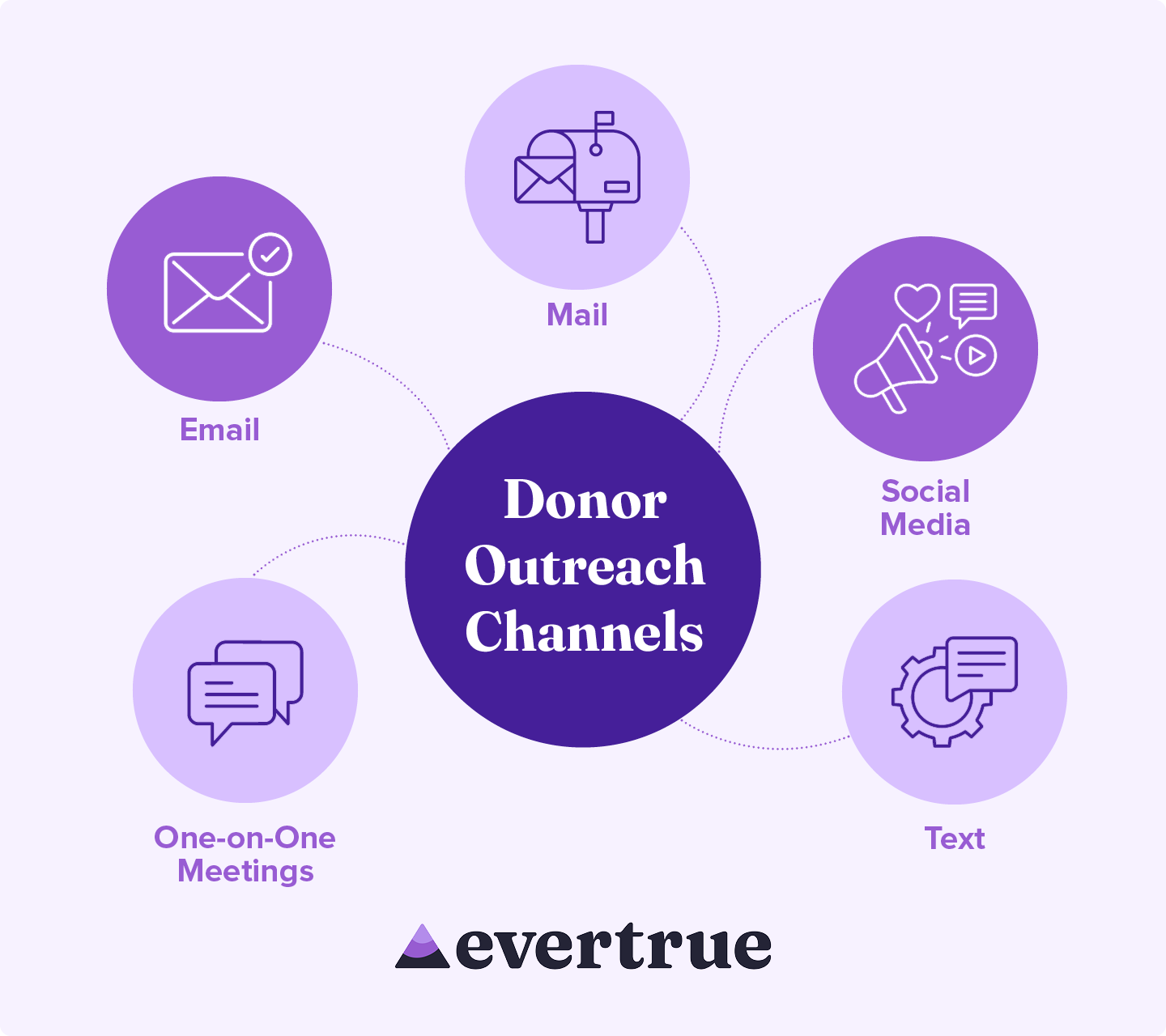
For many nonprofits, email is the go-to outreach channel for donor communications. In 2025, nonprofits sent an average of 50 emails per subscriber, making it an incredibly popular channel. Of course, while creating multiple touch points can affect donor response rates, nonprofits will see stronger engagement if they invest in quality rather than just quantity.
A few tips for improving your email outreach include the following:
- Use attention-grabbing subject lines. Avoid getting caught in spam filters and improve your clickthrough rates by forgoing generic calls to action and buzzwords. Instead, use your subject lines to pose questions, share interesting facts, or begin a story. For emails that request a direct personal response, such as prospect meet-up emails, you might even put the details of your message right in the subject line.
- Keep messages focused. Make your emails short and to the point. While some messages may require more details, such as dedicated directions for how to get involved with an advocacy campaign or start volunteering, the majority of your emails should be under 200 words.
- Consider the mobile experience. 55% of all email opens happen on mobile devices. Additionally, 75% of mobile users delete unoptimized emails immediately. This means that engaging with approximately half of your audience necessitates creating a user-friendly mobile experience.
Above all, email is flexible, fast, and can easily be personalized at scale, making it one of the most accessible donor outreach channels for many nonprofits.
With nonprofits and businesses alike often pursuing digital outreach strategies, your organization can cut through the noise with direct mail. Mail provides a tactile, memorable way to engage with your nonprofit that provides donors with a physical reminder of your organization.
A few ways to improve your direct mail outreach include:
- Use high-quality materials. Going the extra mile with high-quality paper and cardstock shows supporters that you care and are a professional organization. Partner with a mailing provider who can oversee your mailing logistics and guarantee quality deliverables.
- Connect your mail and digital strategies. For mailed fundraising appeals, some of your donors may still be willing to send back a check in the mail. However, to save money on prepaid envelopes and increase response rates, instead try adding a QR code to your letters or sharing a link to your website that’s easy to remember and type into a mobile browser.
- Experiment with content types. Rather than sending solely letters, take full advantage of this communication channel by sending postcards, greeting cards, calendars, and more to make your nonprofit stand out.
In addition to fundraising appeals, mail is a useful channel for other communications your nonprofit wants to make feel extra meaningful, such as event invitations or annual reports.

Social Media
While email and mail help your nonprofit develop individual supporter relationships, social media is a key outreach channel for discoverability. An active social media presence helps your nonprofit seem like an active, dynamic organization that donors will be excited to be a part of.
To make the most of social media, try:
- Encourage supporter engagement. Create a community online by regularly posting content that encourages supporters to interact, such as by answering polls or responding to an open question by leaving a comment. Reply to comments on your posts to start conversations and encourage your most active supporters to share your content with their followers.
- Practice social media listening. Get better insight into your donors’ feelings about your nonprofit by using social media listening tools that pick up mentions of your nonprofit. With these tools, you can find donors who are more engaged than you may have assumed and tailor content to their interests. For example, a university might discover a prospective major donor is highly invested in their football team, leading to conversations about gifts to support stadium renovations.
- Maintain a few active profiles. A common mistake many organizations make is setting up social media profiles on a wide range of platforms to establish a presence and then struggling to maintain a consistent posting schedule. Having many inactive profiles can make donors question whether your nonprofit is still operational. Instead, focus on a handful of high-performing channels based on which ones have the highest return on investment (ROI).
Make social media posting a consistent part of your marketing strategy. Just like you would schedule emails, put social media posts on your calendar to remind your team to stay active.
Text
Text messages are best for short updates and encouraging immediate action. For example, you might use text messages to:
- Share a donor stewardship video, such as a happy birthday message
- Alert donors that now is the time to take action for an advocacy campaign
- Keep volunteers informed about new roles and open shifts
- Encourage urgent gifts for Giving Tuesday and other time-sensitive fundraisers
- Remind donors about an upcoming event they RSVP’d to
Experiment with SMS communications that incorporate images, GIFs, and video into your text messages. A few strategic visuals can grab donors’ attention and help you convey more in this otherwise brief messaging format.
One-on-One Meetings
Some of your supporters, such as major donors, require individualized, in-person outreach. Once you identify these donors, start connecting with them one-on-one by calling them on the phone, chatting with them at events, and arranging meet-ups.
Your major gift officers can make the most of these meetings by preparing detailed notes and a specific goal for each interaction. Some meetings may aim to simply steward the donor and keep the relationship strong. For example, you might introduce a new program to a major donor during a chat over coffee but refrain from asking for a gift.
Log all meeting interactions, and explore software that can help you summarize donor meetings, extract top insights, and schedule follow-up conversations to save your major gift officers’ time.
7 Donor Outreach Strategies for Every Nonprofit
1. Choose channels strategically.
The more channels your nonprofit uses to connect with donors, the more touchpoints you’ll create. This multi-channel approach improves brand awareness, and by issuing multiple calls to action, you increase the chance that a supporter will act on one.
However, it is possible to stretch your nonprofit’s resources too thin or overinvest in outreach channels that see little ROI. When assessing marketing channels, ask yourself:
- Which channels are our donors already using? Survey your donors to discover what platforms they currently use and how they prefer your nonprofit to stay in touch with them. This can help you optimize your email, direct mail, and text strategy, and it can also provide insight into which platforms your nonprofit is being discussed on.
- What platforms could help us connect with new audiences? Create a profile of your average donor and consider what outreach channels that supporter likely uses. For example, if your nonprofit is hoping to bring in more with young donors, you might experiment with Instagram, or if you want to connect with a specific interest group, you might partner with an influencer to gain access to their niche audience.
- Which channels see the highest conversions? Ensure you track engagement metrics for each outreach channel your nonprofit uses. Keep an eye on metrics such as open rate, clickthrough rate, cost-per-dollar raised, and, above all, conversions. Certain platforms, like TikTok and X, may help your nonprofit rack up impressions but result in few donations.
Your nonprofit’s team has a limited amount of time and resources to devote to donor outreach. As mentioned, narrow your focus to the channels that will provide the highest ROI, and expand strategically as your nonprofit grows.
2. Track each donor’s engagement.
Any time a donor engages with your outreach efforts, record it in their donor profile. This can help you understand which messages are resonating with them, what types of activities they want to respond to, and where they are in their donor journey.
For example, you might flag that a mid-level donor consistently attends your events and discusses your nonprofit on Facebook. This high level of engagement indicates a strong affinity for your nonprofit, which may result in a positive response to an increased fundraising appeal.
In contrast, you may also notice donors who have stopped opening your emails and text messages. These supporters may be at risk of lapsing, and their behavior should trigger a re-engagement campaign.
3. Create a consistent schedule.
Routine outreach builds strong donor relationships. Stay in touch with your supporters without overwhelming them by:
- Create a content calendar. When planning email campaigns, annual fundraisers, events, or any other activity that involves donor outreach, add it to your dedicated marketing calendar. This will help you track all of your ongoing outreach to ensure each fundraiser or event receives enough promotion without confusing donors by sending multiple differing appeals at one time.
- Set up automatic outreach. Use your marketing and fundraising software solutions to set up messages that trigger automatically in response to donor actions. For example, you might have an automatic thank-you message for donations or a welcome email for supporters subscribing to your email list.
- Build custom schedules as necessary. Major donors should have custom stewardship schedules. Keep prospects warm by scheduling routine check-ins and outreach messages based on each donor’s unique relationship with your nonprofit.
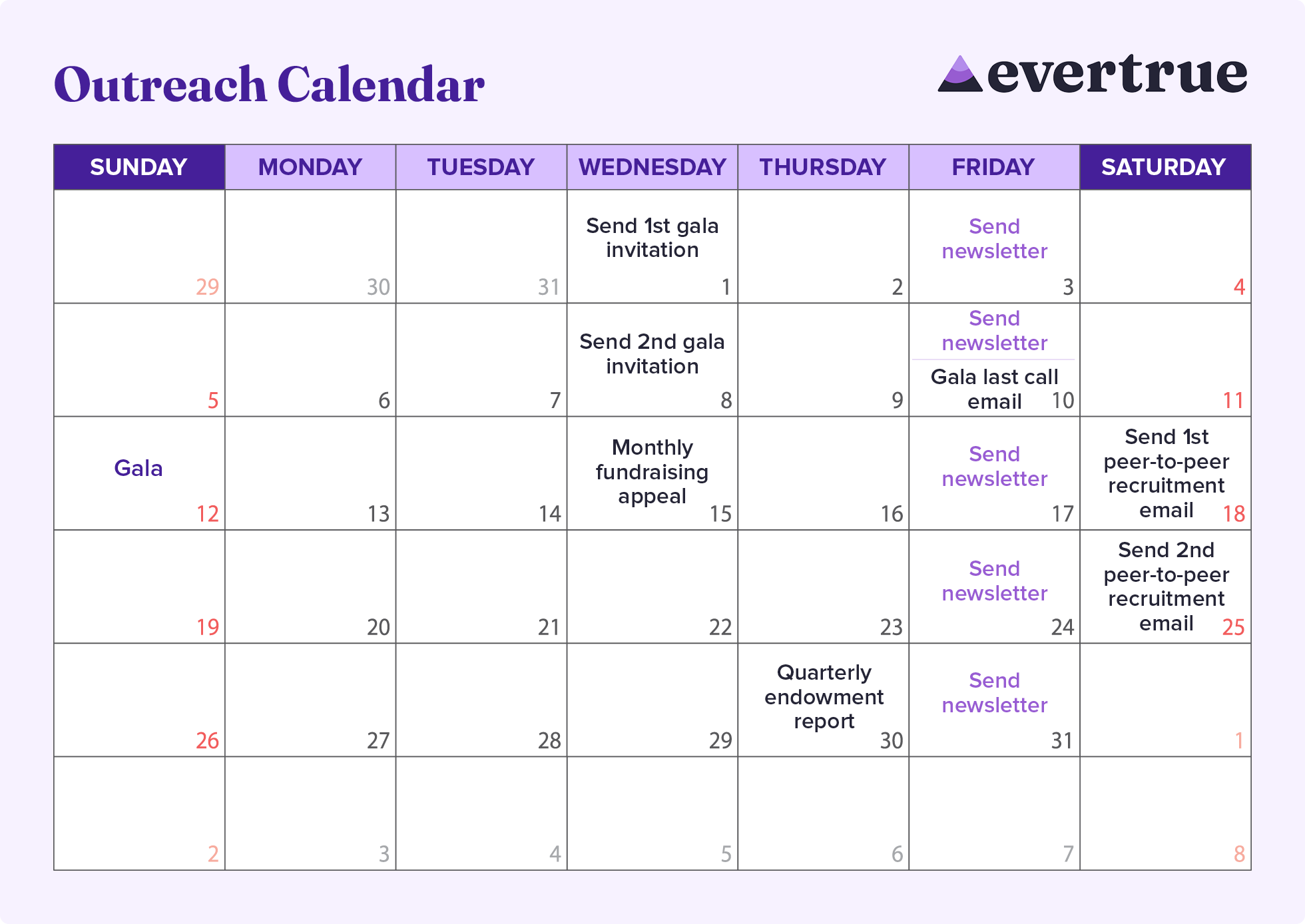
AI-powered donor engagement tools can often help your fundraising team with this process. For example, your major donor engagement platform might automatically add calendar reminders or schedule follow-up meetings after a major gift officer reports checking in with a prospect.
4. Personalize content.
Donors are more likely to respond to outreach that relates to their interests. Create messages tailored to your donors by leveraging personalization and segmentation strategies:
- Personalization involves including details personalized to each donor. For example, you might address donors by name, thank them for their last gift amount, and reference other ways they have engaged with your organization, such as by volunteering or attending an event.
- Segmentation is the process of dividing your donors into groups based on relevant characteristics. For example, you might have audience segments for new donors, recurring donors, mid-level donors, and donors at risk of lapsing. Each of these segments would receive a message series that reflects their relationship with your nonprofit, increasing the likelihood that your outreach resonates with them.
To personalize and segment content at scale, create unique message templates for each of your audience segments. Then, use your donor database and marketing tools to auto-populate messages with each recipient’s personal details.
5. Experiment with content types.
Maintain donors’ interest by varying your content. For example, in addition to text-based content, you might also send donors:
- Videos thanking donors for their gifts, celebrating life events, requesting donations, or promoting new fundraisers
- Photos of your community, including volunteers, staff, and individuals impacted by your mission
- Infographics that explain topics related to your mission or your organization’s impact
Some types of content may require expertise to design—such as bringing in a photographer or graphic designer—whereas others can be done with even a small team. For example, many nonprofits create professional videos by simply using their phones to record and a video platform to edit and distribute them.
6. Maintain transparency.
Honesty goes a long way toward maintaining donor loyalty. Even when your nonprofit experiences challenges, being transparent often secures donor trust far better than attempting to cover up problems.
In your reports—whether it’s an annual, endowment, or impact report—present both your wins and challenges. When discussing obstacles, take a pragmatic approach by sharing why you think these issues happened and what steps your nonprofit is taking to overcome them. This approach helps donors look to the future and can even serve as a call to action for why donors should continue to give.
For example, in 2025, public media nonprofits were frank about how losing federal funding would negatively impact operations. As a result, their email revenue increased by an incredible 130%.
7. Scale up strategically.
For nonprofits with thousands of donors, maintaining personalized relationships with each supporter can be challenging. Fortunately, with the right technology and strategies, nonprofits can reach out to every corner of their donor pyramid:
- Donor engagement software can help you track each donor to ensure they receive messages relevant to where they are in their giving journey.
- Marketing tools for email and direct mail let nonprofits create and send messages in bulk, each personalized with details imported from your donor database.
- Volunteer management solutions and collaborative communication tools let volunteers pitch in to help with donor outreach by creating videos, writing cards, and making phone calls.
Additionally, as your nonprofit’s team expands, explore project management tools. These help you keep large-scale outreach campaigns on track by ensuring each member of your team knows what they’re responsible for, providing project leaders insight into individual tasks, and ensuring accountability.
EverTrue: The Donor Outreach Tools Your Nonprofit Needs
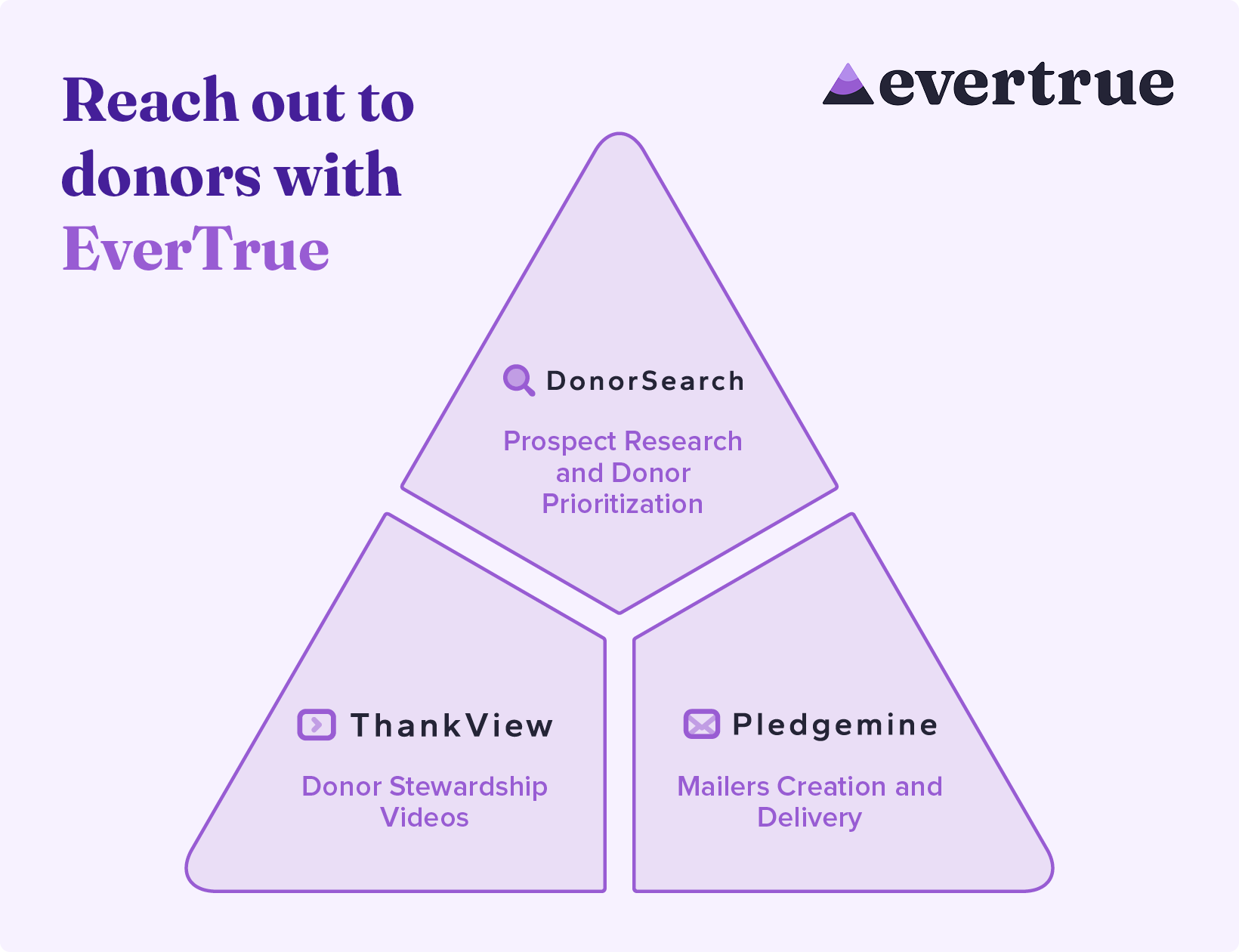
EverTrue can complete your nonprofit’s tech stack with the exact donor outreach tools you’ve been looking for. Whether you’re interested in expanding your audience, improving major donor relationships, or just maintaining consistent communication, EverTrue has the solution for you.
Explore our top donor outreach tools:
DonorSearch
Know exactly which donors you should reach out to and when with DonorSearch by EverTrue. DonorSearch is a prospect research tool that does far more than just identifying wealthy donors. It scores each donor based on their giving history and capacity indicators to help you prioritize your most valuable supporters.
Plus, explore its wide range of search models based on your immediate outreach needs:
- Most Likely to Raise (MLR): Identify donors most likely to make a high-value gift in the next 12 months.
- Sustainers model: Predict which donors are likely to give over four times in the next 12 months.
- Acquisition model: Surface the non-donors who are the most likely to make a first gift.
- Retention model: Flag first-time donors most likely to give again.
- Upgrade model: Identify donors who are likely to move up at least one giving tier within 12 months.
- Major Gift Propensity: Identify donors likely to make a gift of at least $100k in the next five years.
ThankView
Video is one of the most popular content formats, and ThankView by EverTrue makes leveraging it to connect with donors easy.
Share resources with volunteers, record videos, film your video messages at scale, add professional branded assets, and share videos via your channel of choice. Additionally, nonprofits can schedule videos to time when special messages are shared or prepare in advance for major fundraising campaigns.
Pledgemine
Send your donors personalized mail that builds connections, builds brand awareness, and makes an impression in an era of online outreach with Pledgemine by EverTrue.
Pledgemine is your comprehensive mail outreach tool that lets you design custom mailers, create personalized messages, and print your messages on high-quality materials. Plus, we handle all mail deliveries, meaning your nonprofit can focus on the outreach itself rather than logistics.
More Donor Outreach Resources
All fundraising strategies rely on solid donor outreach. Start building a reliable foundation for your nonprofit by exploring donor engagement platforms that make personalized communication at scale simple.
For more donor outreach tips and tools, explore these resources:
- Major gifts software that engages your entire donor pyramid. Build a strong major donor outreach strategy with software that helps your major gift officers stay organized and maximize their time.
- The Best Alumni Management Software Solutions. Staying up to date with alumni donors can be a challenge. Keep in touch with your university’s community with the right alumni management solution.
- Why Your Nonprofit Needs an Endowment Accounting Tool. Improve your donor outreach by providing transparent, professional endowment reports. Discover how to manage your endowment and discuss it with donors.